
A ‘beautiful life’ in music
An interview with Doc Walker
Advertisement
Read this article for free:
or
Already have an account? Log in here »
We need your support!
Local journalism needs your support!
As we navigate through unprecedented times, our journalists are working harder than ever to bring you the latest local updates to keep you safe and informed.
Now, more than ever, we need your support.
Starting at $15.99 plus taxes every four weeks you can access your Brandon Sun online and full access to all content as it appears on our website.
Subscribe Nowor call circulation directly at (204) 727-0527.
Your pledge helps to ensure we provide the news that matters most to your community!
To continue reading, please subscribe:
Add Brandon Sun access to your Free Press subscription for only an additional
$1 for the first 4 weeks*
- Enjoy unlimited reading on brandonsun.com
- Read the Brandon Sun E-Edition, our digital replica newspaper
*Your next Free Press subscription payment will increase by $1.00 and you will be charged $20.95 plus GST for four weeks. After four weeks, your payment will increase to $24.95 plus GST every four weeks.
Read unlimited articles for free today:
or
Already have an account? Log in here »
Hey there, time traveller!
This article was published 24/02/2024 (932 days ago), so information in it may no longer be current.
Talking of their love of small towns and of how the band got its big break here in Brandon, Juno-award-winning duo Dave Wasyliw and Chris Thorsteinson of Doc Walker describe a changing musical industry that has them considering the future of their music, and how they engage with a new generation.
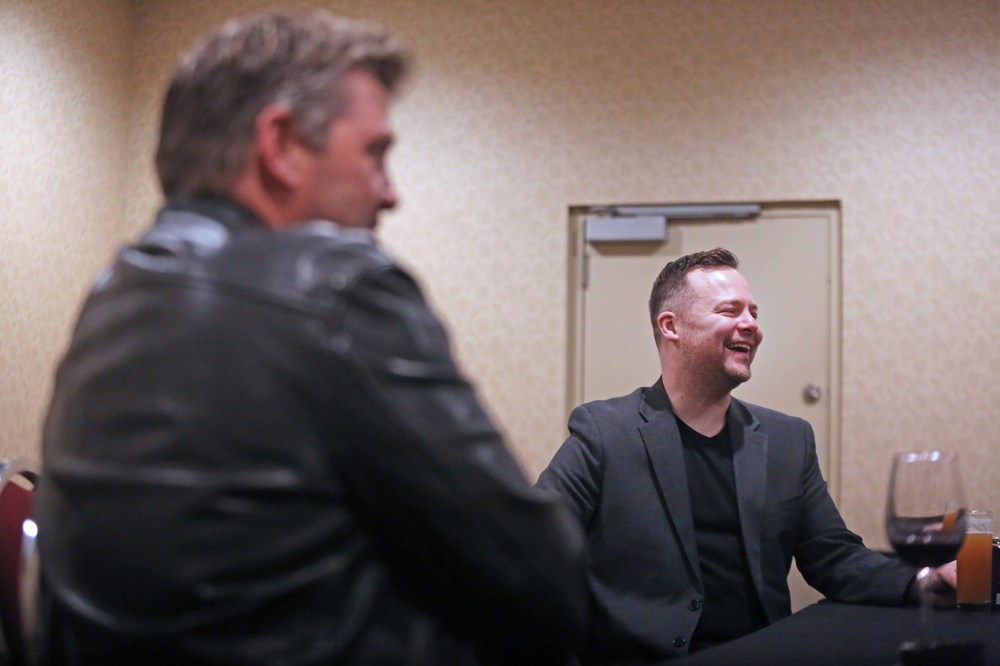
The duo allowed Brandon Sun editor Matt Goerzen a few minutes to join the band behind the scenes on Thursday evening as they enjoyed a few spirits and rested up for a special acoustic performance for the Provincial Exhibition of Manitoba’s President’s Dinner at the Victoria Inn.
The interview has been edited for length and clarity.
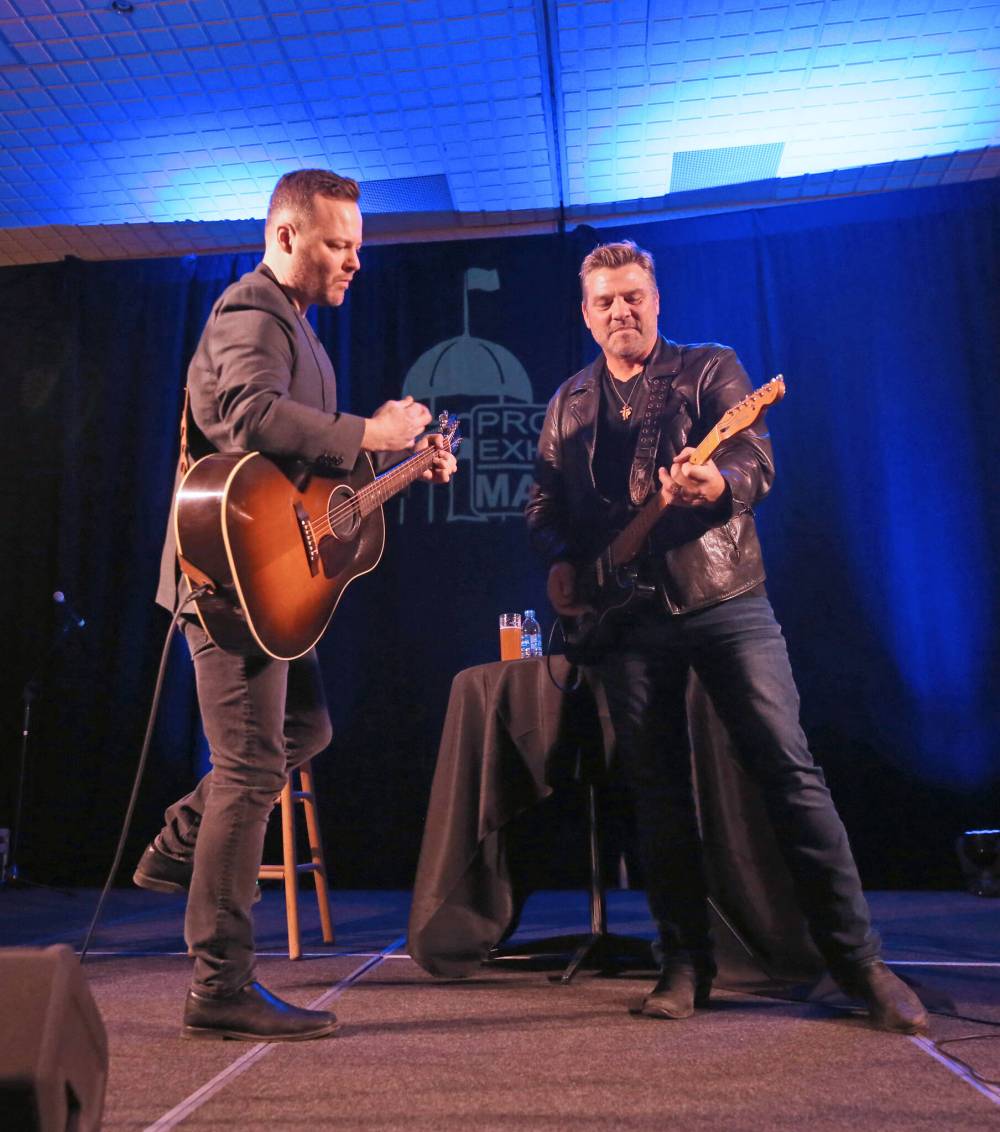
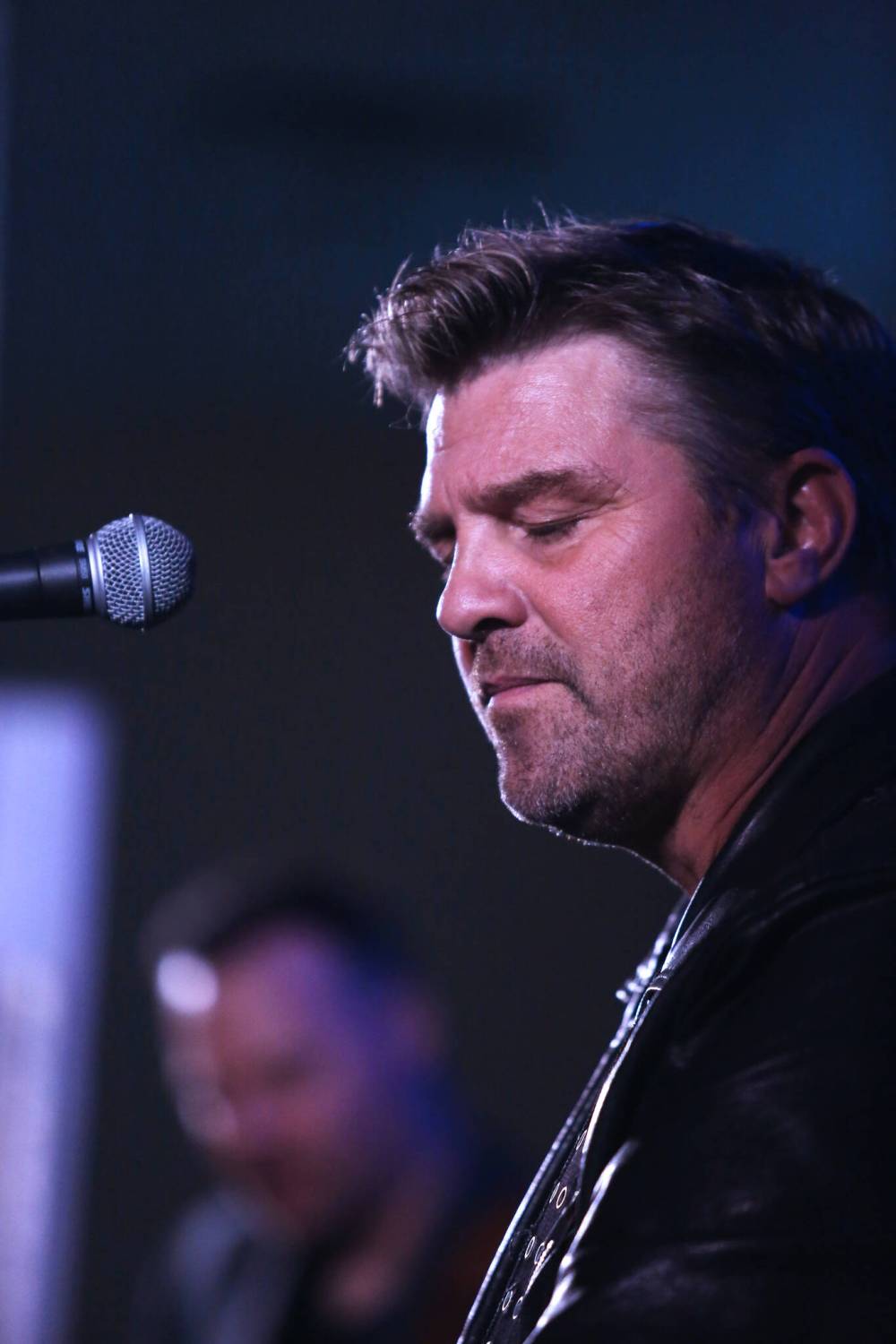
Doc Walker duo Dave Wasyliw (left) and Chris Thorsteinson play some fan favourites during a special acoustic performance for the Provincial Exhibition of Manitoba's President's Dinner on Thursday evening. (Photos by Matt Goerzen/The Brandon Sun)
Matt — So, you’ve been out to Brandon before and this is not new, right?
Chris — Oh yeah.
Matt — This is the President’s Dinner, part of the Royal Manitoba Winter Fair. Have you ever been at all to the Royal?
Chris — Yeah, we’ve played it before. Yeah. And we’ve done Agribition. We’ve, you know, done a lot of stuff. And Brandon … It’s like we’re from Portage, so you know, not too far away. Right.
Dave — A lot of curling things. (Chris — Yeah, a lot of curling.)
Chris — I think we did the Scotties here… (Dave — Or the Worlds). Honestly, Brandon is sort of the birthplace of my career. I mean, I grew up playing in around Westbourne, Man., and Portage and Gladstone. But back in the day, when Heidi (Howarth) had The 40, she had the … it was the Orange Crush Challenge. So I went into that and ended up winning it. And what happened was, I got to spend a week playing with Curtis Grambo. I got to spend a week playing with Marty at The 40, playing at the band house there. And boy, was that a quick learning experience in the world of bars. And you know, Marty, I mean, Curtis and Marty, they’ve been great friends of ours for years … Basically, Brandon was where we went. And I went into the Orange Crush talent contests. And I got to know a lot of the bands that was playing. Sean Borton, who was a guitar player, ended up being our road manager on our first major tour with their family. And he was a guitar player in the band to back me up and got to know Curtis and got to know how to play in bars. And so, Brandon has a pretty special place in our heart for, you know, for growing up in the country music scene. Coming to play The 40 and then eventually playing Houstons, who had a wicked band house at the time.
Matt — Things have changed somewhat.
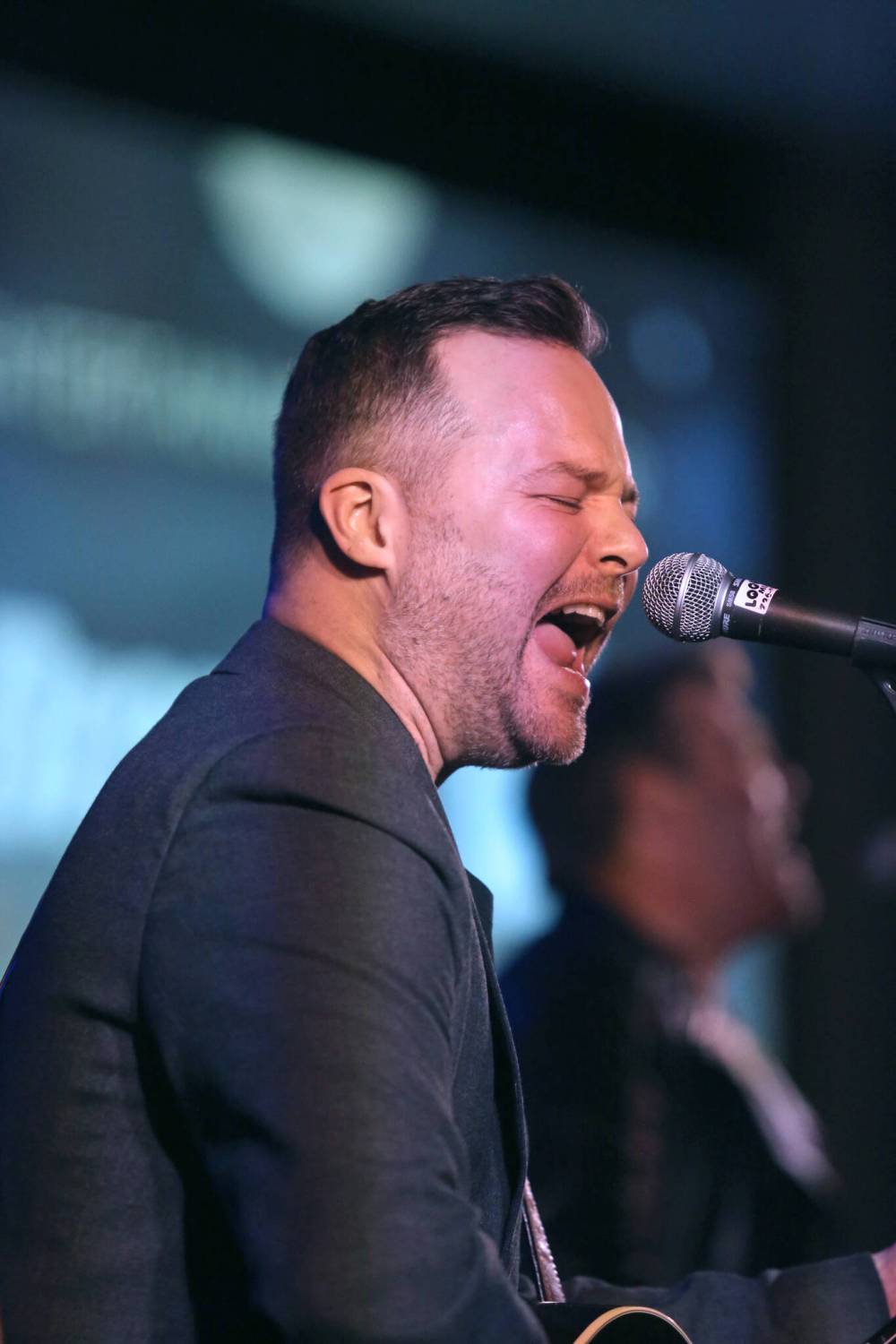
Chris — Oh, yeah, well, nobody plays bars anymore. We kind of wonder now what, how do you even — I guess you’ve got to make a viral video to be famous now, before you start to go on the road for two years and play bars. Now you just make a viral video.
Matt — I mean, The 40 still exists, right? And it does get people in and it’s still …
Chris — It’s one of the few left. But I mean, there were, those were in every — they were in Saskatoon, Lloydminster. Every little town had a North 40 or had a Houstons and we could spend, we’re just talking about this today where we would literally leave and come back like a month and a half later. And we’d go to the Island (P.E.I.) and back in a suburban with no cellphones. I mean, that was amazing. But now it’s different. But it’s great that there’s places like The 40 that are there still there.
Matt — So where do you now try and focus your energies? I mean, you know, obviously Brandon is a nice community to come back to. But can you pick and choose a little bit more these days now? I mean, you’re “settled” is the wrong word for it. But you’ve achieved a certain level of fame, right? And now you can kind of pick and choose where you want to go? Or how does it work?
Chris — We just want to play everywhere.
Dave — I think the music business, like we just said, it kind of evolves a lot. A lot of things that used to be — like the whole bar scene setup — is just not there. And I think it’s probably changed since then about 10 times too, so you just kind of roll with it. And for the most part, you got to play what they want you to play. (Laughs)
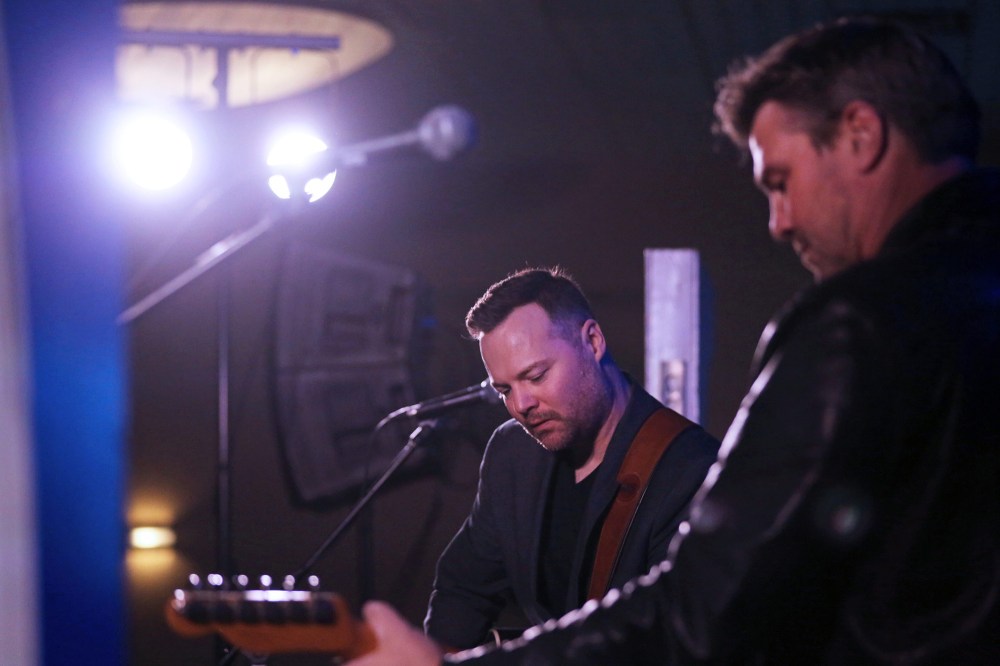
Chris — I mean, as far as what Doc Walker wants to play, we want to play where people will show up. Yeah, I don’t care where that is. Dave and I do a lot of small-town halls, right? Even the full band. Like we’re looking at doing small-town touring, you know. I’m from a town of 50 people, right? So, you know, you get to these smaller towns, whether it be Ste. Rose, Man., or … (Dave — Boissevain). Boissevain, or Hamiota or whatever it may be — Rocanville, Sask. You know, I love those kinds of shows, because I know what it’s like in a small town. And I know how beneficial it is being in a small town and having an event where you can have a fundraiser. Like we have a two-sheet curling rink in Westbourne. And we did a benefit there years ago. And it’s because of the benefit we got a new ice plant. And that kept the heart of the community alive because (if) you don’t have a curling club in a small community, you got nothing. Right? I mean, that’s why there’s some great instructors come out of Manitoba because every little community has a curling club.
Matt — I come from Gretna, and my father was a farmer in the area. And I remember when we lost the three curling ice sheets there.
Chris — And did you notice once you lost that, the town kind of …
Matt — Yeah.
Chris — And that’s where we decided in Westbourne, barely a town of 50 people. You know, we all sat there and said, we got to do something — mostly during COVID — to keep the power on. We’re not going to be able to be here, but keep everything, you know, up to date, and not break down. Because any small communities lose a curling club, that’s the heart of the community. And I remember we played Swan River and the community hall and the funds they made from it, they got a brand-new community hall sign, “Swan River,” and they took a picture and posted it, saying “thanks to Doc Walker, we have a new community hall sign.” And to me, that’s a big deal, because that’s going to be there for a long time. And you know, a lot of people say, ‘Hey, I, you know, we played with Bon Jovi in Edmonton. That was really cool.’ But I can say, hey, you know, it’s because of us Swan River has a brand-new sign in their community hall. Right? And that’ll be there for years. Hundreds of years, probably. We’ll probably have to do a rebrand tour to get a new one.
Dave — And we’ll be holograms or something. (Laughs)
Chris — No, I think, when you ask what’s next for Doc Walker, if we get to pick and choose, we just want to play as much as we possibly can …
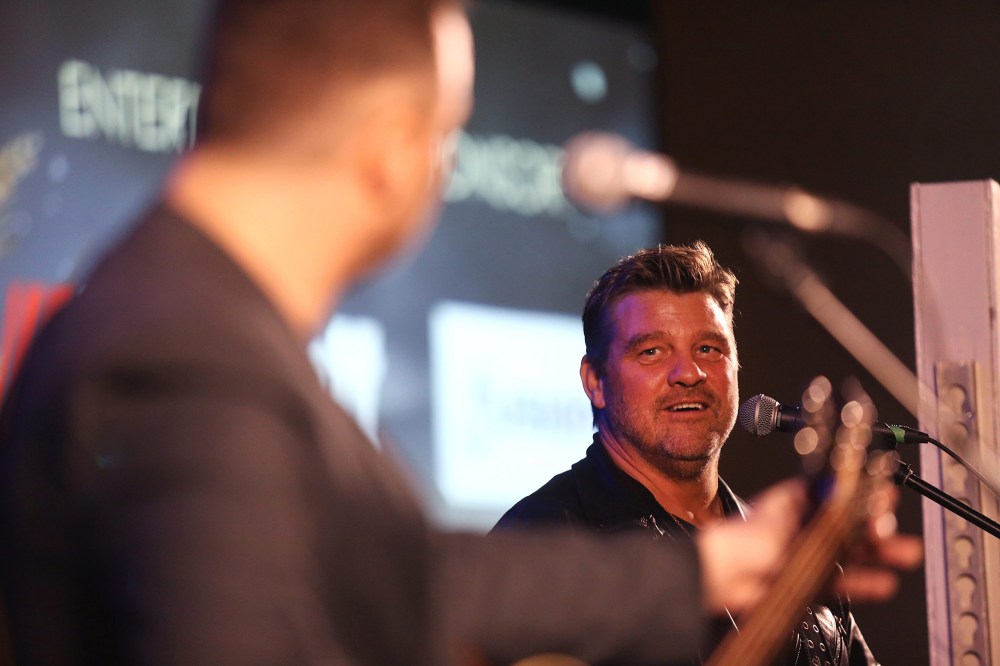
Dave — To the people that appreciate it the most. And it does seem like the, you know, the entertainment dollars and the big markets are, you know, either taken by Madonna, who comes through town and takes all of it for a year or, you know, they have an NHL team or something like that. Even Winnipeg size, there’s only so many dollars to go around. So when you do play something, like we said a smaller town, it’s the event that’s happening, probably that year, if not the only event that’s happened there in many years. I remember playing in Consort, Alta., people coming up to us and asking us why we were playing there. Who’s the last guy that played here? He said, ‘Oh, nobody. This guy named Rick Tippy played here 10 years ago.’ And it’s like, ‘You still remember it.’
Matt — And they will.
Chris — Yeah. So I mean, you know, I’m not saying we’re going to focus our whole touring on going to small towns, but we’re both from small towns. We played Buffalo, Alta., population one. (Dave laughs) Like they actually had, I think it was a pump house and an hotel that was shut down. And there was one person that actually had their mail sent there. So we go to this hall. And it must have been a lot of farming money around there because it was a beautiful hall, they just rebuilt or built the kitchen. And it was unbelievable. And I think it was supposed to only hold 250 people, but they sold 275 tickets. And it sold out in like three days. And it was a blast. You know, our tour bus pulls up to this hall in the middle of nowhere. But yet every rancher and farmer shows up and, you know, they honestly didn’t even really listen to us. They sat in a social atmosphere and they had snacks on the table and some beers and they sat and talked like we do in Westbourne, you know. I guess I can kind of say that’s where our heart is. I love the big shows, but we love kind of stuff like that.
Matt — So what’s next, musically, for the group? I mean, you’ve got, I mean, how many songs under your belt, things that you’ve done? Are you actively working on something new?
Chris — Yeah. Always more songs we have … Not, uh, not as fast as I’d like. I mean, we had some songs that we did during COVID. We released “She Wants What She Wants.” But it’s, it’s been a bit of a stall after that. And we’ve got a lot of ideas. We’re going to be doing some work — like we’ve always kept up with Murray Pulver, who was, you know, a big part of the band before he actually joined the band … I think we’re going to do some more writing with Murray and maybe do a bit do a tour with Murray, that would be a lot of fun. But I think as far as music, it’s changed a lot in the fact that we used to want to write everything that we recorded, and we still do. But in the landscape of music, now, it’s changed so much. I don’t know how to explain it. But I’m not saying we should be a cover band and do cover songs — we should do our own songs that we want to do. But in the same sense, you’re competing against YouTube, you’re competing against algorithms, you’re competing against so much more than just getting on radio like we used to. So I think we’re kind of trying to … dig our heels into really how to approach that.
Matt — It’s a different world.
Chris — It’s a different world, and I don’t really know how to explain it.
Dave — New music always used to benefit us, right? We release it, it’d be on the radio, you know — that was the exposure. And now radio is becoming less and less of a kingmaker. Right? And yeah, there’s just different avenues. For the most part, we just — the incentive to make music for monetary is just, it’s not there anymore. No, it’s more like you make it just to make an excuse to tour a lot.
Chris — Well, like we would write songs because we would get SOCAN (Society of Composers, Authors and Music Publishers of Canada), which is, you know, payment for writing the song. And now with, I mean, we’ll just call a spade a spade, like this little pocket we have in our jeans. That’s for the streaming.
Dave — Yeah. Yeah.
Chris — The little tiny one here that nobody knows what it’s for. Yeah, but so as far as making music, the reason we’re making music has changed. We used to go OK, we had to write a song. And we’ve written a lot of songs and I think what we’ve done is we’ve established what Doc Walker is with songs like ‘Rocket Girl’ and ‘Beautiful Life,’ ‘Driving With The Brakes On,’ ‘That Train.’ Those are songs, lyrically, or — how do you say this — story, lyrically great songs that really connected with a with a big audience. So now I mean, we’ve already done that. Why write another one? What are we going to do? Like how, what are we going to do now to, to really make a difference, to make something stand out? Because it’s harder now. It’s not just “Hey, get a top 10.” It’s “Hey, now you have to deal with that redheaded ginger guy singing about no work, no pay.” Yeah. And then the next week it’s another kid singing about a turtle and then the next week it’s … so what do you do now?
Dave — Listening habits have changed. Yeah, of course, even my own. But yeah, it used to be, you know, my mom had a really amazing record collection that was, you know, that’s your universe for the longest time. And then your CD collection becomes your whole thing. And, and now it’s always the excitement of something new. But now it’s like you have the whole world’s library at your fingertips. And I don’t think I even give enough time to one artist ever anymore. It’s more like, ‘Oh, I love this thing.’ But I don’t devour it. And I don’t read the lyrics, you know, and wear out the tape anymore. It’s just like, what else is? Yeah, like every day is just something new. And you’re always searching for that high. And that’s not, not good.
Chris — And yet there’s something good about it in the fact that — my son Ryder’s 17. So he shows me (while) we’re driving to Portage. And I mean, it went from Journey to AC/DC, to Snoop Dogg to some … thing … rap — I’ve never heard it, never want to hear again — to Corb Lund to like some new, really cool rootsy Americana, Yellowstone kind of artists. I’m like, it blew my mind. And that’s in 20 minutes’ drive from Westbourne to Portage. It’s all over the map. What really makes me excited about music is Ryder’s openness to music. So Ryder, I’ll show him something, and if he thinks it’s good, he doesn’t care what genre it is. Could be disco, could be, you know, Willie Nelson. Could be k.d. lang. Could be anything. They’re open to good music — that’s coming back to what Doc Walker is doing next. That’s where we’re takin’ all this information, going, ‘What do we do with this now?’ Like, how can we — you always want to try to go up a level, right? You don’t want to just record something to record something … But I don’t know. I think it’s an exciting time for music.
Matt — But also a little scary.
Chris — It’s always been scary.
Dave — Yeah. Yeah. So much material is being released every day. Yeah. Like, how do you get through the static?