
Invasive species lead to access restrictions in B.C., Alberta national parks
Advertisement
Read this article for free:
or
Already have an account? Log in here »
We need your support!
Local journalism needs your support!
As we navigate through unprecedented times, our journalists are working harder than ever to bring you the latest local updates to keep you safe and informed.
Now, more than ever, we need your support.
Starting at $15.99 plus taxes every four weeks you can access your Brandon Sun online and full access to all content as it appears on our website.
Subscribe Nowor call circulation directly at (204) 727-0527.
Your pledge helps to ensure we provide the news that matters most to your community!
To continue reading, please subscribe:
Add Brandon Sun access to your Free Press subscription for only an additional
$1 for the first 4 weeks*
*Your next subscription payment will increase by $1.00 and you will be charged $20.00 plus GST for four weeks. After four weeks, your payment will increase to $24.00 plus GST every four weeks.
Read unlimited articles for free today:
or
Already have an account? Log in here »
Hey there, time traveller!
This article was published 19/03/2024 (774 days ago), so information in it may no longer be current.
Parks Canada is closing all bodies of water in British Columbia’s Kootenay and Yoho national parks, and restricting watercraft in Alberta’s Waterton Lakes National Park in an effort to slow the spread of invasive species.
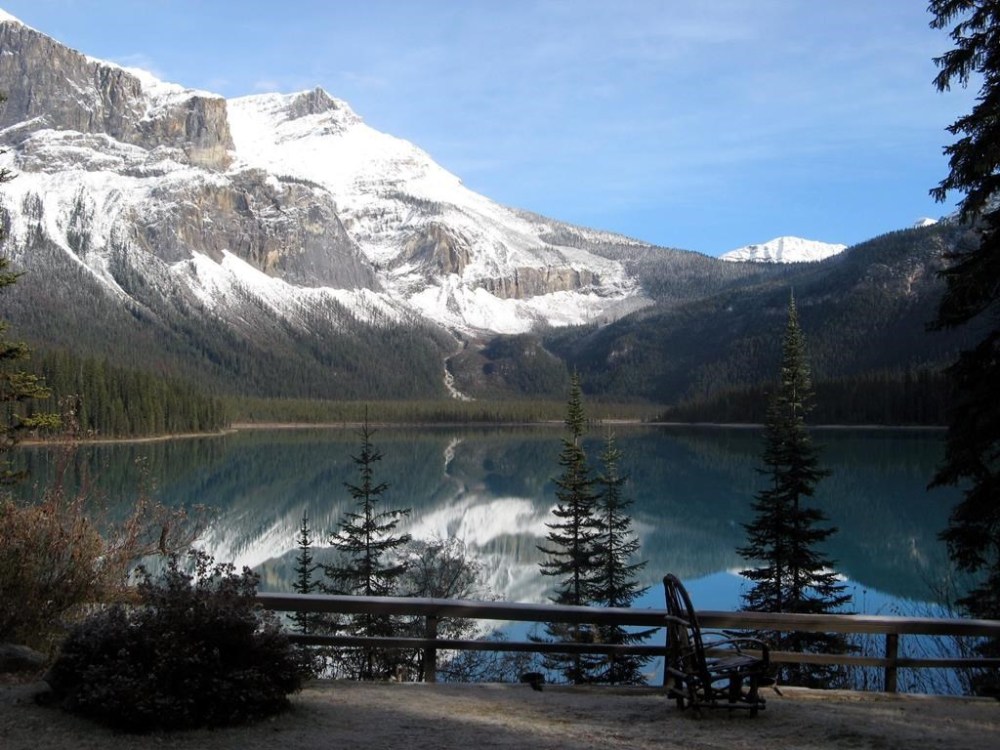
The lakes, creeks and tributaries in eastern British Columbia will be closed until at least March next year in response to the deadly whirling disease parasite found in fish.
At the same time, non-motorized watercraft from outside park boundaries will not be allowed into Waterton Lakes National Park in southern Alberta starting April 1, to protect against both whirling disease and invasive zebra and quagga mussels.
Jeanette Goulet, with the aquatic invasive species program for mountain national parks, said Tuesday that boats are the main way species are transferred between bodies of water.
“They can pick up things like mud, sand and sediments, plant fragments,” she said.
“And if their equipment is not cleaned of all of that, drained of any standing water, and dried for a certain amount of time, then that poses a big risk of transferring aquatic organisms … between water bodies.”
British Columbia’s first case of whirling disease was detected in Emerald Lake last year and was later found in Kicking Horse River, Wapta Lake, Finn Creek, Monarch Creek and the confluence of Emerald River and the Kicking Horse River.
Access was first restricted for five months last October, and François Masse, Parks Canada’s superintendent for Lake Louise, Yoho and Kootenay, said extending the restrictions another year will help protect fish species including several types of trout and Kokanee.
Goulet said staff will be monitoring the parks and anyone found breaking the rules could face a fine of up to $25,000.
There’s no treatment specifically for whirling disease, Goulet said, and removing the diseased fish from the water system is not feasible.
She said officials are gathering more information before deciding what’s next.
“Other jurisdictions have either decided to let the infection play out and see if a natural resistance does build up in the fish, or, in some places where they’ve seen population decline in the States, they’ve actually restocked with trout that have a resistance that have been bred in hatcheries,” she said.
“I don’t know if we would ever go that route in parks.”
Locke Marshall, the superintendent for Waterton Lakes National Park, said along with the ban on non-motorized watercraft from outside park boundaries, fishing for all species will no longer be permitted in flowing waters in the park, but will be allowed under current regulations in park lakes.
He said invasive zebra and quagga mussels that are present in other Canadian and U.S. jurisdictions pose a threat to Waterton Lakes and downstream infrastructure across southern Alberta.
He said if infestations start, they can cost millions to control.
Marshall said a mandatory inspection station for non-motorized boats has been operating since 2021 but only 56 per cent of watercraft users participated last year.
“The risk of aquatic invasive species spreading is too high to continue with this previous approach,” he said.
This report by The Canadian Press was first published March 19, 2024.