
What’s in Canada’s new ‘Our North, Strong and Free’ defence policy
Advertisement
Read this article for free:
or
Already have an account? Log in here »
We need your support!
Local journalism needs your support!
As we navigate through unprecedented times, our journalists are working harder than ever to bring you the latest local updates to keep you safe and informed.
Now, more than ever, we need your support.
Starting at $15.99 plus taxes every four weeks you can access your Brandon Sun online and full access to all content as it appears on our website.
Subscribe Nowor call circulation directly at (204) 727-0527.
Your pledge helps to ensure we provide the news that matters most to your community!
To continue reading, please subscribe:
Add Brandon Sun access to your Free Press subscription for only an additional
$1 for the first 4 weeks*
- Enjoy unlimited reading on brandonsun.com
- Read the Brandon Sun E-Edition, our digital replica newspaper
*Your next Free Press subscription payment will increase by $1.00 and you will be charged $20.95 plus GST for four weeks. After four weeks, your payment will increase to $24.95 plus GST every four weeks.
Read unlimited articles for free today:
or
Already have an account? Log in here »
Hey there, time traveller!
This article was published 08/04/2024 (762 days ago), so information in it may no longer be current.
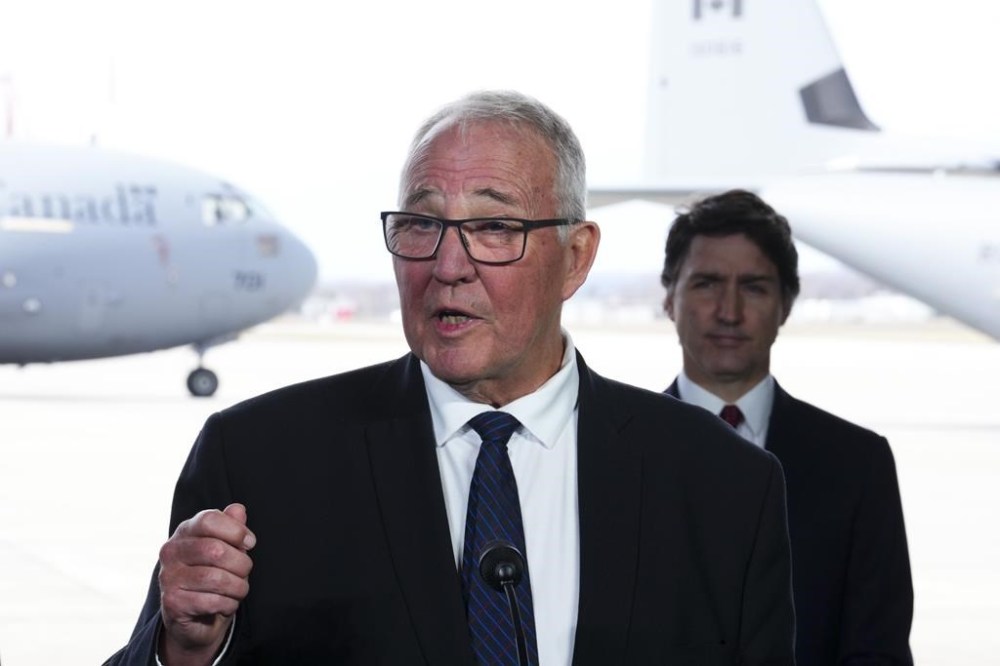
OTTAWA – Canada’s military is set to take a bigger role in the North over the next two decades as climate change and increasingly aggressive foes threaten Arctic sovereignty.
In all, the “Our North, Strong and Free” defence policy will allocate another $73 billion over the next 20 years.
Here are some of the details of how that money will be spent:
$9.5 billion to ramp up production of new artillery ammunition in Canada and buy up rounds for our own stockpile.
$18.4 billion for new tactical helicopters to replace the CH-146 Griffon fleet.
$2.7 billion to purchase long-range missiles for the Army.
$1.4 billion for specialized maritime sensors that can detect missiles, underwater systems, ships and submarines.
$307 million on airborne early warning aircraft.
$2.8 billion for a new Canadian Armed Forces Cyber Command.
$5.5 billion to buy a comprehensive worldwide satellite communication capability that ensures adversaries can’t jam or disrupt communications.
$9 billion for critical updates to existing equipment over the next 20 years.
$9.9 billion to extend the life of the Halifax-class frigates and at-sea replenishment capabilities.
The government is also committing to “explore options” for several new capabilities, including:
— Ground-based air defence systems to protect against drones, missiles and artillery.
— Long-range air and sea missiles.
— Upgraded or new battle tanks and light armoured vehicles.
— Submarines, which will be conventionally powered and capable of performing under the ice.
— Surveillance and strike drones, along with counter-drone capabilities.
— All-terrain vehicles that are adapted to the ice, snow and tundra.
— Ways to enable the new Arctic and offshore patrol ships to operate helicopters at sea.
This report by The Canadian Press was first published April 8, 2024.