
Critic’s Notebook: ‘Civil War’ and the elusiveness of the of-the-moment movie
Advertisement
Read this article for free:
or
Already have an account? Log in here »
We need your support!
Local journalism needs your support!
As we navigate through unprecedented times, our journalists are working harder than ever to bring you the latest local updates to keep you safe and informed.
Now, more than ever, we need your support.
Starting at $15.99 plus taxes every four weeks you can access your Brandon Sun online and full access to all content as it appears on our website.
Subscribe Nowor call circulation directly at (204) 727-0527.
Your pledge helps to ensure we provide the news that matters most to your community!
To continue reading, please subscribe:
Add Brandon Sun access to your Free Press subscription for only an additional
$1 for the first 4 weeks*
- Enjoy unlimited reading on brandonsun.com
- Read the Brandon Sun E-Edition, our digital replica newspaper
*Your next Free Press subscription payment will increase by $1.00 and you will be charged $20.95 plus GST for four weeks. After four weeks, your payment will increase to $24.95 plus GST every four weeks.
Read unlimited articles for free today:
or
Already have an account? Log in here »
Hey there, time traveller!
This article was published 18/04/2024 (921 days ago), so information in it may no longer be current.
NEW YORK (AP) — The movies are good at resurrecting the past and imagining the future, but pinning down the present can be tricky. Movies take a long time to make. Once you’ve gone from idea to script to production to edit and, finally, to audiences, several years might have passed.
Take “Civil War,” Alex Garland’s seemingly very of-the-moment, election-year release that led the box office over last weekend. Garland wrote it in 2020 as the pandemic was unfolding and a presidential election was approaching. “Civil War” arrived in theaters four years later, loaded with the anxieties of societal breakdown and concern for the endgame to our current political extremism.
But it also very consciously stepped away from the bitter partisanship of today. “Civil War” sparked a lot of discussion by pairing California and Texas together in battle, but that’s far from the only gesture Garland made to avoid channeling the current, highly charged fissures of American society.
The movie, perhaps out of fear of being too contemporary, is set in a near-future dystopia. Scant mention is made of race, income inequality or climate change. It has connective tissue with many current issues, particularly the plight of journalists. But it’s telling that even a provocative movie that imagines America in all-out warfare is timid about today.
Yet even if “Civil War” was bracingly current, would that have been appropriate in an election year? More importantly, would we even want to see it?
With many exceptions, the movie year in multiplexes can seem forever toggling between the period dramas of Oscar season and the sequels of summer, a seemingly willful dance to forever avoid the here and now. To a large degree, Hollywood runs on intellectual property, which, by its definition, is old. That didn’t stop “Barbie” from being highly relevant 64 years after the doll’s creation, or a 70-year-old Godzilla from showing some new moves, or 62-year-old Spider-Man proving surprisingly adept at reflecting our chaotic digital lives.
But finding movies free of decades-old baggage or loads of CGI that masks the real world can take some effort. That dearth has made a pair of spring releases — Radu Jude’s “Do Not Expect Too Much From the End of the World” and Bertrand Bonello’s “The Beast” — all the more thrilling for their eagerness to confront our present reality.
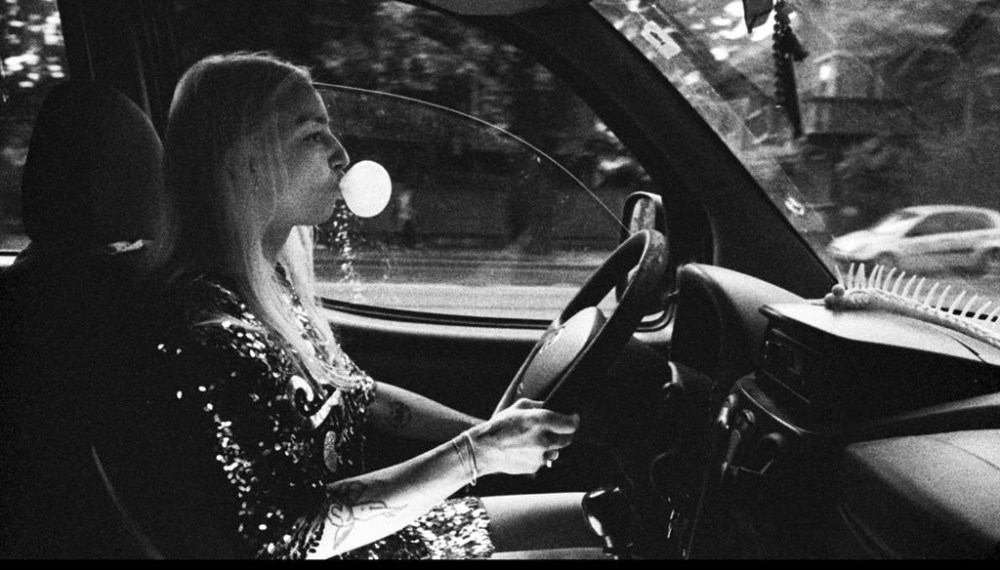
“Do Not Expect Too Much From the End of the World,” the latest from the 47-year-old Romanian writer and director Jude, begins with an iPhone alarm clock going off. On the disheveled nightstand of Angela Răducanu (Ilinca Manolache) is a wine glass, paperback Proust and a clock with no hands, beneath which it reads “It’s later than you think.”
Angela’s life is a discombobulated swirl of GPS-navigated traffic, boorish men and work errands. Everything from the war in Ukraine to gun violence to Pornhub is filtered into her daily experience while she drives to appointments to make workplace-safety videos for a production company.
Angela occasionally boils over, though she mostly vents through TikTok, spouting misogynist incel rants with a filter that cloaks her identity. The persona is modeled after the online influencer Andrew Tate, who is charged in Bucharest with human trafficking, rape and forming a criminal gang to sexually exploit women. He’s denied the allegations.
Interspersed with Angela’s story are excerpts from Lucian Bratu’s 1981 film “Angela Goes On.” That Angela (played by Dorina Lazăr) spends her days driving, too, as a taxi driver, and the juxtaposition between the two Angelas invites a comparison between that era and now. Today, filming in a harsh monochrome, doesn’t come off looking so good — even next to the communist Romania of the 1981 film.
Bonello’s “The Beast,” which expands this Friday in theaters, also uses separate timelines to illuminate present reality while pondering if we aren’t just doomed to repeat the past.
The movie, inspired by the Henry James novella “The Beast in the Jungle,” follows two lovers — Gabrielle (Léa Seydoux) and Louis (George MacKay) —through three time periods: 1910 Paris, 2014 Los Angeles and 2044 Paris.
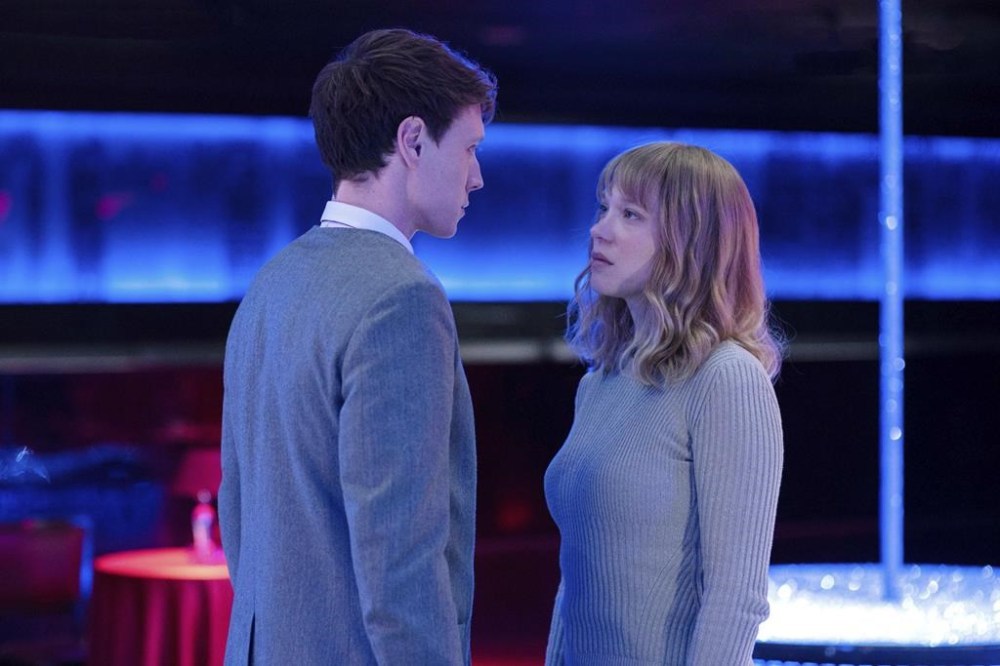
In the first chapter, Gabrielle and Louis are brought together — not for the first time, Louis reminds her — in belle époque Paris just before the Great Flood of 1910. Their connection is palpable but the encounter ends in tragedy, in an underwater sequence of haunting power in the doll factory of Gabrielle’s husband.
The switch, then, from costume drama to more-or-less contemporary Los Angeles is jarring. But our characters are still some distant versions of their prior selves. Gabrielle, previously a pianist, is now an actor. Louis is a misogynistic vlogger whose incel delusions — along with some strange force drawing them back together — bring him again into Gabrielle’s orbit.
The echoes of their past lives are even more acute in 2044, by which time artificial intelligence has spread into all corners of life and Gabrielle is considering undergoing a procedure to “purify” her DNA. She’s told she won’t lose her emotions but will feel more “serenely.” The bookends of past and present in “The Beast” put dehumanization — from doll-making to A.I. — in disquieting context.
It’s not a coincidence that both “The Beast” and “Do Not Expect Too Much From the End of the Earth” wrestle with incel culture. To do so may be a necessary ingredient for making sense of our present reality. Sean Price Williams’ “The Sweet East,” a scuzzy, vital picaresque from last year, glibly but perceptively surveyed a ridiculous America of worlds-apart subcultures, conspiracy-addled shooters and bookish white supremacists. With a cast including Simon Rex, Jeremy O. Harris, Ayo Edebiri and Jacob Elordi, but a central heroine in Lillian (Talia Ryder), “The Sweet East” played like an “Alice in Wonderland” for now – an absurd odyssey for absurd times.
None of these films — “The Beast,” “Do Not Expect Too Much From the End of the Earth,” “The Sweet East” — are perfect, or even trying to be. But, unlike “Civil War,” they aren’t dodging anything. The present may be messy and muddled but these films, in very distinct and outlandish ways, are at least trying to pin it down.
___
Follow AP Film Writer Jake Coyle at: http://twitter.com/jakecoyleAP