
‘Invite grief in for tea,’ says former Broncos coach
Advertisement
Read this article for free:
or
Already have an account? Log in here »
We need your support!
Local journalism needs your support!
As we navigate through unprecedented times, our journalists are working harder than ever to bring you the latest local updates to keep you safe and informed.
Now, more than ever, we need your support.
Starting at $15.99 plus taxes every four weeks you can access your Brandon Sun online and full access to all content as it appears on our website.
Subscribe Nowor call circulation directly at (204) 727-0527.
Your pledge helps to ensure we provide the news that matters most to your community!
To continue reading, please subscribe:
Add Brandon Sun access to your Free Press subscription for only an additional
$1 for the first 4 weeks*
- Enjoy unlimited reading on brandonsun.com
- Read the Brandon Sun E-Edition, our digital replica newspaper
*Your next Free Press subscription payment will increase by $1.00 and you will be charged $20.95 plus GST for four weeks. After four weeks, your payment will increase to $24.95 plus GST every four weeks.
Read unlimited articles for free today:
or
Already have an account? Log in here »
Hey there, time traveller!
This article was published 20/04/2024 (892 days ago), so information in it may no longer be current.
When Chris Beaudry shares his story about the 2018 crash that killed 16 Humboldt Broncos junior hockey players and team staff, he said it not only gives his life power, but he hopes it sparks healing in other people’s lives as well.
Beaudry was the Broncos assistant coach and travelling in his own vehicle when he arrived at the scene about 10 minutes after the bus collided with a semi-trailer truck on a rural road in Saskatchewan.
Hours later, he was asked to help identify some of his players at the morgue.
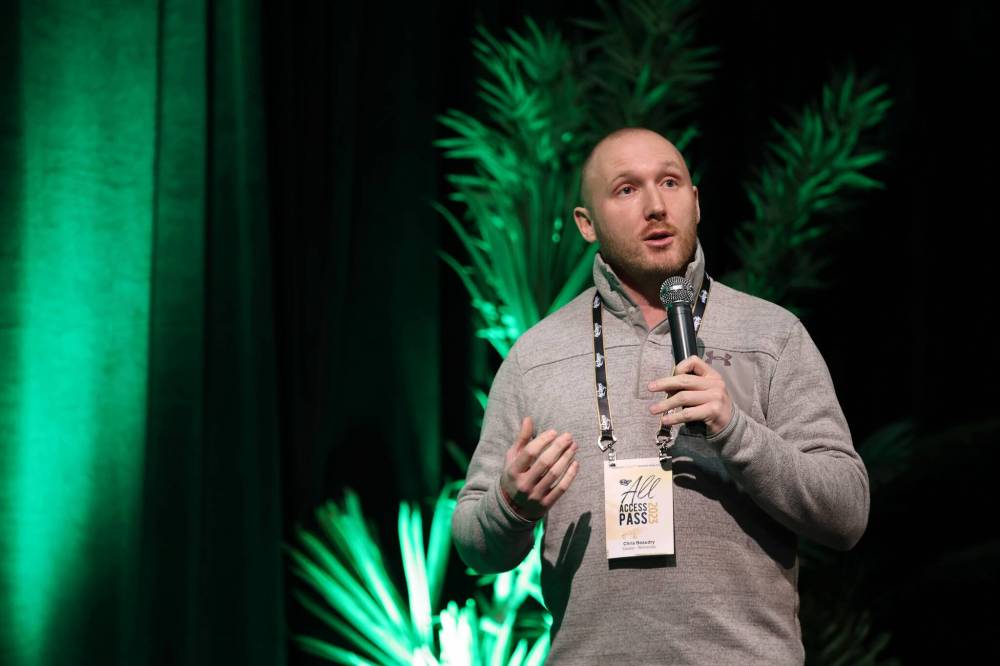
That unprocessed pain, Beaudry said, was locked inside of him until he realized he had to open up and share.
“And that first time we share, you know what? I’m not going to say it’s not painful, because it is. And the second time, it’s still painful, but it’s a heck of a lot easier. And it only gets easier and easier, the more we share.
“So that’s why I’m coming, that’s why I’m sharing my story, so that when the light shines on that dark area inside of you, and you go, ‘Oh me too,’ hopefully that sparks some of your inner strength to just go and tell one other person and say, ‘I’ve been through some pain, I’ve suffered a little,’” Beaudry said.
Beaudry will be giving a free public presentation at Brandon University on Wednesday at 7 p.m. at the Lorne Watson Recital Hall. His visit to the BU campus kicks off the Mental Health on the Prairies conference, April 24-26.
The day before Beaudry’s presentation at BU, he is scheduled to speak at Hamiota Collegiate in the afternoon and at Carberry Collegiate at 7 p.m.
Beaudry takes his audiences through his childhood, which he said was “a difficult one” because his mother was an addict and abusive, which led to his own battle with alcohol.
Four years before the bus crash, he said he had quit drinking, was going to Alcoholics Anonymous and “thought he had it all figured out,” but the crash erased all the tools Beaudry had learned to heal his mental health.
“I like this analogy — and I’ll use grief as the key word, but you can use trauma or pain. When grief comes knocking at the door, if we don’t invite grief in for tea, it’s not the same grief that shows up again. It’s another one and another one and another one. And soon enough, we look outside and instead of there just being one visitor, there’s 500 visitors,” Beaudry said.
“And that’s when the big grief in life shows up, and that’s what happened to me with Humboldt. I avoided it enough until something large enough happened, and I had to grieve everything that I previously hadn’t,” he said.
“So now when that knock comes, I put the kettle on and I invite grief in for tea. Because it’s so much easier to deal with one thing than 100, 500 or 1,000.”
In the years following the crash, Beaudry decided to take courses and enrol in programs on compassion, grief and psychology, studying under Dr. Gabor Maté, a Canadian physician and addiction expert who has written about trauma, addiction, stress and childhood development.
Beaudry says he doesn’t have the tools to fix anyone but himself and added, “Everything we need to move through pain lies inside of us.”
The purest emotions are sadness and anger, Beaudry said.
“Sadness is such a cleaning and cleansing feeling and sensation — it lets go of all these tight areas we’re holding on to. And anger in its purest form — when we get in touch with it — is actually clarity. It tells us what we’re OK with and what we’re not OK with,” Beaudry said.
Avoiding emotions prevents healing, Beaudry said, adding that he was annoyed shortly after the crash when reports in the media and people around him said, “Hockey is healing, we have to get back to hockey.” It was a phrase, he said, that was a distraction from what was actually happening inside.
“I want people to remember what it felt like to have a tender heart. Just look at how you acted. Not how you acted towards the people in Humboldt, that’s not what I mean,” Beaudry said. “But when you had an open and tender heart like that, how did you treat your family? How do you treat your friends and your neighbours, your kids, your dog?
“I would bet the farm that it was in a way that was much more soft, much more caring and much more compassionate than how we normally do when we’re all fired up about taxes and interest and bills coming due … Because those bills and things were all still there a day and a week after the crash. But we were in touch with something else inside of us, something a lot more caring,” he said.
Beaudry is one of three keynote speakers for this year’s conference at BU, which people can attend in person or online.
Sera Davidow is scheduled to present on Thursday at 3:30 p.m. She is a filmmaker, author, activist and director of a peer-to-peer support and training organization who will talk about mental health through a harm reduction lens.
Dr. Jan DeFehr from University of Winnipeg will focus on the research and community practice related to breaking down psychiatric divisions.
For more information on the Mental Health on the Prairies conference, visit https://www.brandonu.ca/mhp/
» mmcdougall@brandonsun.com
» X: @enviromichele