
Doing more to help first responders
Advertisement
Read this article for free:
or
Already have an account? Log in here »
We need your support!
Local journalism needs your support!
As we navigate through unprecedented times, our journalists are working harder than ever to bring you the latest local updates to keep you safe and informed.
Now, more than ever, we need your support.
Starting at $15.99 plus taxes every four weeks you can access your Brandon Sun online and full access to all content as it appears on our website.
Subscribe Nowor call circulation directly at (204) 727-0527.
Your pledge helps to ensure we provide the news that matters most to your community!
To continue reading, please subscribe:
Add Brandon Sun access to your Free Press subscription for only an additional
$1 for the first 4 weeks*
*Your next subscription payment will increase by $1.00 and you will be charged $20.00 plus GST for four weeks. After four weeks, your payment will increase to $24.00 plus GST every four weeks.
Read unlimited articles for free today:
or
Already have an account? Log in here »
Hey there, time traveller!
This article was published 01/05/2024 (733 days ago), so information in it may no longer be current.
Last June, members of our newsroom had a glimpse of the horrors that so many first responders in this province face as part of their duties in our society.
We refer, of course, to the collision between a bus carrying several Dauphin seniors and an eastbound semi-truck at the intersection of Highway 5 and the Trans-Canada Highway at Carberry that claimed the lives of 17 people and injured eight others.
We witnessed emergency crews, including paramedics and investigators, begin the difficult and disturbing task of documenting the collision scene and the deceased.
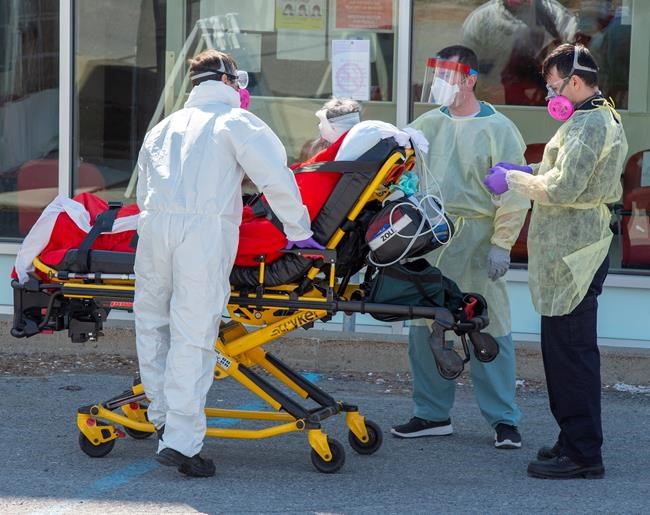
And while this particular collision was extreme in nature, our first responders handle many such difficult scenes, often beyond the view or understanding of the public.
The stress upon those working at the site of the collision was obvious. We may have watched as outsiders, but anyone who was on scene that fateful day could not have walked away unmoved or unaffected. And we were only on the periphery.
While we as members of the public may have felt some angst at what we see on the outside looking in, the fallout for emergency services workers can be far more detrimental, even if there aren’t obvious physical injuries. The story of Winnipeg firefighter Preston Heinbigner is just such an unfortunate example.
Last month, Mr. Heinbigner died at the age of 40. Friends and family have said he had struggled with the trauma he had seen while responding to calls on the job, and took his own life.
Heinbigner, sadly, is far from alone.
For all first responders, there are risks. And not just the ordinary risks of dangerous work environments and dangerous situations — there is also the very real toll that witnessing others’ pain and suffering can cause. Officially, it gets the long diagnostic name of post-traumatic stress disorder (PTSD).
It’s a complex matter of experiencing too much and being unable to process it all safely. Damage can be cumulative, or the result of specific experiences. There are elements of PTSD that can be almost surreal.
While you’re asleep — if you sleep — startlingly realistic dreams that take you back deep into past horrors, or invent completely new ones out of fragments of other memories. Dreams that repeat themselves, day after day, and shock you awake every single time.
While you’re awake, feelings of anger, failure and betrayal. Maybe you start to preplan every aspect of your daily life, just so that you’ll be ready if something happens.
Loneliness and anger, as you watch while the world goes on around you, a world blissfully ignorant of what you’ve seen and felt and still live with. That you will live with for months, for years, for always.
Sometimes, there’s a strange addiction to the adrenalin of what you do, so much so that you don’t want to admit that you’re having issues because your employer might pull you off the job.
It’s a paradox that you can still love a job that’s actually trying to kill you.
For years, first responders were told to just tough it out. Break an arm, and the cast you’ll end up wearing will tell everyone you’re injured.
Break your brain, and the injury can be virtually invisible to the people around you. You may be depressed — you may be overly quiet. You may turn to drugs or alcohol to try to dull the intruding noises down. You may not be able to cope with even the simplest complications of family life.
But the symptoms can be less than obvious. You may just seem withdrawn, or lean into routine as if it’s critically important — and to you, it is.
It is a truly kaleidoscopic hell. There isn’t a magic solution. There are treatments, with different individual levels of success.
Counselling, of course, cognitive behavioural therapy, cognitive processing therapy, eye movement desensitization therapy (known as EMDR) and some drug therapies as well.
But you have to get help to first responders when they need it, and they can be their own worst enemies.
The provincial government has taken the step of announcing it would hire three counsellors to work with police, firefighters and paramedics, putting forward the idea of regular mental health checks with first responders.
That is a good idea: normalizing regular contact with mental health professionals could take away some of the stigma of admitting to having problems, and building mental health protections into the job will help normalize the fact that no one can simply tough it out.
But it is only a start. We ask so much from first responders that we have to do a better job of protecting them.
Preston Heinbigner has reminded us that we’re not doing enough.
» Winnipeg Free Press and The Brandon Sun