
Social media’s reach — and its damage
Advertisement
Read this article for free:
or
Already have an account? Log in here »
We need your support!
Local journalism needs your support!
As we navigate through unprecedented times, our journalists are working harder than ever to bring you the latest local updates to keep you safe and informed.
Now, more than ever, we need your support.
Starting at $15.99 plus taxes every four weeks you can access your Brandon Sun online and full access to all content as it appears on our website.
Subscribe Nowor call circulation directly at (204) 727-0527.
Your pledge helps to ensure we provide the news that matters most to your community!
To continue reading, please subscribe:
Add Brandon Sun access to your Free Press subscription for only an additional
$1 for the first 4 weeks*
- Enjoy unlimited reading on brandonsun.com
- Read the Brandon Sun E-Edition, our digital replica newspaper
*Your next Free Press subscription payment will increase by $1.00 and you will be charged $20.95 plus GST for four weeks. After four weeks, your payment will increase to $24.95 plus GST every four weeks.
Read unlimited articles for free today:
or
Already have an account? Log in here »
Hey there, time traveller!
This article was published 06/05/2024 (903 days ago), so information in it may no longer be current.
There’s nothing particularly groundbreaking about a new United Nations report outlining social media’s negative impacts on girls and young women. But while it doesn’t tell us anything we didn’t already know, it does serve as a useful reminder that vigilance is the key to our digital-age society’s well-being.
In its 2024 Global Education Monitoring report titled, “Technology on her terms,” the United Nations Educational, Scientific and Cultural Organization (UNESCO) states in no uncertain terms that constant online exposure to negative gender-focused content and body-related imagery poses a risk to girls’ mental health.
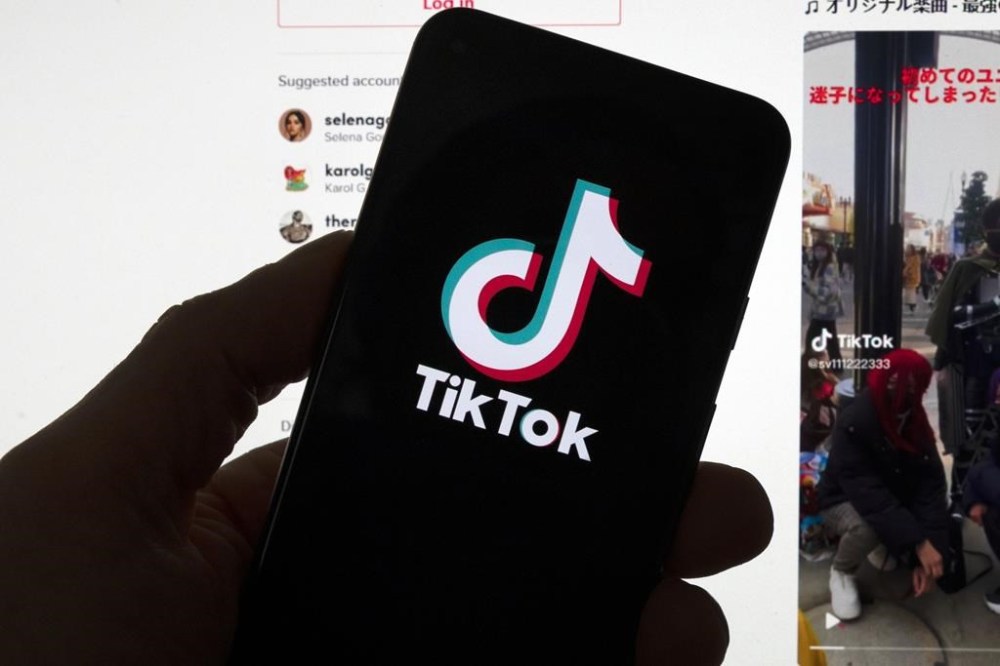
And such harms can have a cascading effect, as social media websites (whose designers’ primary profit-driven intention is to cultivate as many addicted users as possible) create a perfect online storm in which algorithm-delivered content undermines self-esteem and encourages obsessive usage that can ultimately reduce attention spans and distract from academics and extracurricular activities.
“That also has … negative impacts on learning, and that is where we’re really concerned,” said Manos Antoninis, director of UNESCO’s ongoing GEM report.
It’s a very concerning acceleration of a societal trend that has been in motion since long before the advent of social media. Since the 1960s at least, proponents of gender equality have argued, with merit, that popular culture has routinely barraged girls with images and messages that leave them feeling they’re not pretty enough, not thin enough and not smart enough to be suited to high-level careers, particularly in the so-called STEM (science, technology, engineering and mathematics) fields.
In the days before the internet, such corrosive misinformation was mostly found in print media — particularly glossy fashion-focused magazines — and television, although its relatively limited reach could be counteracted by progressive education and mentorship.
In the current societal context, however — when smartphones are ubiquitous and the siren call of social media platforms is never more than a finger-swipe away — any realistic hope of shielding young people from images and (mis)information that can pervert their world view and devastate their feelings of self-worth seems to have been lost.
As Toronto-based child/youth psychiatrist Dr. Rachel Mitchell recently told the CBC, it’s the relentless nature of the digital-information assault that puts young social media users at profound risk.
“(In the past) you wouldn’t always have a magazine in your back pocket to look at every spare moment … which is essentially what’s happening (with smartphones). So it’s the volume and the intensity of the information. The vulnerability really hasn’t changed; (it) was already there in society, and it’s just magnified that much more.”
Add to all of this the fact the digital realm’s power was multiplied by the pandemic, as interpersonal contact was limited and online interaction skyrocketed, and then factor in the additional impacts of still-nascent but undeniably powerful artificial intelligence, and one is left wondering if the harms being inflicted by social media’s most malevolent forces have risen to the level of an unsolvable problem.
So, what’s to be done?
The UNESCO report recommends smarter regulation of digital platforms, but individual nations have so far been largely unsuccessful in imposing rules on social media giants whose reach, ambitions and power are global.
The report’s other recommendation is a greater investment in education — a goal that might be attainable if societies, governments, communities and families are willing to commit the necessary combination of time and resources.
With smartphones and social media — along with the infinite influences they can algorithmically impose — available to almost everyone at every minute of the day, the familiar phrase “left to our own devices” has never seemed more ominous.