
Zoning changes to be aired at public hearing
Advertisement
Read this article for free:
or
Already have an account? Log in here »
We need your support!
Local journalism needs your support!
As we navigate through unprecedented times, our journalists are working harder than ever to bring you the latest local updates to keep you safe and informed.
Now, more than ever, we need your support.
Starting at $15.99 plus taxes every four weeks you can access your Brandon Sun online and full access to all content as it appears on our website.
Subscribe Nowor call circulation directly at (204) 727-0527.
Your pledge helps to ensure we provide the news that matters most to your community!
To continue reading, please subscribe:
Add Brandon Sun access to your Free Press subscription for only an additional
$1 for the first 4 weeks*
- Enjoy unlimited reading on brandonsun.com
- Read the Brandon Sun E-Edition, our digital replica newspaper
*Your next Free Press subscription payment will increase by $1.00 and you will be charged $20.95 plus GST for four weeks. After four weeks, your payment will increase to $24.95 plus GST every four weeks.
Read unlimited articles for free today:
or
Already have an account? Log in here »
Hey there, time traveller!
This article was published 11/05/2024 (742 days ago), so information in it may no longer be current.
Brandon residents will have a chance to weigh in on three housing-related changes being proposed by city administration at a public hearing in front of the Planning Commission on Thursday.
While Brandon’s application to the federal Housing Accelerator Fund includes seven actions it is taking to boost housing supply, the public hearing is focusing on proposed changes to zoning, parking requirements and density bonuses.
Sonikile Tembo, the city’s principal planner, told the Sun on Friday that the current regulations and bylaws don’t reflect the Brandon of today.
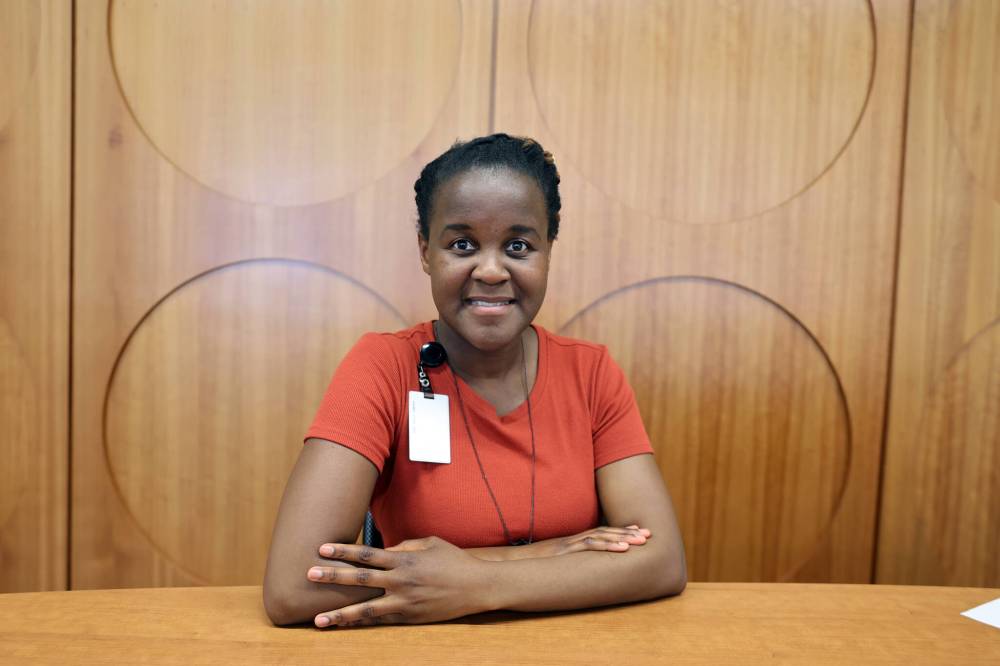
“We’re seeing a shift in demographics and needs in our city that we’re not meeting,” Tembo said.
“For example, over 50 per cent of our residentially zoned land only permit a single-detached house. Last year, we saw 19 single detached houses and I think 140 multi-units built. That just shows you that there’s something missing and we have an opportunity here to correct this.”
Though Brandon is moving forward with these changes now to access the federal funding, Tembo said there have been discussions on some of these items for a couple of years now. The conversations going on in Brandon, she said, are happening in municipalities around the country.
She said the planning commission is being presented with three changes to the way the city zones residential land and will recommend one of them for city council’s final approval.
The one she said would likely best allow Brandon to meet the targets set out for it in its Housing Accelerator Fund agreement would involve combining the currently existing residential single-detached (RSD) zone and the residential low-density (RLD) zones into a single new low-density housing zone, with the medium- and high-density zones remaining in place.
Currently, the RSD zone only allows for the construction of a single-detached home on a property and the RLD zone only permits the construction of multiplex housing on corner lots and duplexes on 50-foot lots.
The new zone would allow for fourplexes to be built on a 50-foot lot and triplexes on a 40-foot lot without requiring a public process to obtain a variance or conditional use permit.
“The idea is to provide more options,” Tembo said. “There’s a misconception that is going around the community, I think, where we’re trying to eliminate single-detached housing. It’s impossible, we’re not going to do that nor do we desire to do that. The market will continue to dictate what housing is needed.”
The reduction of red tape and public processes needed to approve new housing is one of the requirements set out by the accelerator fund.
Required setbacks would still be in place, and administration is proposing that the maximum amount of space a building can take up on a property be reduced from 60 per cent to 45.
The second proposal would see the RLD and RSD zones remain intact but modified to be more permissive. The final proposal would just see the RLD zone modified to allow for fourplexes to be built on 50-foot lots.
When it comes to parking requirements, Tembo said the ideal scenario would be for their complete elimination so that more space can be devoted to building housing.
However, administration is only recommending that the current requirement be reduced. For a single-detached home or duplex, only one parking space is required per unit.
Anything larger currently requires 1.5 spaces per unit. The proposal is to reduce that to one space per unit and leaving it up to the discretion of a developer as to whether more should be built.
“They’re the experts in knowing what the market calls for and they would know how much parking is required for a particular use in a particular area,” Tembo said.
The reason they’re not recommending the complete removal of minimums is because of concern from the public that this would lead to developers not building any parking at all, however unlikely that may be.
“Over and over again, we see developments that simply won’t move forward because of parking,” Tembo said, adding that one of the reasons the Brandon YMCA’s recent expansion happened is because downtown has no parking requirements.
“We have these developers from out of town that will come in with these fantastic ideas, you slap on the 1.5 parking requirement and it seals up so much of the developable land and you’re left with something just sort of mediocre.”
Another proposed scenario would only see the parking requirements for supportive and affordable housing be reduced.
At an open house about Brandon’s in-development city plan earlier this year, some residents expressed concern that a reduction in parking requirements would lead to road congestion from more on-street parking.
Tembo said the lack of a parking requirement or a reduction doesn’t mean there won’t be parking. With the elements of the city plan aimed at improving transportation options, it could help reduce the number of cars on streets.
For the density bonuses, developers would be allowed to build bigger developments if they include one-bedroom or affordable units.
The size of the addition depends on the percentage of units that meet the criteria. At the low end, having 10 per cent or fewer units being one-bedroom or affordable would allow for a five per cent bigger building.
If 91 to 100 per cent of the building fits the criteria, that bonus rises to 50 per cent.
This Wednesday, Tembo said she hopes to paint a picture for residents as to why the changes are being proposed and what outcomes will come from them before they come to the microphone to speak.
So far, she said parking is the biggest concern for residents that the city has heard about, with others concerned that if the changes are approved it could mean fourplexes will be built everywhere.
On the latter point, she said with the high cost of construction, the construction of fourplex units will be gradual, but they will be able to be built in more locations.
No matter which proposals the Planning Commission recommends, Brandon City Council will have final say at a future meeting.
Doors for the meeting open at 6 p.m. with proceedings kicking off at 7 p.m.
First on the agenda is a conditional use application to allow special needs housing at 336 Sixth St., followed by the public hearing. Three hours have been allotted for the hearing.
More information on all elements of the city’s Housing Accelerator Fund initiatives, including those to be discussed next week, can be found online at brandon.ca/housing-accelerator-fund.
» cslark@brandonsun.com
» X: @ColinSlark