
More resources needed to keep our lakes healthy
Advertisement
Read this article for free:
or
Already have an account? Log in here »
We need your support!
Local journalism needs your support!
As we navigate through unprecedented times, our journalists are working harder than ever to bring you the latest local updates to keep you safe and informed.
Now, more than ever, we need your support.
Starting at $15.99 plus taxes every four weeks you can access your Brandon Sun online and full access to all content as it appears on our website.
Subscribe Nowor call circulation directly at (204) 727-0527.
Your pledge helps to ensure we provide the news that matters most to your community!
To continue reading, please subscribe:
Add Brandon Sun access to your Free Press subscription for only an additional
$1 for the first 4 weeks*
- Enjoy unlimited reading on brandonsun.com
- Read the Brandon Sun E-Edition, our digital replica newspaper
*Your next Free Press subscription payment will increase by $1.00 and you will be charged $20.95 plus GST for four weeks. After four weeks, your payment will increase to $24.95 plus GST every four weeks.
Read unlimited articles for free today:
or
Already have an account? Log in here »
Hey there, time traveller!
This article was published 16/05/2024 (863 days ago), so information in it may no longer be current.
“I think first and foremost, when it comes to zebra mussels, you want to talk prevention … Manitobans are going to enjoy summer, rightfully so. And so we’re going to have to ensure that we respond to this federal government announcement by putting in those resources … to ensure that there’s good support for some of these other summer destinations.”
— Manitoba Premier Wab Kinew
During his visit to Carberry last week Friday, Premier Wab Kinew was asked whether there was any chance that the province might follow the federal lead and close access to Manitoba lakes that — like Clear Lake in Riding Mountain National Park — might be in danger from zebra mussel infestations from migrating watercraft.
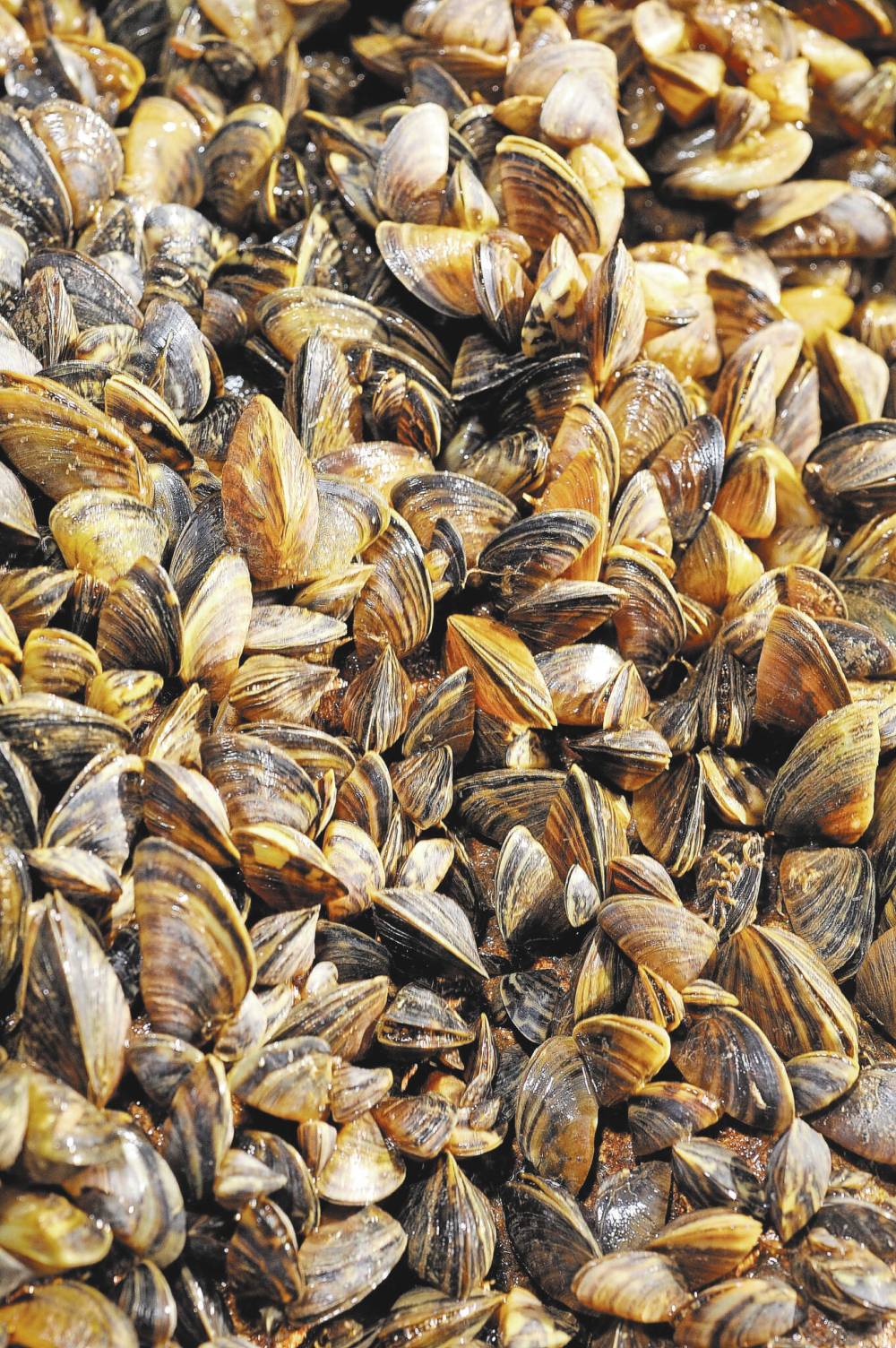
A rock is covered with zebra mussels, which originated in Russia and have spread across North America. If Manitoba's government wants to keep lakes open in the face of the threat this invasive species poses, it's going to need to provide more resources such as inspection and decontamination stations. (File)
Mr. Kinew’s answer was a definitive no, with the premier telling reporters he was disappointed with the actions of the federal government and their unilateral decision to ban boats, kayaks and other watercraft from Clear Lake for the summer.
Instead, he pointed to the fact that the province has earmarked an extra $500,000 toward the Aquatic Invasive Species (AIS) Program, “to more effectively prevent and slow the spread of AIS and increase watercraft inspection and decontamination stations,” as noted in the 2024 provincial budget.
While that is certainly an improvement, it’s but a drop in the bucket compared to what will be necessary to protect numerous Manitoba lakes and waterways that face potential contamination.
Last June, the former Progressive Conservative government added two new AIS inspection stations to the list of decontamination sites in the province, with one of these two opened in the Minnedosa/Neepawa region and the other in Ste. Rose due Lac. A third was to open the following July in Grand Rapids, complementing the existing inspection stations in Headingley, Selkirk, Eriksdale, The Pas and Wabowden.
But these stations are not necessarily cheap to operate or maintain. Staff need training, and there needs to be a concerted effort to keep them open over weekends, when the largest number of boaters and cabin owners take to the highways with their crafts in tow.
As the Sun reported a year ago, some bodies of water, such as Sandy Lake, located 96 kilometres northwest of Brandon, have inspection stations to check boats for zebra mussels and other species, but lack the capacity to properly clean them.
Current provincial regulations say boats must be treated thermally, using either heat or cold, to kill zebra mussels and other invasive species. Thermal treatments should also be used to decontaminate water-related equipment, such as life jackets. One provincially run decontamination station in western Manitoba simply isn’t enough to handle the need in our part of the province, and at present we don’t know how far that $500,000 will stretch, how many stations will open, or where they will be located.
It cannot be stated firmly enough — the danger from invasive species, particularly zebra mussels, is very real. Zebra mussels reproduce quickly and can impact a habitat’s food chain, clog water intake systems and damage watercraft. The introduction of this species into smaller bodies of water like Killarney Lake and Pelican Lake would be absolutely devastating. Not only would it essentially destroy the ecosystems of these lakes as the mussels crowd out other species, it would shut down any summer tourism that these communities currently enjoy.
No boater would want to take their craft out on a zebra mussel-infected lake for fear of having the species clog up their motors.
The federal ban at Clear Lake affects all personal watercraft, but there have been three exceptions: a Keeseekoowenin Ojibway First Nation vessel for cultural use, boats used by Parks Canada and the commercial tour boat the Martese. Beach toys, swimming and angling are still allowed.
While we understand the disappointment of business owners and cabin dwellers at Clear Lake — and sympathize as we enjoy boating and kayaking on the lake, too — we do not blame the federal government in the least for doing all it can to protect such a pristine and delicate ecosystem while officials ascertain whether the zebra mussels have already gained a foothold.
We also can understand Premier Kinew’s desire to appear receptive to the business interests of those who live around our provincial waterways, and to the political fallout that would come with further lake access bans to boats and other crafts in this province. But as a society, we have to be mindful that not everyone is as careful or thoughtful as they should be when it comes to cleaning and decontaminating their boats. And the damage done by one thoughtless act can be permanent.
If the NDP is resolute in standing by its decision to keep lakes open to the public, it will have to put more resources into preventive measures throughout the province where provincial roadways allow easy access to our lakes and watersheds, and spend more time educating the public why such measures are necessary.
» Matt Goerzen, editor