
Commission gives nod to zoning overhaul
Advertisement
Read this article for free:
or
Already have an account? Log in here »
We need your support!
Local journalism needs your support!
As we navigate through unprecedented times, our journalists are working harder than ever to bring you the latest local updates to keep you safe and informed.
Now, more than ever, we need your support.
Starting at $15.99 plus taxes every four weeks you can access your Brandon Sun online and full access to all content as it appears on our website.
Subscribe Nowor call circulation directly at (204) 727-0527.
Your pledge helps to ensure we provide the news that matters most to your community!
To continue reading, please subscribe:
Add Brandon Sun access to your Free Press subscription for only an additional
$1 for the first 4 weeks*
- Enjoy unlimited reading on brandonsun.com
- Read the Brandon Sun E-Edition, our digital replica newspaper
*Your next Free Press subscription payment will increase by $1.00 and you will be charged $20.95 plus GST for four weeks. After four weeks, your payment will increase to $24.95 plus GST every four weeks.
Read unlimited articles for free today:
or
Already have an account? Log in here »
Hey there, time traveller!
This article was published 16/05/2024 (846 days ago), so information in it may no longer be current.
Brandon’s Planning Commission voted unanimously in favour of approving proposed changes to residential zoning, parking minimums and density bonuses that are part of the city’s application to the Housing Accelerator Fund on Wednesday.
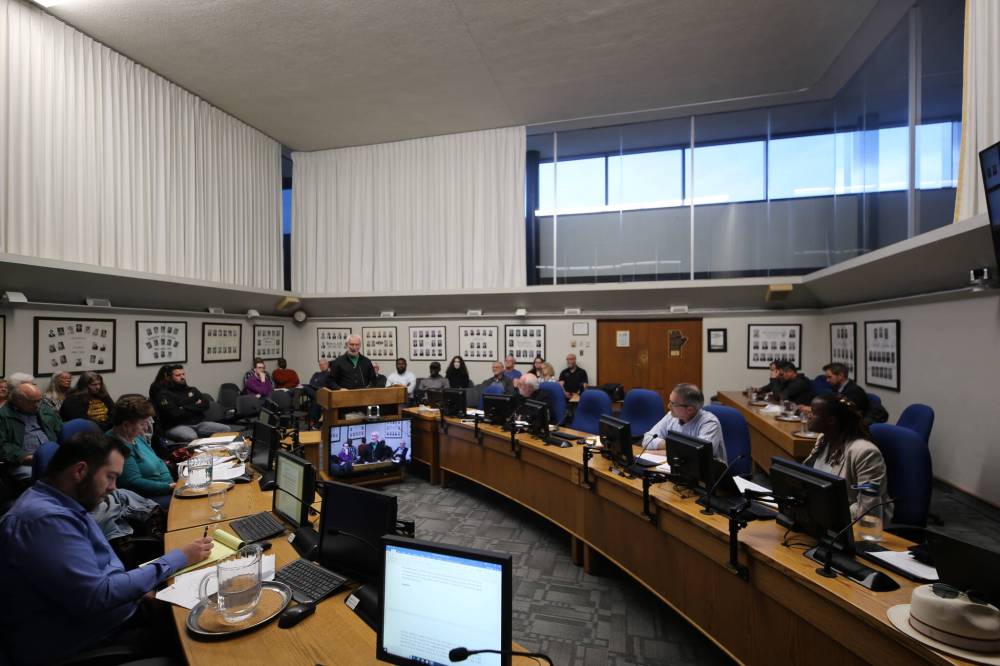
More than two dozen Brandon residents came to a public hearing on proposed changes on the second floor of Brandon City Hall, with most speakers in favour of the changes — though there were a few concerns over knock-on effects on infrastructure and parking.
Brandon has already received an unspecified amount of money from the program, with city staff saying they cannot reveal any details on funding or housing targets until the federal government officially announces Brandon’s participation in the program.
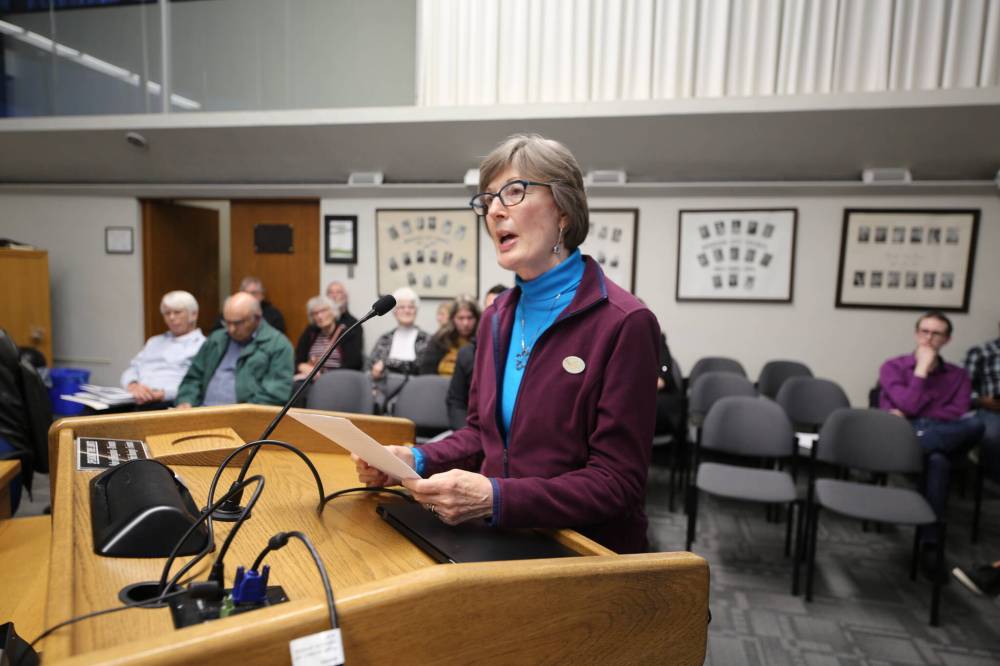
Quentin Robinson, who ran for the NDP in Brandon West in last year’s provincial election, spoke in favour of the changes, saying it seemed like a good way to address a crucial need for affordable housing.
“If we reject this bylaw, I think it will be due to a lack of imagination,” Robinson said, adding that he thinks some people have a wrong idea of what kind of people live in fourplexes.
Betty Kelly, who introduced herself as the chair of Knox United Church’s outreach committee, said she was speaking in favour of the changes on behalf of the congregation.
She said they appreciate the improvements the bylaws will make to the supply for affordable and infill housing. The more housing options that are available, she said, the less likely people will stay in housing that isn’t suitable to them.
On top of that, she said smaller housing units are needed for seniors who are looking to downsize from larger homes or move from rural communities into the city. That in turn leaves their previous homes open for those who need them.
Debby Dandy spoke in favour of the changes on behalf of Sustainable Brandon, expressing hope that the city would eventually adopt housing codes promoting the use of energy-efficient construction.
She said affordability doesn’t just go for the price of housing, but for heating and electricity as well.
“Everyone deserves a place to call home, and we believe these bylaws are a way to provide that,” she said.
James Epp, who introduced himself as a property owner, said he was in favour of the planning changes in spite of the Housing Accelerator Fund and the in-development new city plan.
He said he prefers markets to regulate themselves as much as reasonable, asking why the city hadn’t introduced these changes sooner and what other regulations the city could loosen.
For good or for bad, he said, people’s real estate decisions affect a disproportionate amount of their wealth and for that reason, these discussions must be treated carefully.
Epp asked what exactly the city is getting out of the Housing Accelerator Fund since the terms of the agreement and the amount of funding have yet to be revealed. He asked if it was possible to reveal those details before a final decision is made.
The planning department is proposing changes to the city’s zoning bylaw when it comes to how residential areas are zoned, how many parking spaces are required for new developments and establishing bonuses allowing developers to increase the size of their developments depending on how many affordable or one-bedroom units are included.
Sun columnist Deveryn Ross said he was in favour of the proposed changes to zoning and the reduction of parking minimums, but he questioned what the Planning Commission’s role was in this decision.
City planner Andrew Mok said under the provincial Planning Act, the commission must hold a public hearing on behalf of city council and make recommendations stemming from that hearing.
The Planning Commission was asked to choose between the different scenarios and make a recommendation to Brandon City Council, which will make a final decision at its June 2 meeting.
Ross said the materials made available to the public disproportionately included information on certain proposals and less on others, which might be a problem if city council feels differently than the planning department when making their decision.
Ultimately though, he said the changes promote fairness and that the planning department’s recommended changes would avoid a patchwork quilt of rules that some of the other options would have.
He also said he thought the proposed changes would prevent the creation of urban sprawl, but warned about unintended consequences from the changes like a lack of schools in areas where growth is heavier.
Ron Tompkins said that with the city having already received funding from the federal fund, he wondered if discussion was necessary, with it feeling like a foregone conclusion, though he was in favour of the zoning changes.
He raised concerns about the potential impacts on Manitoba Hydro’s infrastructure if some areas see a large increase in population as well as things like electric vehicle charging stations, and wondered if transition areas could be created instead of blanket changes to zoning.
Due to the increasing electrification of vehicles, Tompkins said he thought a reduction in parking minimums wasn’t a good idea as those vehicles will need charging stations. He also said he worried about increased on-street parking making things like snow removal more difficult.
Terry Pearce said he was worried about the proposed merger of the residential low-density and residential single-detached zones as he believes it would allow for the construction of smaller single-detached homes and the subdivision of those lots.
Steve McMillan of VBJ Developments said he was generally in favour of the proposed changes, though he preferred a less-sweeping change to residential zoning, especially if the city is planning to review zoning bylaws again next year.
However, he said he was fully supportive of the proposed changes to parking and would even be in favour of the total abolition of parking spot minimums in the future.
He also spoke in favour of revealing the terms of the housing fund agreement as it is unknown whether the housing targets being set for the city are attainable.
Leila Praznik said she had recently had to find a new place to live and felt the changes to zoning would make housing more accessible in Brandon. She also felt the changes would promote urban densification, which would in turn improve the viability of small neighbourhoods in Brandon.
Brandon’s principal planner, Sonikile Tembo, used a quote that Mayor Jeff Fawcett used at his state of the city address last month when she introduced the changes ahead of public comments — that it is more important to be good ancestors than good descendants.
In essence, she pitched the changes being proposed as a way to improve Brandon’s housing situation for future generations.
She said these changes were already being looked on as part of the development of a new 30-year city plan, but the timeline was moved up so that Brandon can access funding from the federal Housing Accelerator Fund
While there are many aspects of housing that the city and its planning department cannot control, Tembo said it does have power over land use, zoning and parking.
Though multiple scenarios were presented for each of those items, staff recommended that for residential zoning, the residential single-detached and residential low-density zones be merged into a single zone more permissive of the construction of multi-unit housing.
This would allow for developments up to fourplexes to be built on lots at least 50 feet wide and triplexes on 40-foot lots.
Tembo showed a version of the city’s planning bylaws from 1958, which created the original zone for what was then called “one-family districts.”
She said those areas were created to protect the idea of the dream of owning a home with a white-picket fence someone could raise a family in. Though she said the city isn’t looking to prevent the construction of those homes, it wants to be more permissive of multi-unit housing.
Some residents have expressed concerns that this would lead to drastic changes, Tembo said, but she said the construction of multiplex units in established areas would be gradual and the layout of neighbouring properties would be considered when establishing setbacks.
According to figures Tembo provided, the property values of homes in areas zoned for residential low-density zones have grown 54 per cent over the last decade while single-detached zoned areas have grown by 45 per cent.
She theorized that this was likely because there is more development happening in the RLD zones.
Commissioner Keith Edmunds said at least one letter from a resident had expressed concern about the impact of the proposed changes to the city’s infrastructure.
The city’s director of planning and buildings, Ryan Nickel, said there is a possibility that the changes to zoning could lead to some parts of the city reaching their infrastructure capacity, but that it doesn’t guarantee those areas will have anything built there.
For parking, staff were recommending that the 1.5 spaces per unit requirement for all housing other than single-detached homes or duplexes be reduced to one space per unit to align it with the one-space-per-unit requirement for single-detached and duplex homes.
The requirement for small one-bedroom units and affordable and supportive housing would be reduced to 0.5 spaces per unit and zero spaces per unit in downtown Brandon.
While it would reduce the required number of parking spots, Tembo said it would allow developers to use their expertise to decide if more are needed when they build new homes.
Though the gallery was filled to capacity at the beginning of the meeting, requiring some people to be diverted to another room, many attendees left before the discussion over the zoning changes started. Around 30 people remained to hear the discussion.
Two members of city council, Coun. Greg Hildebrand (Ward 5) and Coun. Jason Splett (Ward 8), watched the proceedings from a table reserved for city representatives.
Also at the Planning Commission meeting, a conditional use permit for a transitional housing facility aimed primarily at Indigenous women operated by Brandon Housing First at 336 Sixth Street was approved.
» cslark@brandonsun.com
» X: @ColinSlark