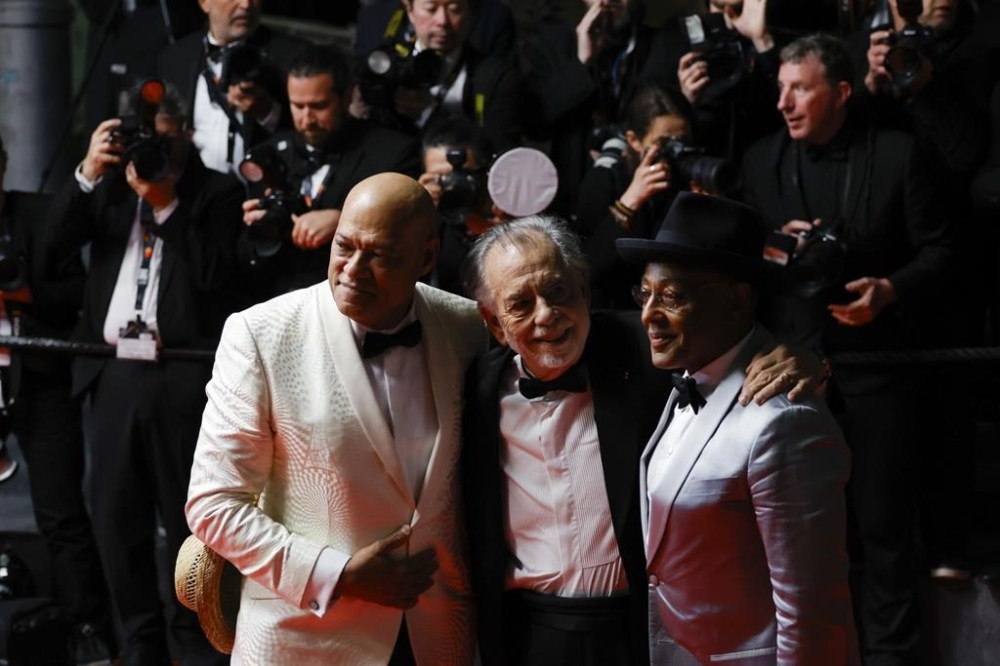
Francis Ford Coppola debuts ‘Megalopolis’ in Cannes, and the reviews are in
Advertisement
Read this article for free:
or
Already have an account? Log in here »
We need your support!
Local journalism needs your support!
As we navigate through unprecedented times, our journalists are working harder than ever to bring you the latest local updates to keep you safe and informed.
Now, more than ever, we need your support.
Starting at $15.99 plus taxes every four weeks you can access your Brandon Sun online and full access to all content as it appears on our website.
Subscribe Nowor call circulation directly at (204) 727-0527.
Your pledge helps to ensure we provide the news that matters most to your community!
To continue reading, please subscribe:
Add Brandon Sun access to your Free Press subscription for only an additional
$1 for the first 4 weeks*
- Enjoy unlimited reading on brandonsun.com
- Read the Brandon Sun E-Edition, our digital replica newspaper
*Your next Free Press subscription payment will increase by $1.00 and you will be charged $20.95 plus GST for four weeks. After four weeks, your payment will increase to $24.95 plus GST every four weeks.
Read unlimited articles for free today:
or
Already have an account? Log in here »
Hey there, time traveller!
This article was published 16/05/2024 (851 days ago), so information in it may no longer be current.
CANNES, France (AP) — Francis Ford Coppola on Thursday premiered his self-financed opus “Megalopolis” at the Cannes Film Festival, unveiling a wildly ambitious passion project the 85-year-old director has been pondering for decades.
Reviews ranged from “a folly of gargantuan proportions” to “the craziest thing I’ve ever seen.” But most assuredly, once again, Coppola had everyone in Cannes talking.
No debut this year was awaited with more curiosity in Cannes than “Megalopolis,” which Coppola poured $120 million of his own money into after selling off a portion of his wine estate. Not unlike Coppola’s “Apocalypse Now” some 45 years ago, “Megalopolis” arrived trailed by rumors of production turmoil and doubt over its potential appeal.
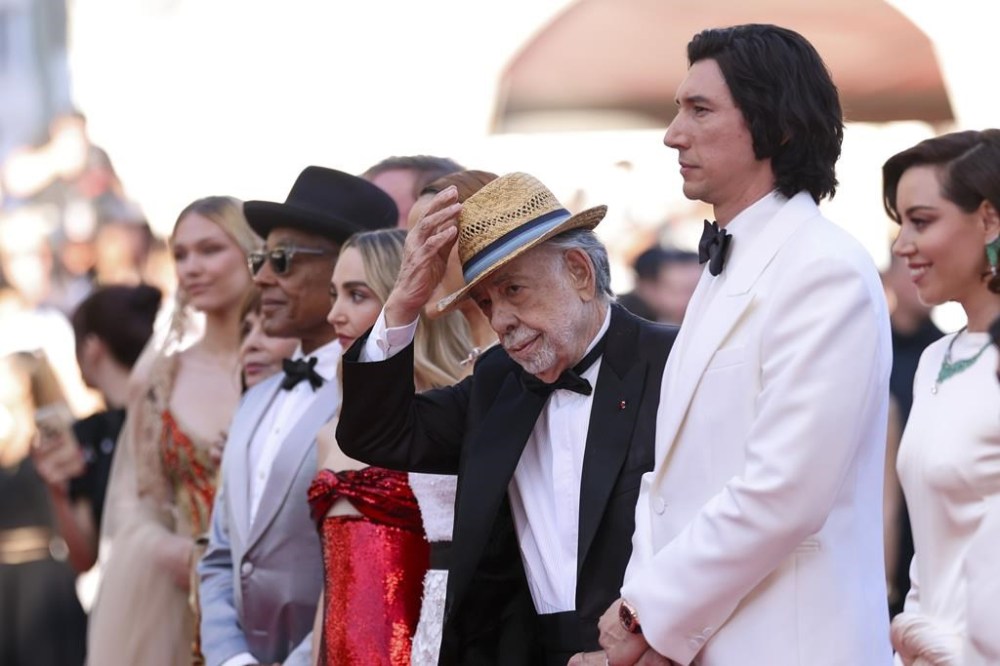
What Coppola unveiled defies easy categorization. It’s a fable set in a futuristic New York about an architect (Adam Driver) who has a grand vision of a more harmonious metropolis, and whose considerable talents include the ability to start and stop time. Though “Megalopolis” is set in a near-future, it’s fashioned as a Roman epic. Driver’s character is named Cesar and the film’s New York includes a modern Coliseum.
The cast includes Aubrey Plaza as an ambitious TV journalist named Wow Platinum, Giancarlo Esposito as the mayor, Laurence Fishburne as Cesar’s driver (and the film’s narrator) and Shia LaBeouf as an unpleasant cousin named Claudio.
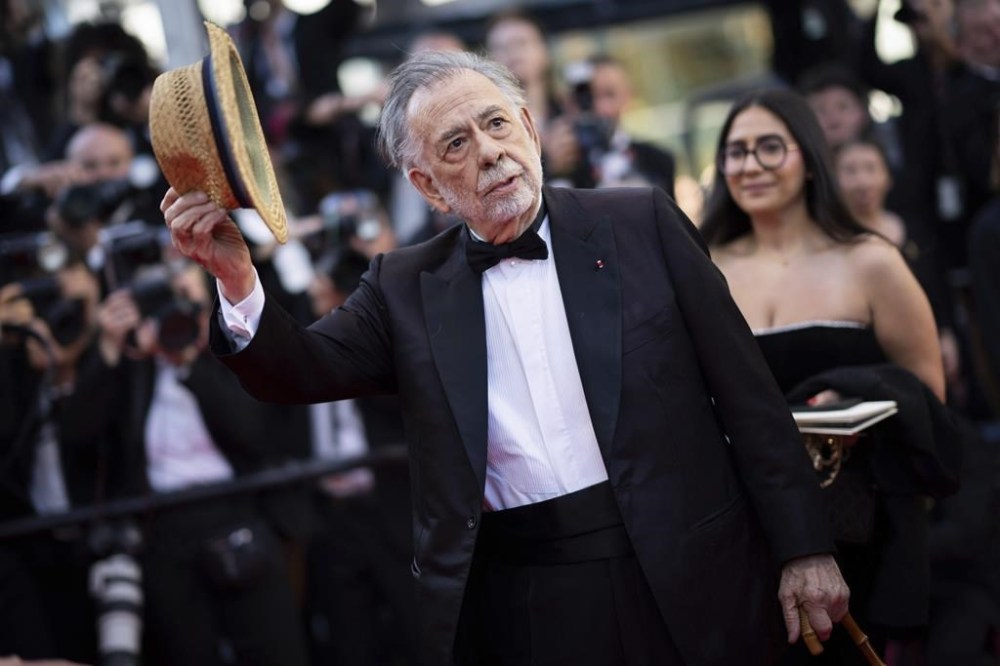
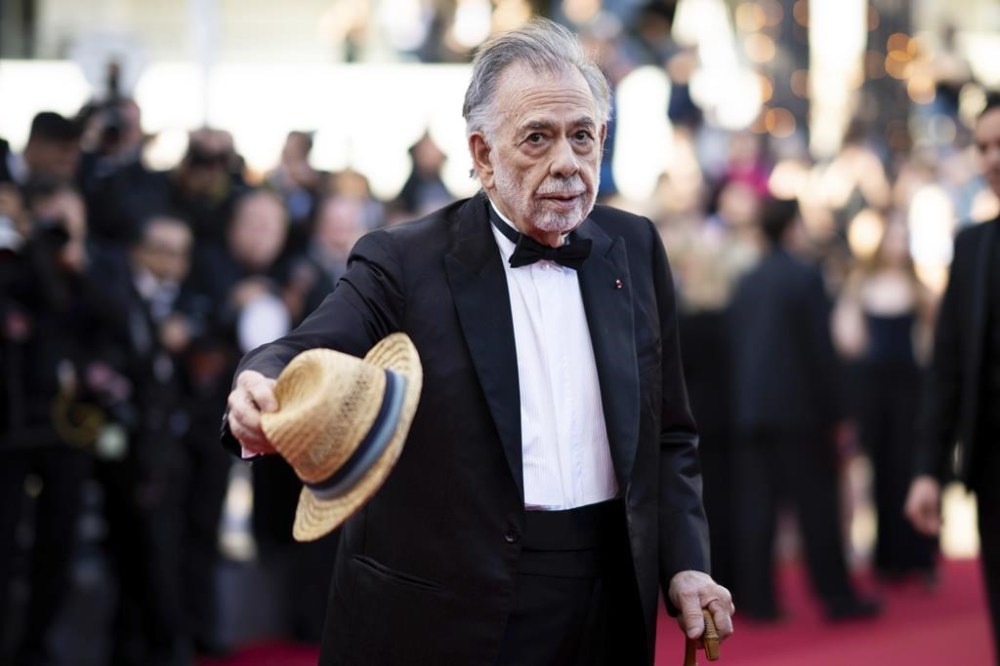
Coppola, wearing a straw hat and holding a cane, walked the Cannes carpet Thursday, often clinging to the arm of his granddaughter, Romy Coppola Mars, while the soundtrack to “The Godfather” played over festival loudspeakers.
After the screening, the Cannes audience stood in a lengthy ovation for Coppola and the film. The director eventually took the microphone to emphasize his movie’s ultimate meaning.
“We are one human family and that’s who we should pledge our allegiance to,” Coppola told the crowd. He added that Esperanza is “the most beautiful word in the English language” because it means hope.
Many reviews were blisteringly bad. Peter Bradshaw for The Guardian called it “megabloated and megaboring.” Tim Grierson for Screen Daily called it a “disaster” “stymied by arbitrary plotting and numbing excess.” Kevin Maher for the Times of London wrote that it’s a “head-wrecking abomination.” Critic Jessica Kiang said “Megalopolis” “is a folly of such gargantuan proportions it’s like observing the actual fall of Rome.”
But some critics responded with admiration for the film’s ambition. With fondness, New York Magazine’s Bilge Ebiri said the film “might be the craziest thing I’ve ever seen.” David Ehrlich for IndieWire praised a “creatively unbound approach” that “may not have resulted in a surplus of dramatically coherent scenes, but it undergirds the entire movie with a looseness that makes it almost impossible to look away.”
“Is it a distancing work of hubris, a gigantic folly, or a bold experiment, an imaginative bid to capture our chaotic contemporary reality, both political and social, via the kind of large-canvas, high-concept storytelling that’s seldom attempted anymore?” wrote David Rooney for The Hollywood Reporter. “The truth is it’s all those things.”
“Megalopolis” is dedicated to Eleanor Coppola, the director’s wife who died last month.
Coppola is seeking a distributor for “Megalopolis.” Ahead of its premiere, the film was acquired for some European territories. Richard Gelfond, IMAX’s chief executive, said “Megalopolis” — which Coppola believes is best viewed on IMAX — will play globally on the company’s large-format screens.
In numerous places in “Megalopolis,” Coppola, who once penned the book “Live Cinema and its Techniques,” experimentally pushes against filmmaking convention. At a screening Thursday, a man emerged mid-film, walked across the stage to a microphone and posed a question to Driver’s character on the screen above.
Several weeks ahead of Cannes, Coppola privately screened “Megalopolis” in Los Angeles. Word quickly filtered out that many were befuddled by the experimental film they had just watched. “There are zero commercial prospects and good for him,” one attendee told Puck.