
Andrew Arksey’s tennis officiating takes him to top events
Advertisement
Read this article for free:
or
Already have an account? Log in here »
We need your support!
Local journalism needs your support!
As we navigate through unprecedented times, our journalists are working harder than ever to bring you the latest local updates to keep you safe and informed.
Now, more than ever, we need your support.
Starting at $15.99 plus taxes every four weeks you can access your Brandon Sun online and full access to all content as it appears on our website.
Subscribe Nowor call circulation directly at (204) 727-0527.
Your pledge helps to ensure we provide the news that matters most to your community!
To continue reading, please subscribe:
Add Brandon Sun access to your Free Press subscription for only an additional
$1 for the first 4 weeks*
- Enjoy unlimited reading on brandonsun.com
- Read the Brandon Sun E-Edition, our digital replica newspaper
*Your next Free Press subscription payment will increase by $1.00 and you will be charged $20.95 plus GST for four weeks. After four weeks, your payment will increase to $24.95 plus GST every four weeks.
Read unlimited articles for free today:
or
Already have an account? Log in here »
Hey there, time traveller!
This article was published 10/07/2024 (681 days ago), so information in it may no longer be current.
When it comes to officiating tennis, Andrew Arksey says he has to be as ready as the players or it’s simply not going to be a good day for him.
The 37-year-old Brandonite, who also referees hockey and previously officiated baseball and volleyball, is currently working at the Winnipeg National Bank Challenger, an Association of Tennis Professionals (ATP) challenger event this week in Winnipeg.
“The players have to be tuned in or dialled in for their match,” Arksey said. “As an official, you have to be dialled in for the amount of time you’re watching that match, too. It’s tough when you’re watching a few different courts at the same time or even watching a men’s match. I’ve done a lot in the ATP Challenger Tour and you see serves that come in at 240 kilometres an hour, 140 miles per hour, that are just humming.
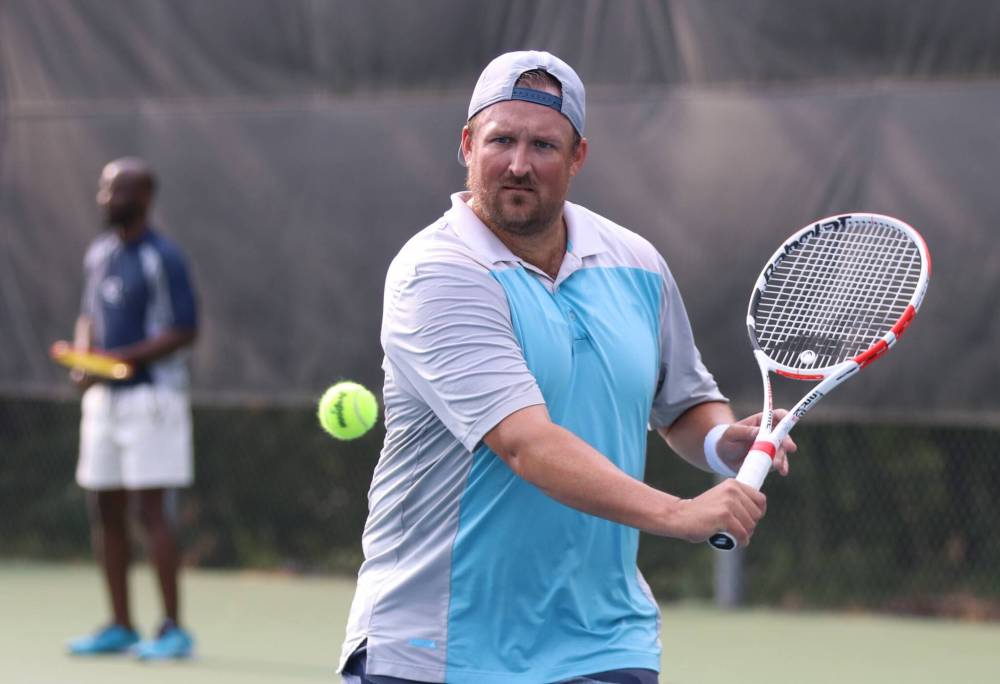
“A lot of people think you have to watch the ball, but that’s where you get hurt. You have to watch the line and be focused on that and then watch the trajectory of the ball and the pathway it takes into the line. It requires a lot of focus and lot of wherewithal to make the call without getting hit sometimes.”
Each year, Canada hosts a couple of Association of Tennis Professionals (ATP) challenger events, plus some International Tennis Federation (ITF) and Women’s Tennis Association (WTA) events.
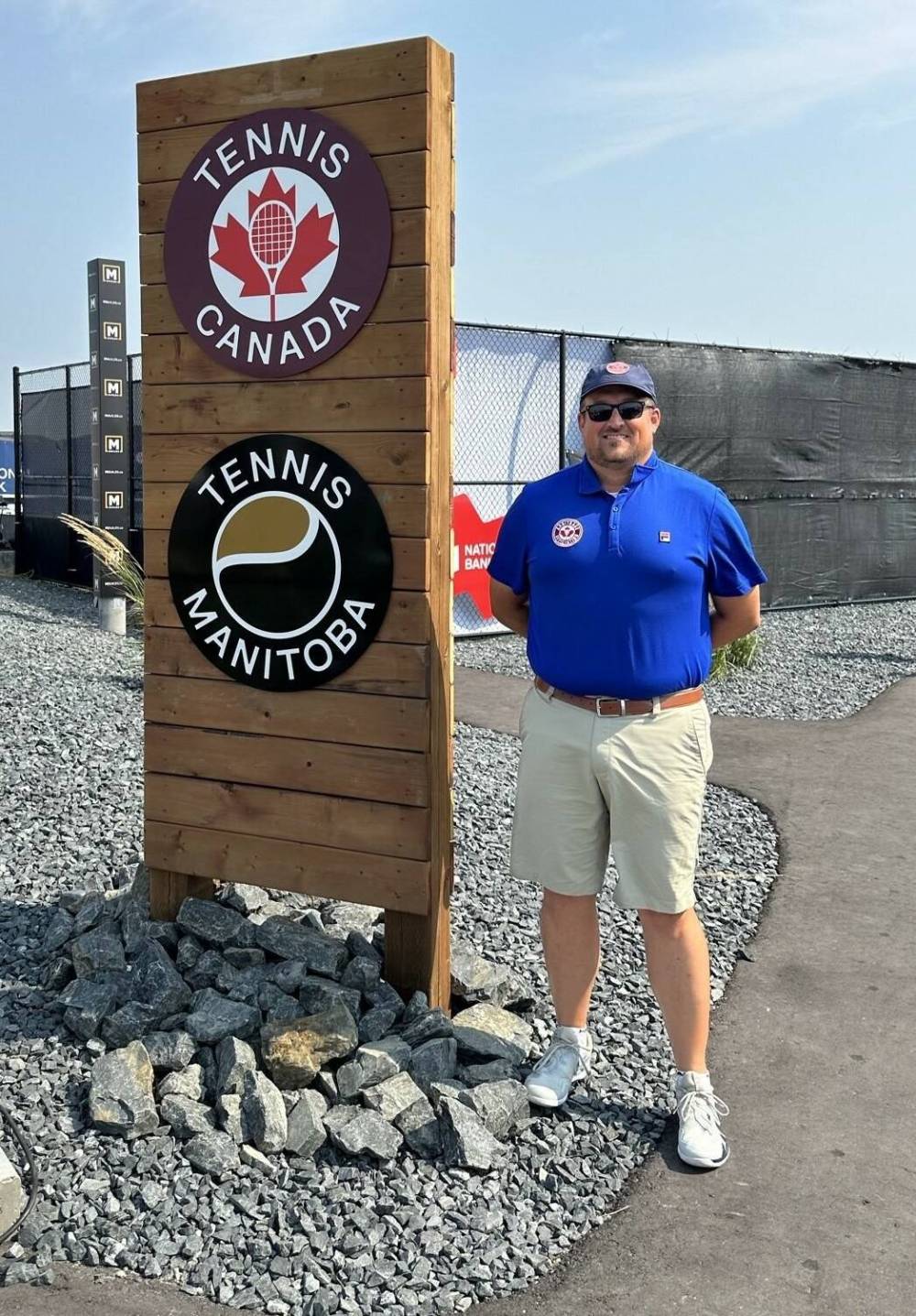
The tournament in Winnipeg began with qualifying on Sunday and runs until this Sunday at the new Tennis Manitoba Hub in West St. Paul. Arksey will be serving as a line umpire.
“I’m really excited for that,” Arksey said. “It should be a lot of fun.”
Arksey, who is originally from Dauphin, moved to Brandon in 2016 after a spell in Weyburn, where he was part of the city’s leisure board. They refinished the tennis courts while he was there, so he did some work with Tennis Saskatchewan. When he saw the organization were offering an officiating clinic, he signed up and soon worked a few events in Regina and Saskatoon.
When he came to Brandon, he quickly became part of the local scene, even serving as president of the Wheat City Tennis Club while continuing his officiating.
“A lot of people think you have to watch the ball, but that’s where you get hurt. You have to watch the line and be focused on that and then watch the trajectory of the ball and the pathway it takes into the line. It requires a lot of focus and lot of wherewithal to make the call without getting hit sometimes.”– Andrew Arksey
Unlike hockey, where you are either a referee or a linesman, there are several officiating roles in tennis.
A roving official covers several courts, helping with rule interpretations, line corrections and procedural stuff. The next step up is chair umpire, the head official who calls an individual match.
Line umpires decide whether the ball is in or out, but they’re most commonly at higher echelon events. There is also a referee in charge of and event and a tournament supervisor.
“I’ve been doing stuff for Tennis Saskatchewan and Tennis Manitoba for years, with a little bit of chair umpiring,” Arksey said. “You can apply to do these national events. We have nationals for U12, U14, U16, U18 and open and senior, so you can apply and be seen by different event supervisors and referees and get scored and advance.”
Tennis Manitoba holds an annual clinic for its officials to introduce new people to the game.
Arksey, who worked a lot of U18 AAA Brandon Wheat Kings game last winter as part of his busy hockey officiating schedule, said it is useful to have experience calling other sports.
“I think having a little bit of the — I hate using the term game management — but knowing what the competitors and everybody puts into the game really helps,” Arksey said. “And just having the wherewithal to take a step back and view the game in its totality and then you can get into the little intricacies of the game. Reffing other sports really helps.
“With hockey, you’re not just managing the 12 people on the ice, there’s the four officials and you have benches with 20 people, you have scorekeepers and coaches you’re dealing with. It takes a lot.”
He is also working at the biggest event of the year on the Canadian tennis calendar, the National Bank Open from Aug. 2 to 11. Arksey will be at the men’s event in Montreal, while the women play in Toronto.
But he won’t be a line judge because technology has changed how the game is officiated at the highest levels. In 2021, the Australian Open became the first major to operate without line judges, opting instead to use the Hawk-Eye Live camera system that debuted in 2006.
Studies have shown it’s about 95 per cent accurate, compared to 85 per cent for human line judges.
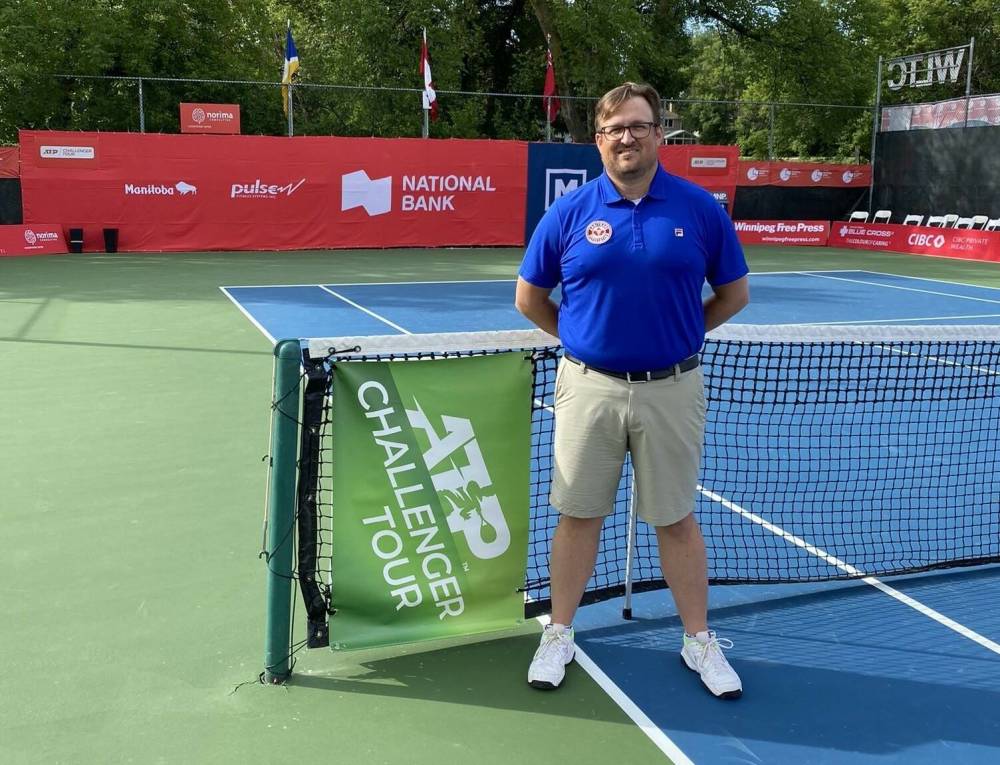
So while Arksey is a line judge this week in Winnipeg, he’ll be taking on a different role in Montreal in August.
“I’ll be a match assistant there,” Arksey said. “It’s kind of a new role with these ATP and WTA events because they’ve eliminated line umpires with this new Hawk-Eye review system that they have. Being a match assistant is just helping out the chair umpire as much as you can and helping the players on the court to make sure the match goes off without any bumps. It’s my first time doing it so I don’t really know what to expect.”
But the stakes remain high.
Arksey said there are nerves for officials, especially as the tournament progresses and the field gets smaller until it’s down to a singles and doubles final.
“You start an event with upwards 90 to 100 players and by the end of the week you’re down to six,” Arksey said. “It’s a lot of pressure because they’re playing for money, they’re playing for points, they want to improve their ranking because if they improve their ranking, they get into events easier.
“They take the game seriously. You see the players on the court for hours before warming up and hours after cooling down. It’s a lot of pressure but it’s fun.”
» pbergson@brandonsun.com
» Twitter: @PerryBergson