
Rapid city museum project reaches next stage
Advertisement
Read this article for free:
or
Already have an account? Log in here »
We need your support!
Local journalism needs your support!
As we navigate through unprecedented times, our journalists are working harder than ever to bring you the latest local updates to keep you safe and informed.
Now, more than ever, we need your support.
Starting at $15.99 plus taxes every four weeks you can access your Brandon Sun online and full access to all content as it appears on our website.
Subscribe Nowor call circulation directly at (204) 727-0527.
Your pledge helps to ensure we provide the news that matters most to your community!
To continue reading, please subscribe:
Add Brandon Sun access to your Free Press subscription for only an additional
$1 for the first 4 weeks*
- Enjoy unlimited reading on brandonsun.com
- Read the Brandon Sun E-Edition, our digital replica newspaper
*Your next Free Press subscription payment will increase by $1.00 and you will be charged $20.95 plus GST for four weeks. After four weeks, your payment will increase to $24.95 plus GST every four weeks.
Read unlimited articles for free today:
or
Already have an account? Log in here »
Hey there, time traveller!
This article was published 25/07/2024 (671 days ago), so information in it may no longer be current.
RAPID CITY — After a great deal of backbreaking demolition work, structural repairs to the building and its foundation and a flurry of building inspections to make sure they’ve got it done right, the ongoing restoration project for the Rapid City Museum and Cultural Centre has seemingly turned a corner.
“Our big thing that we’ve been working on in the building is just making sure it’s been structurally sound, as well as making sure we’ve had the right people coming in, and, you know, signing off,” said building committee volunteer Duncan Martin.
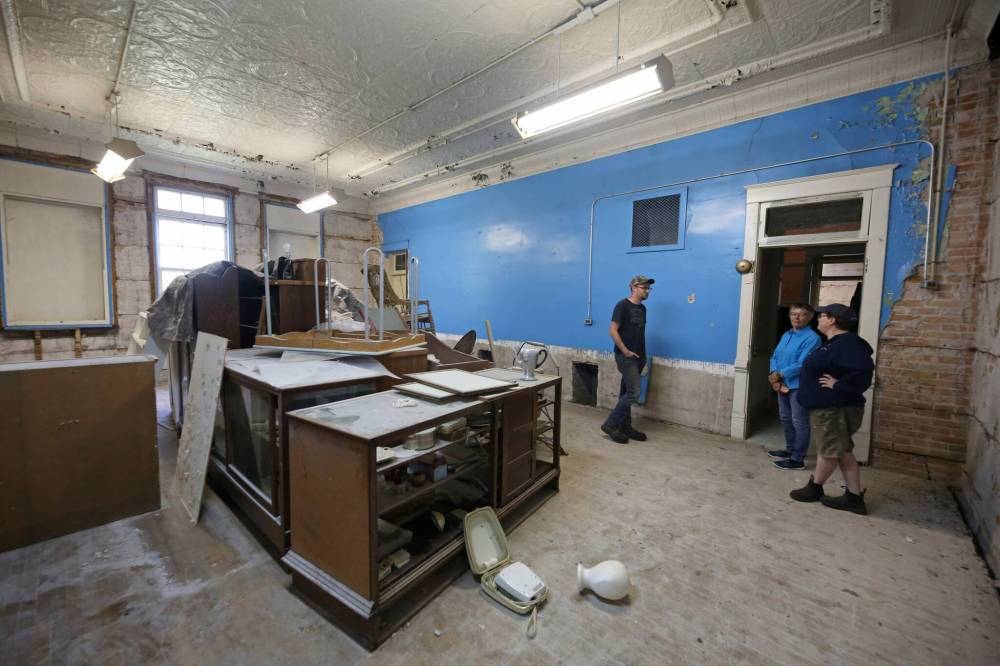
“And we’re happy to say the building is structurally sound. We’ve gutted the building, right to the foundation. There was a bunch of point work and mason work that had to happen in the basement, we got a big grant to do that. And we’ve repaired all that. So the building is perfectly preserved. So now going forward, we’re in there, we’re not really in the demolition stage or the taking down stage, we’re in the building up stage. So that’s a big turnaround for us.”
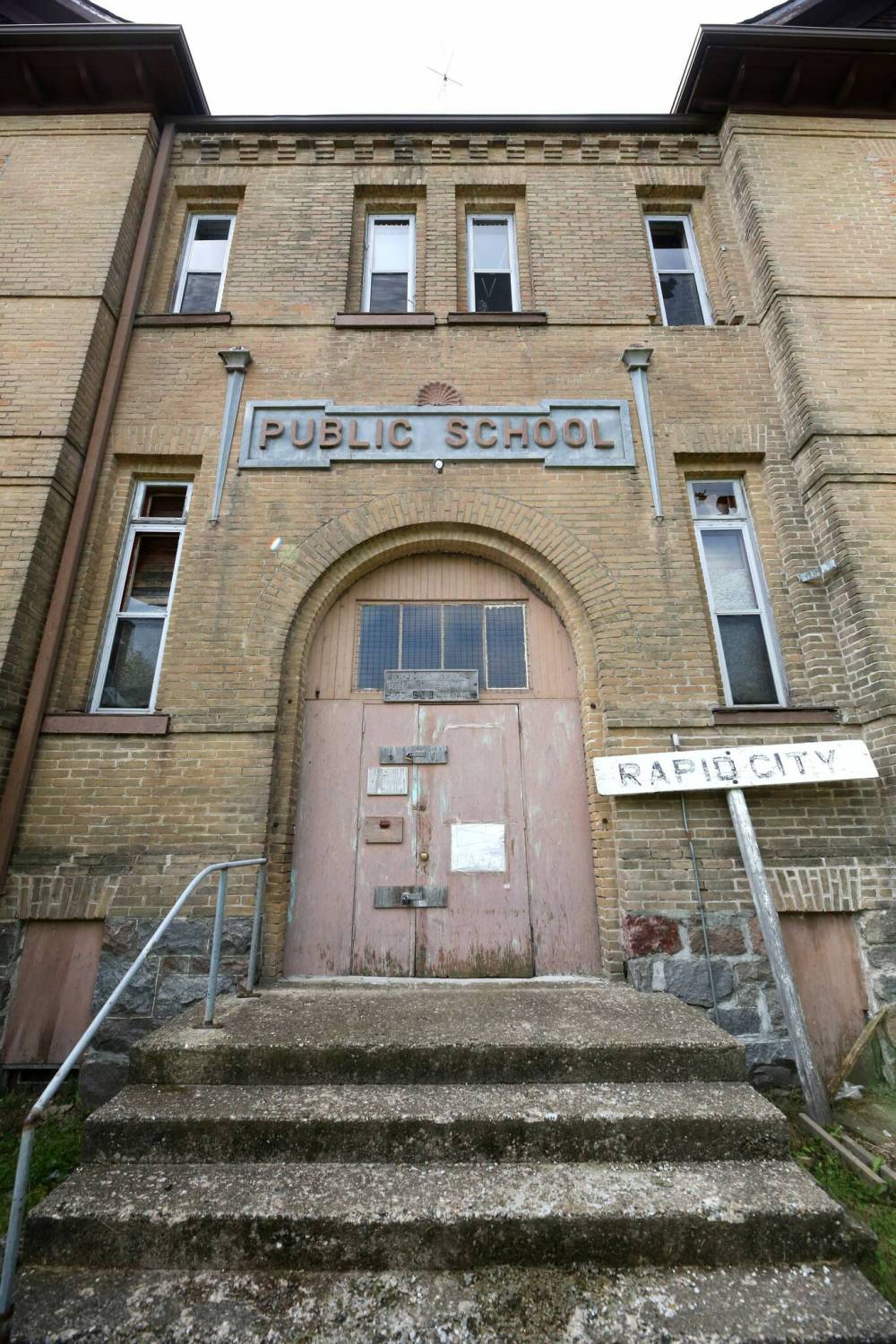
The building in question is the Rapid City School, an old brick high school built in 1902 that stands — sentinel like — on a hill just off Fourth Street.
The structure was designed by William Alexander Elliot, an architect who also happened to design many of Brandon’s most notable and beautiful brick structures — including the historic Brandon Court House on Princess Avenue, Clark Hall on the Brandon University campus and St. Matthew’s Anglican Cathedral on 13th Street.
After the school was closed sometime in the late 1960s or very early ‘70s, it was used as the main museum structure until around 2004, and for a time housed the community library. The building was recognized as a Municipal Heritage Site in 2014, but it has seen better days. Many of its large north-facing windows are bricked over, the gable roof bay windows on the upper-most floor are damaged, and the exterior has an overall careworn look about it that belies the “restrained but elegant brick ornament” that adorns the school, as noted by Canada’s Historic Places website.
Efforts have been underway for several years to restore the main school building for use as both a museum and as a housing and business space for the community. As the Sun reported in 2019, once the restoration work has been completed, the building will serve as a hub in the city, servicing a number of community needs.
They have found a few gems along way too, as the partial demolition of the interior moved forward and they got down to the lath and plaster walls. When removing some heavy straw board from the walls of the second floor of the public school building — an addition to the structure that was not original — they uncovered a plaster wall that had been signed by several former students in the 1930s. Some of them were relatives of people who still live in the community, but one name in particular stood out — Ralph Fuller, who signed the wall on Feb. 20, 1934.
Austin Ralph Fuller, formerly of Rapid City, had enlisted as a Canadian soldier with the Royal Winnipeg Rifles during the Second World War, and rose to the rank of Lance Corporal. At the age of 26, it was reported by the Winnipeg Free Press that he was one of 19 Canadian soldiers “murdered” by the German army in Normandy on June 8, 1944.
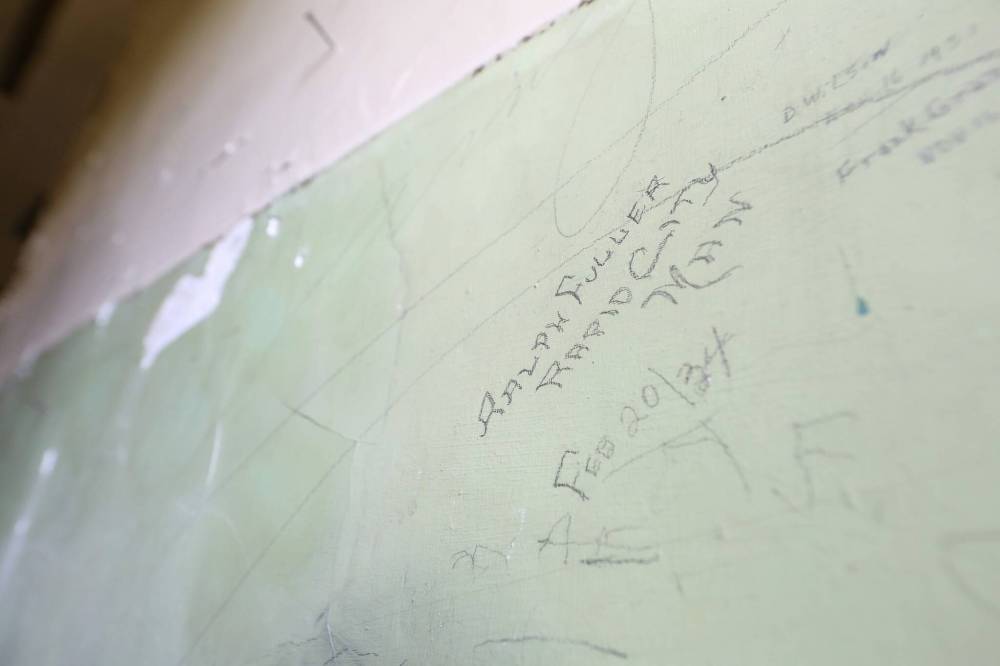
“He was the one that was executed by the Nazis in a firing squad,” Duncan said.
A war memorial in Rapid City that was erected in June of 2011 bears his name, along with dozens of other fallen soldiers from the community in both the first and second World Wars.
The restoration committee hopes to find a way to preserve this section of the plaster wall, which is very delicate, and allow the public to be able to view it.
Aside from restoration, there are big plans for the building. The goal is to turn the second floor into a pair of rented apartments to bolster affordable housing in the area. And the two school rooms on the main floor will be open to commercial and office space, while the basement will house the museum.
“We want to preserve the building, and make it a showcase home that is sustainable year round,” said committee chair Shirley Martin, “for the artifacts that we have, for the stories of the community, so that it reminds everyone where the community has come from and where it can go.
“We also want it to become more of a functioning building in the community, and become a staple,” added Duncan. “If you put some rentable space and some apartments and stuff in there, we really transform it to be kind of a centrepiece in the community. And then, as well as the museum to preserve our heritage.”
A major grant they received before the COVID-19 pandemic allowed the board to bring commercial-grade electricity to the school building from Manitoba Hydro in 2019.
One of the ongoing hurdles the board faces is finding enough grant money to move the project forward. Many of the programs require shared funding, so the museum board has embarked on a series of fundraising events to begin the process of raising capital, including raffles, meat draws, and their annual Canada Day event.
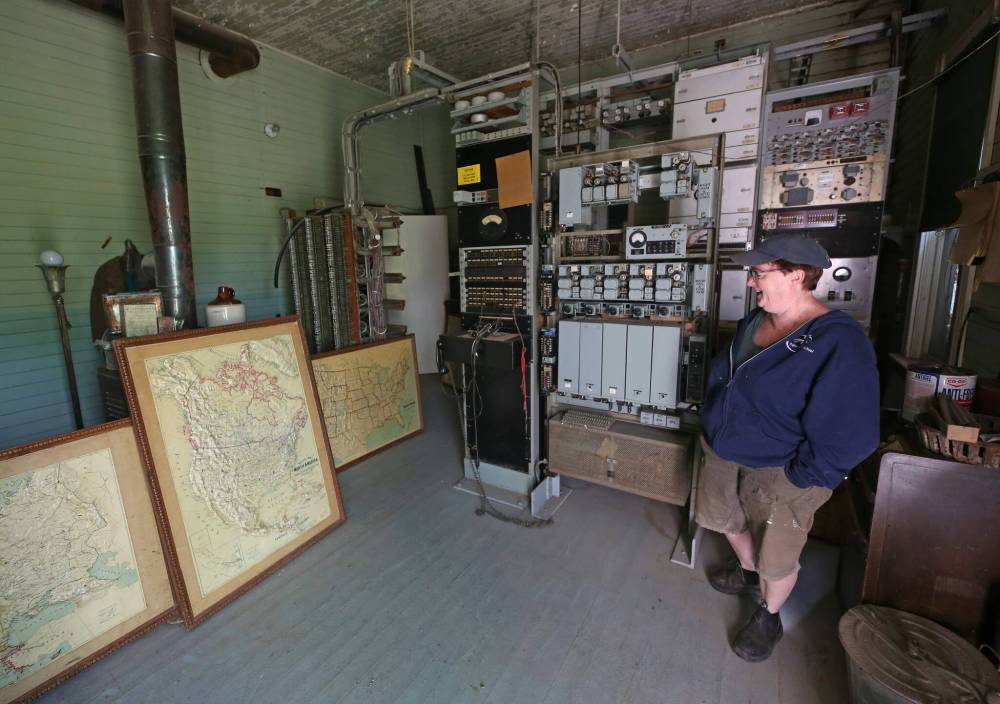
Because the main museum building hasn’t been functional for several years, the board has also looked to its other resources on the grounds, including an old telephone exchange building that was donated by the former Manitoba Telephone System, along with an operator’s board, in 1977 and moved from downtown Rapid City to its current location next to the former school. It’s noteworthy that Rapid City was the final community in Manitoba to receive the dial system, which is recounted with photos and information in the building.
“Because the building hasn’t been an active museum for a while, a lot of the grants were, you know, it would look better if you were an active museum. So then we’ve kind of switched focus… into the two sub buildings,” board secretary Margo Eckberg said. “And so we have a reporter’s office that has an old printing press in there. And we’re using it more as a storage facility. But then the original MTS building that also is on the grounds. We’ve been working on turning that into a functional museum and having people come through.”
The board plans to hold a “welcome back to the museum” day in August at the former MTS building as a way to invite the public to the grounds. That date has not been set as yet, but the board intends to publicize it as soon as a day is settled upon.
» mgoerzen@brandonsun.com
» X: @MattGoerzen