
Despite union protest, new hybrid work rules for federal employees kick in Monday
Advertisement
Read this article for free:
or
Already have an account? Log in here »
We need your support!
Local journalism needs your support!
As we navigate through unprecedented times, our journalists are working harder than ever to bring you the latest local updates to keep you safe and informed.
Now, more than ever, we need your support.
Starting at $15.99 plus taxes every four weeks you can access your Brandon Sun online and full access to all content as it appears on our website.
Subscribe Nowor call circulation directly at (204) 727-0527.
Your pledge helps to ensure we provide the news that matters most to your community!
To continue reading, please subscribe:
Add Brandon Sun access to your Free Press subscription for only an additional
$1 for the first 4 weeks*
*Your next subscription payment will increase by $1.00 and you will be charged $20.00 plus GST for four weeks. After four weeks, your payment will increase to $24.00 plus GST every four weeks.
Read unlimited articles for free today:
or
Already have an account? Log in here »
Hey there, time traveller!
This article was published 07/09/2024 (565 days ago), so information in it may no longer be current.
OTTAWA – On Monday, federal public servants will return to the office a minimum of three days a week— if grudgingly.
Public service unions will start the week with an early-morning rally opposing the policy. But despite the unions’ “summer of discontent” and an ongoing court challenge, the new rules will still kick in on Sept. 9.
The unions are pledging to keep fighting, even as they acknowledge it will take time.
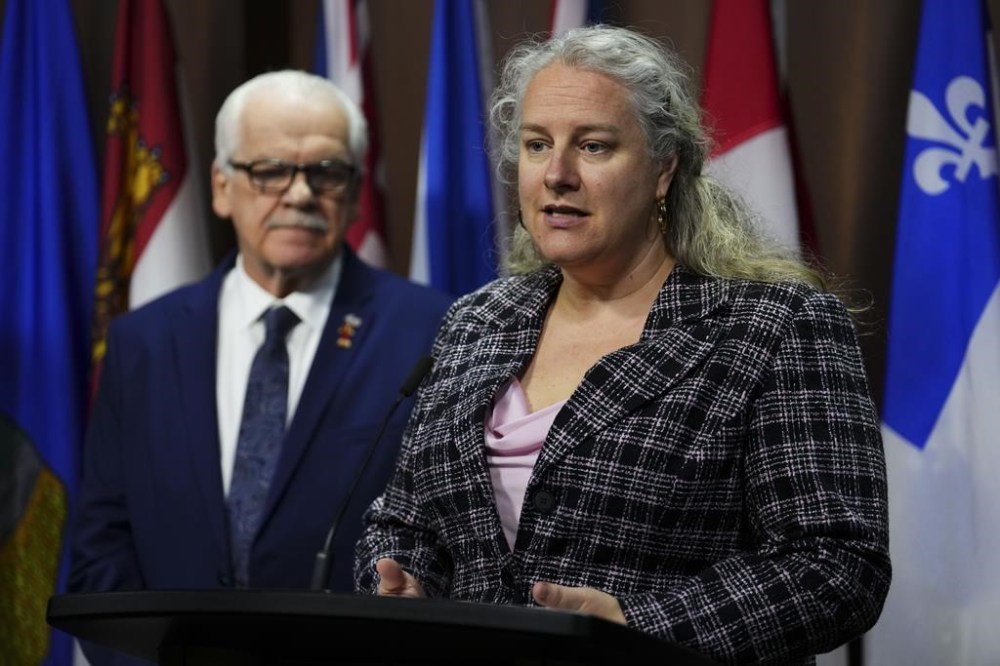
“We may not win this tomorrow. We may not win this next week. But if we continue to fight, this is the new future of work for federal public servants and for workers everywhere,” Jennifer Carr, president of the Professional Institute of the Public Service of Canada, told an earlier rally on Thursday.
Ottawa announced the policy, which also stipulates that executives will have to be in the office at least four days a week, in May. The unions responded by pledging a “summer of discontent.”
That included moves by the Public Service Alliance of Canada to file unfair labour practice complaints and policy grievances, as well a Federal Court application. Just before the Labour Day weekend, Federal Court agreed to hear the case.
That decision by the court “does not affect the decision on increased in-person presence,” the Treasury Board said in a statement, noting both parties will have a chance to present their arguments to the court.
Treasury Board President Anita Anand has maintained Ottawa has the jurisdiction to make the changes and hybrid work arrangements aren’t in the collective agreements with the unions.
Previously, most federal public servants had to be in the office at least two days a week. Those rules were put in place March 2023, two years after people began working remotely due to the COVID-19 pandemic.
Despite the union pledges to fight the new rules, public servants will have to abide by them. “The rule from a union is always obey and then grieve,” Carr said in an interview.
Nathan Prier, president of the Canadian Association of Professional Employees, declined to specify the exact tactics the unions will urge members to use, but said they could include petitions demanding an exemption from the policy and moves to exploit contradictions in various government policies.
One of the concerns the unions have flagged is that there won’t be enough space for everyone in the office, saying workers already struggle to find available desks and meeting rooms.
In a statement, Public Services and Procurement Canada said it is working with federal departments and agencies to ensure sufficient office space is provided.
Alex Silas, national executive vice-president of the Public Service Alliance of Canada, predicted “a lot of chaos on Monday.”
“I think a lot of people are unfortunately going to be showing up to offices that aren’t ready to accommodate that return,” either because the offices themselves won’t be ready or because there’s just not enough space for everyone to work.
The federal government said in this year’s federal budget it plans to cut its office portfolio in half and turn “vacant government offices” into housing.
Silas argued when it comes to “forcing people back to the office while also planning to convert some of those offices, there’s a dissonance there. Those plans don’t work together.”
Unions are also flagging concerns about transportation, given Ottawa’s public transit system recently announced service cuts during non-peak hours.
“Most federal public servants living in the Ottawa area in particular don’t trust that the transit system here is credible,” Prier said.
Thursday’s rally featured bumper stickers saying: “Sorry about the traffic, I have to commute to a video call.”
Carr said it’s going to “take people longer to get to work…imagine that you have all this turmoil that’s happened before you get to the office, and then you sit at the office and do exactly the same thing you could have done from home. It’s just going to breed resentment and anger.”
Pat Scrimgeour, director of transit customer systems and planning, said the city’s public transit system can handle the increase.
“There is sufficient capacity on the O-Train and bus network to support public servants as they return to the office more often. We will continue to monitor ridership demand in case there is any location or time when ridership increases more than we expect,” he said in a statement.
A date for when the court case will be heard has not yet been set. Silas said the union is looking forward to “finally hearing from the employer as to the reasoning for this return to office policy.”
Ultimately, the issue may end up in collective bargaining negotiations. Silas pointed out PSAC’s next round of bargaining with the Treasury Board starts in 2025.
“If this doesn’t get resolved willingly by the federal government, if they don’t come to the light on their own terms and see the positives about remote work, then this will certainly continue to be a priority for us in bargaining.”
This report by The Canadian Press was first published Sept. 7, 2024.