
Militants attack a military training camp near the airport in Mali’s capital, inflicting casualties
Advertisement
Read this article for free:
or
Already have an account? Log in here »
We need your support!
Local journalism needs your support!
As we navigate through unprecedented times, our journalists are working harder than ever to bring you the latest local updates to keep you safe and informed.
Now, more than ever, we need your support.
Starting at $15.99 plus taxes every four weeks you can access your Brandon Sun online and full access to all content as it appears on our website.
Subscribe Nowor call circulation directly at (204) 727-0527.
Your pledge helps to ensure we provide the news that matters most to your community!
To continue reading, please subscribe:
Add Brandon Sun access to your Free Press subscription for only an additional
$1 for the first 4 weeks*
*Your next subscription payment will increase by $1.00 and you will be charged $20.00 plus GST for four weeks. After four weeks, your payment will increase to $24.00 plus GST every four weeks.
Read unlimited articles for free today:
or
Already have an account? Log in here »
Hey there, time traveller!
This article was published 17/09/2024 (547 days ago), so information in it may no longer be current.
BAMAKO, Mali (AP) — Jihadis attacked a military training camp near the airport in Mali’s capital on Tuesday as explosions were heard in the area. Within hours, the government said it was temporarily closing the airport in Bamako.
A security official said there was unspecified loss of life and significant damage, without elaborating.
A sweep operation was underway after gunmen attempted to infiltrate the Faladie gendarme school, the military said in a statement. The army said the situation was under control and asked people to avoid the area.
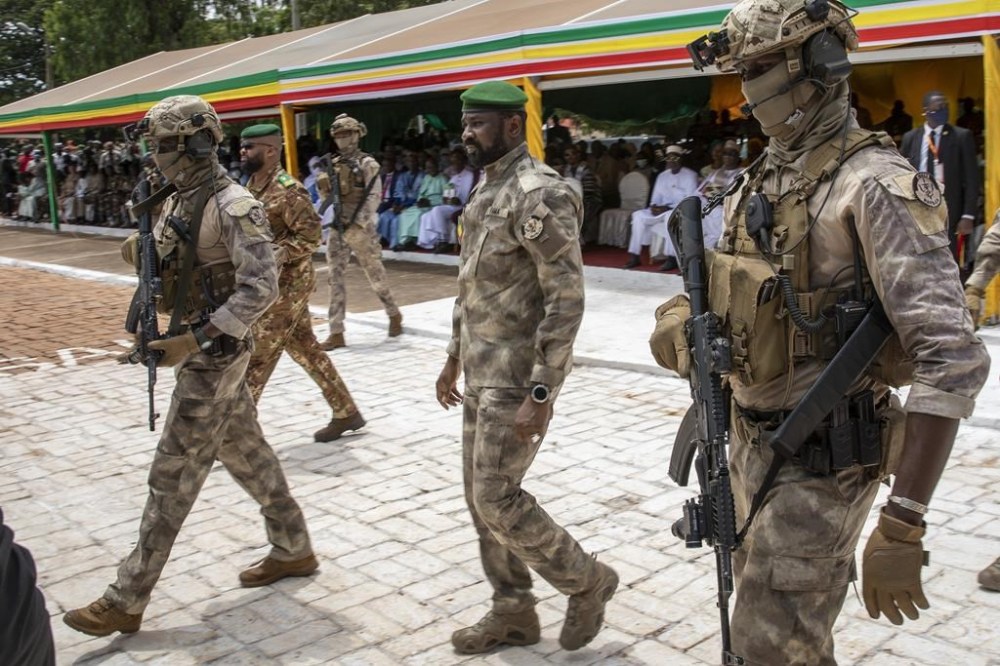
Later, the military confirmed that the attack took place in “multiple locations,” without providing details.
JNIM, which is linked to al-Qaida, claimed responsibility for the attack. Through its media arm, the website Azallaqa, the group claimed inflicting “major human and material losses” and set aircraft on fire. Militant groups often exaggerate their claims.
Earlier in the day, an Associated Press reporter heard two explosions and saw smoke rise in the distance of the camp and airport, both located on the outskirts of the city.
A security official told the AP that the attackers entered the training camp, causing a “loss of life and material damage” but did not provide any numbers or specifics. He said they attacked both the training camp and the military base near the airport.
At least 15 suspects were arrested, said the official, who was inside the base at the time of the attack. He spoke on condition of anonymity because he was not authorized to talk to reporters.
Soon after the attack, Mali’s authorities closed the airport. Mohamed Ould Mamouni, communications officer at the ministry of of transport, said flights were suspended indefinitely because of the exchange of gunfire that took place near it.
The U.S. Embassy in Bamako told its staff to remain at home and stay off the roads.
Mali, along with its neighbors Burkina Faso and Niger, has for over a decade battled an insurgency fought by armed groups, including some allied with al-Qaida and the Islamic State group. Following military coups in all three nations in recent years, the ruling juntas have expelled French forces and turned to Russian mercenary units for security assistance instead.
Since taking power, Col. Assimi Goita has struggled to stave off growing attacks by the jihadis. Attacks in central and northern Mali are increasing. In July, approximately 50 Russian mercenaries in a convoy were killed in an al-Qaida ambush.
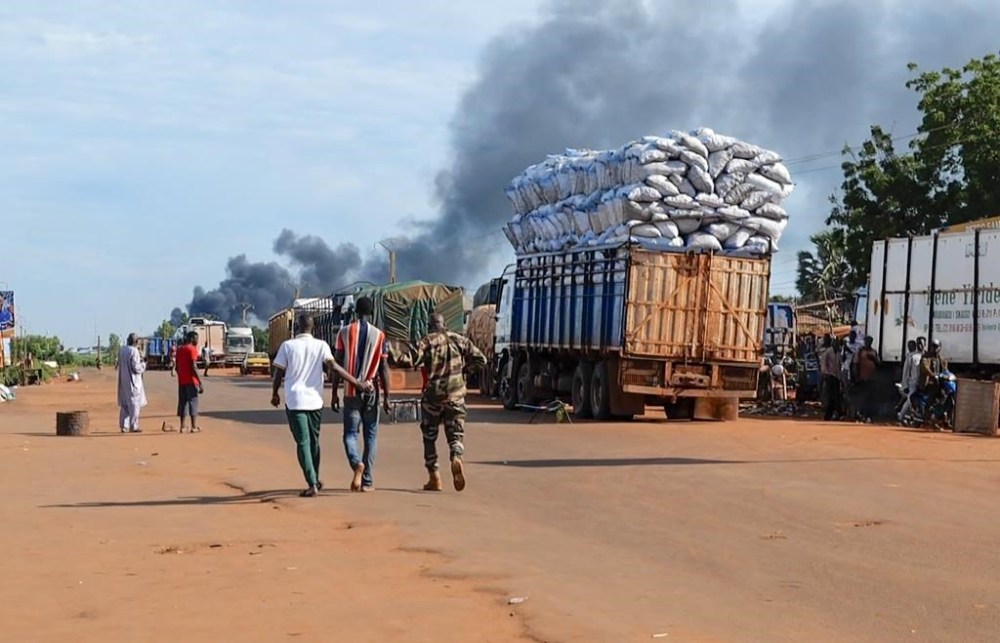
The mercenaries had been fighting mostly Tuareg rebels alongside Mali’s army when their convoy was forced to retreat into jihadi territory and ambushed south of the commune of Tinzaouaten.
Attacks in the capital of Bamako are rare, however. In 2022, gunmen struck a Malian army checkpoint about 60 kilometers (37 miles) outside the city, killing at least six people and wounding several others.
Tuesday’s incident is significant because it showed that JNIM has the ability to stage a large-scale attack, Wassim Nasr, a journalist and senior research fellow at the Soufan Center, told the AP.
“It also shows once again that they are concentrating their efforts on military targets, rather than random attacks on civilian targets,” he said.
___
Mednick reported from Goma, Congo, and Banchereau from Dakar, Senegal.