
Inequality has broad impacts on the health of Montreal children, report finds
Advertisement
Read this article for free:
or
Already have an account? Log in here »
We need your support!
Local journalism needs your support!
As we navigate through unprecedented times, our journalists are working harder than ever to bring you the latest local updates to keep you safe and informed.
Now, more than ever, we need your support.
Starting at $15.99 plus taxes every four weeks you can access your Brandon Sun online and full access to all content as it appears on our website.
Subscribe Nowor call circulation directly at (204) 727-0527.
Your pledge helps to ensure we provide the news that matters most to your community!
To continue reading, please subscribe:
Add Brandon Sun access to your Free Press subscription for only an additional
$1 for the first 4 weeks*
*Your next subscription payment will increase by $1.00 and you will be charged $20.00 plus GST for four weeks. After four weeks, your payment will increase to $24.00 plus GST every four weeks.
Read unlimited articles for free today:
or
Already have an account? Log in here »
Hey there, time traveller!
This article was published 21/10/2024 (558 days ago), so information in it may no longer be current.
MONTREAL – A new public health report says economic inequality has wide-ranging effects on Montreal children’s health and development, affecting everything from high school graduation rates to screen time.
The report released Monday by Montreal’s public health department found that the city’s 12-and-under population is doing well as a whole, but that there are “significant inequalities” depending on where they live and their socioeconomic status.
“We continue to observe important socioeconomic and territorial disparities,” it reads.
Researchers concluded that 67 per cent of kindergarten children living in a disadvantaged environment were considered not very active or not active at all, compared with 55 per cent for their better-off peers.
Twenty-three per cent of disadvantaged kindergarten children reportedly spent more than two hours a day looking at screens, compared with 12 per cent for those in the more “advantaged” group. Excessive screen use “is associated with various health problems in children including sleep disorders, concentration difficulties, musculoskeletal disorders and developmental risks,” the report says.
Only 67 per cent of disadvantaged teens graduated high school, compared with 89 per cent of those from better-off environments.
The report notes that a 2022 study on kindergarten students found that some groups were at higher risk of “developmental vulnerability” tied to inequality, including children from disadvantaged backgrounds, those born outside of Canada, and those for whom French is not their first language.
“Other subgroups of students also have specific health and education needs that must be taken into account in our interventions: students needing special support and boys,” the report reads.
It notes that the measles and chickenpox vaccination rates at the elementary school level have dropped from 81 per cent in 2016-17 to 78 per cent now, but the rates vary greatly in different parts of the city, from as low as 65 per cent in some neighbourhoods to 86 per cent in others.
The report also says inequalities exist at the neighbourhood level, with some areas offering less access to parks, public transit, safe streets and daycares.
In general, the report found that inactivity and screen time were higher in Montreal than the rest of the province. It found that income for families in Montreal was also lower than elsewhere in Quebec — despite a higher level of education — and that 29 per cent of Montreal parents reported high stress levels, which is also higher than other regions.
More than 38,000 Montreal families, or 14 per cent, are spending more than 30 per cent of their income on housing, and a 2020 survey indicated that more than one in five children lived in a food-insecure household, the authors wrote.
The report says housing insecurity is a source of stress for families, and that issues such as mould or overcrowding can lead to health problems.
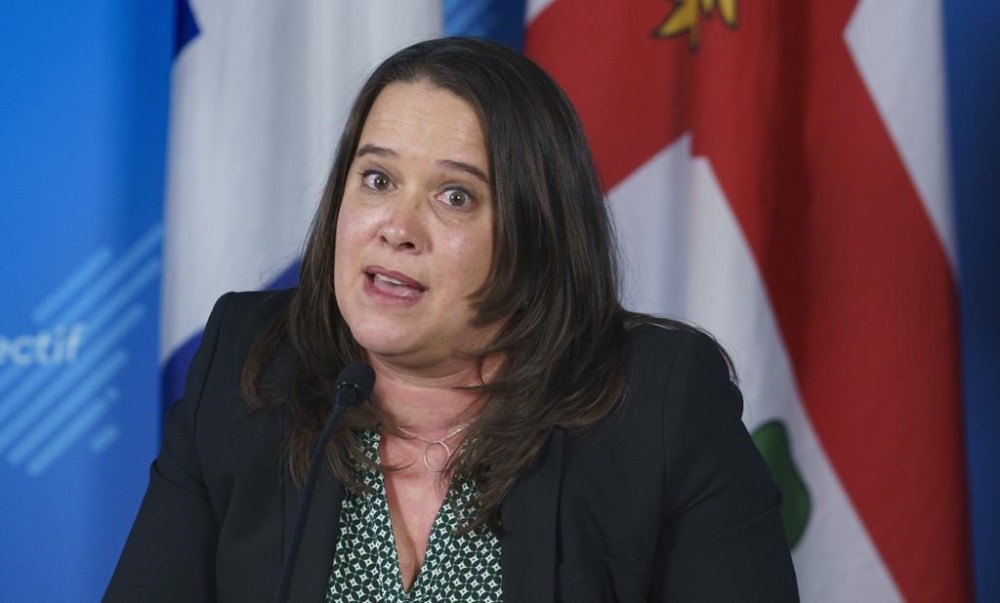
Tabled by Montreal public health director Mylène Drouin, the report notes that difficult living conditions can have lifelong and wide-ranging impacts on children, making them more prone to everything from a lower birth weight to illnesses such as asthma.
“In fact, the stress of living in precarious conditions in a chronic manner even has consequences on the child’s biology, resulting in long- and short-term health effects,” the authors wrote, adding that the resulting health inequalities are “avoidable.”
The report includes a number of recommendations, including more social and affordable housing, financial subsidies for low-income families, and more daycare spaces for vulnerable children, including those with special needs and the children of asylum seekers.
This report by The Canadian Press was first published Oct. 21, 2024.