
Supreme Court charts path for reviewing validity of government regulations
Advertisement
Read this article for free:
or
Already have an account? Log in here »
We need your support!
Local journalism needs your support!
As we navigate through unprecedented times, our journalists are working harder than ever to bring you the latest local updates to keep you safe and informed.
Now, more than ever, we need your support.
Starting at $15.99 plus taxes every four weeks you can access your Brandon Sun online and full access to all content as it appears on our website.
Subscribe Nowor call circulation directly at (204) 727-0527.
Your pledge helps to ensure we provide the news that matters most to your community!
To continue reading, please subscribe:
Add Brandon Sun access to your Free Press subscription for only an additional
$1 for the first 4 weeks*
*Your next subscription payment will increase by $1.00 and you will be charged $20.00 plus GST for four weeks. After four weeks, your payment will increase to $24.00 plus GST every four weeks.
Read unlimited articles for free today:
or
Already have an account? Log in here »
Hey there, time traveller!
This article was published 08/11/2024 (512 days ago), so information in it may no longer be current.
OTTAWA – The Supreme Court of Canada has clarified the legal path for judges when reviewing the validity of government regulations, guidelines or other such instruments.
In a pair of decisions Friday, the Supreme Court pointed to a 2019 top court ruling in a case known as Vavilov, which established a comprehensive framework for determining the applicable standard of review.
The Vavilov case involved review of an administrative decision by the federal registrar of citizenship.
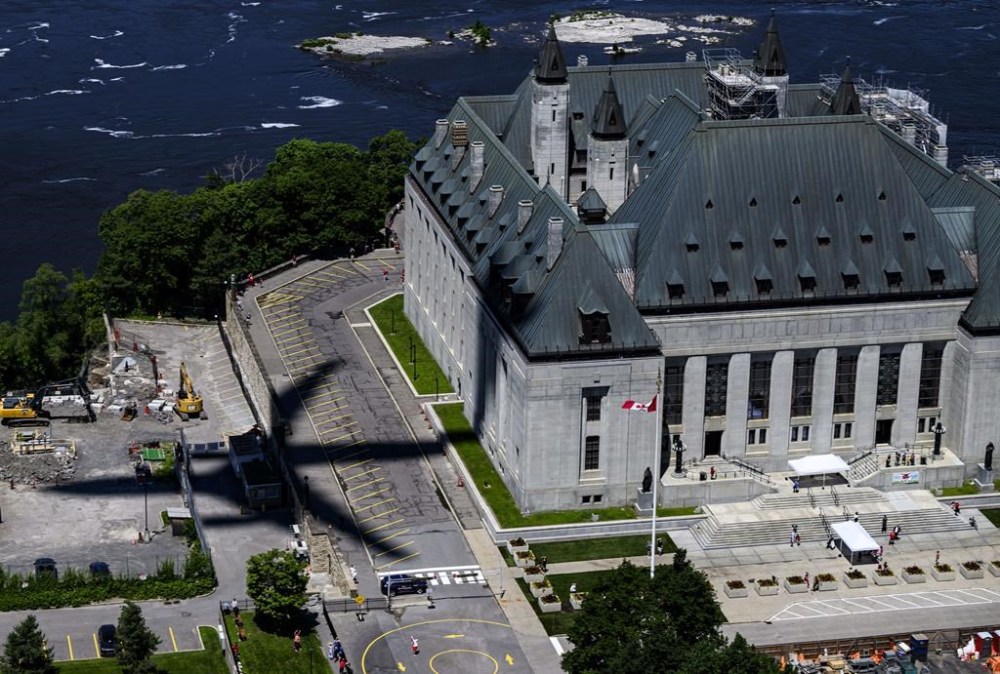
In its latest decisions, the Supreme Court said the standard for gauging reasonableness set out in the Vavilov framework is presumed to apply when reviewing government regulations and other rules.
Such guidelines and rules do not flow directly from Parliament or a legislature, but rather from agencies vested with the authority to make them — for instance, through an enabling statute.
The Supreme Court said a judge’s role is to review the legality or validity of these regulations, not to weigh whether they are necessary, wise or effective in practice.
As a result, it is not an inquiry into the underlying political, economic, social or partisan considerations.
Rather, the review should be aimed at whether an agency has acted within the scope of its lawful authority under the enabling statute.
The court applied the approach Friday in dismissing two appeals.
The first case involved a married couple who had a child and divorced in 2008. The father paid child support to the mother but challenged federal child support guidelines that determine payment levels.
The father argued the federal governor-in-council exceeded its authority under the Divorce Act when enacting the guidelines because they require the paying parent to cover a greater share of child-related costs than the other parent.
Applying the reasonableness standard prescribed by Vavilov, the Supreme Court concluded the guidelines fall reasonably within the governor-in-council’s scope of authority under the Divorce Act when relevant constraints are taken into account.
The second case involved coal-fired electric power generation facilities in Alberta. In 2016, TransAlta entered into an agreement with Alberta to cease coal-fired emissions on or before Dec. 31, 2030, in exchange for transition payments over several years.
Alberta’s municipal affairs minister has the authority to set guidelines for assessing the value of such property.
Sections of specific guidelines prevented TransAlta from claiming additional depreciation on the basis of the reduction in its facilities’ lifespan arising from the agreement.
TransAlta challenged the guidelines, saying they were inconsistent with the purposes of the province’s Municipal Government Act and violated the common law rule against administrative discrimination.
However, the Supreme Court rejected TransAlta’s appeal.
The group Ecojustice welcomed the court’s pronouncements Friday as good news for environmental protection, saying regulations will be subject to the same judicial scrutiny as other forms of government decision-making.
“This means that when the executive branch of government — like ministers or cabinet — makes rules, courts can ensure those rules are a reasonable exercise of their authority.”
This report by The Canadian Press was first published Nov. 8, 2024.
Note to readers: This is a corrected story. A previous version stated that TransAlta and Alberta entered into an agreement in 2106.