
Trump has a point about border security
Advertisement
Read this article for free:
or
Already have an account? Log in here »
We need your support!
Local journalism needs your support!
As we navigate through unprecedented times, our journalists are working harder than ever to bring you the latest local updates to keep you safe and informed.
Now, more than ever, we need your support.
Starting at $15.99 plus taxes every four weeks you can access your Brandon Sun online and full access to all content as it appears on our website.
Subscribe Nowor call circulation directly at (204) 727-0527.
Your pledge helps to ensure we provide the news that matters most to your community!
To continue reading, please subscribe:
Add Brandon Sun access to your Free Press subscription for only an additional
$1 for the first 4 weeks*
*Your next subscription payment will increase by $1.00 and you will be charged $20.00 plus GST for four weeks. After four weeks, your payment will increase to $24.00 plus GST every four weeks.
Read unlimited articles for free today:
or
Already have an account? Log in here »
Hey there, time traveller!
This article was published 27/11/2024 (493 days ago), so information in it may no longer be current.
At 4 p.m. today, Prime Minister Justin Trudeau will hold an emergency “virtual” meeting with Canada’s premiers to discuss our nation’s response to U.S. president-elect Donald Trump’s threat to impose tariffs on goods exported from Canada into the U.S.
Trump posted on social media on Monday that, immediately after he re-assumes his presidential powers in January, he will sign an executive order imposing a 25 per cent tariff on all products entering the United States from Canada and Mexico. The tariff will remain in place, he said, until both countries stem the illegal flow of people and drugs from those countries into America.
The reaction to Trump’s announcement has been both instantaneous and ominous. The Canadian dollar immediately fell against the U.S. dollar, and there have been numerous reports describing the immense damage such a tariff would do to the Canadian economy.
When Trump was threatening a 10 per cent across-the-board tariff, a report by the Canadian Chamber of Commerce suggested the Canadian economy would shrink by approximately one per cent, resulting in approximately $30 billion in economic annual costs for Canadians.
In response to Trump increasing the threatened tariff to 25 per cent, the author of the previous Canadian Chamber of Commerce report, University of Calgary economist Trevor Tombe, said that Canada’s GDP would shrink by a staggering 2.6 per cent. That would translate into a cost of approximately $2,000 per Canadian.
Ontario Premier Doug Ford posted on social media yesterday that the 25 per cent tariff “would be devastating to workers and jobs in both Canada and the U.S.,” and he’s right. Imposition of the tariff would likely result in an immediate increase in the price of groceries, gasoline and other goods.
It would also bring the movement of goods across the border to a virtual halt, paralyzing a large portion of Canada’s economy. That could quickly lead to massive layoffs across the country, along with the insolvency of many Canadian businesses, especially those who export their products into the U.S. market.
In response to the threat posed by the tariff, Trudeau and the premiers will apparently discuss strategies to use a “Team Canada” approach in order to attempt to convince Trump to abandon his plan, or at least reduce the tariff percentage.
That may be a waste of both time and effort, given that Trump campaigned on his tariff proposal during the recent presidential election, and can credibly say he has a mandate from the American people to implement it. Beyond that, he has a duty as president to protect America from the threat of drugs and illegal immigration.
Instead of trying to persuade Trump to ignore that responsibility, Trudeau and the premiers should at least consider that Trump may have a valid point that requires a tangible response. Indeed, Alberta Premier Danielle Smith says that the president-elect has “valid concerns related to illegal activities” at the border.
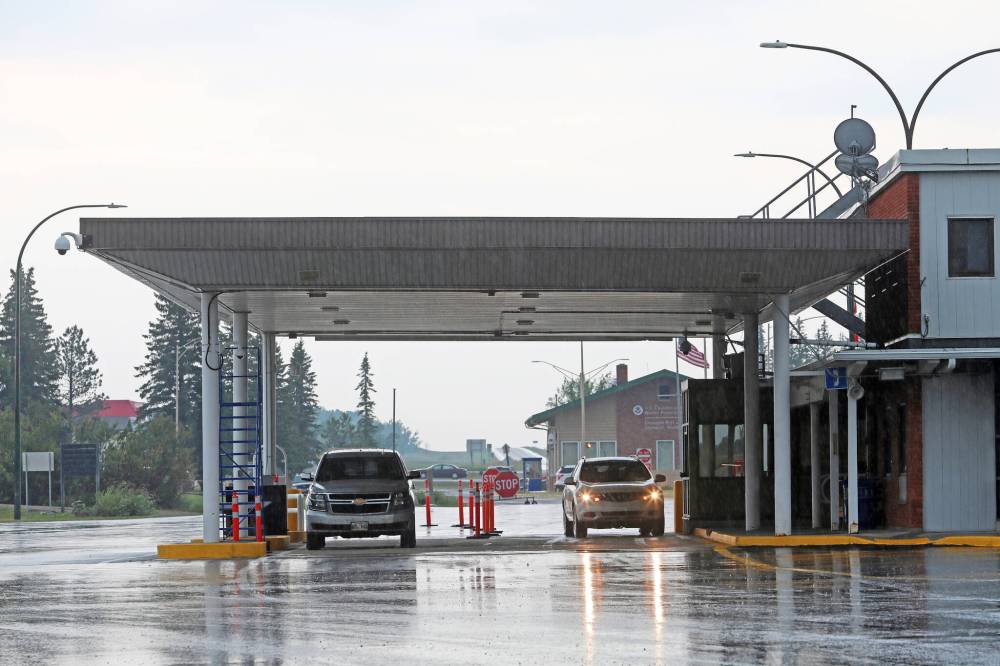
She’s not wrong. In 2023, the U.S. Customs and Border Protection agency encountered 190,000 individuals attempting to cross from Canada to the United States. That’s almost seven times more than in 2021. In September, the agency reported that it recorded a record-high number of encounters with migrants between border posts on the Canada-U.S. border between October 2023 and July of this year.
The number of people illegally crossing from Canada into America continues to be a fraction of the number of people illegally crossing from Mexico into the U.S., but the massive year-over-year increase at the Canada-U.S. border cannot be dismissed as trivial. In fact, the surge reinforces Trump’s position that something substantial needs to be done.
On Tuesday, Immigration Minister Mark Miller acknowledged that the U.S. and Canada have a shared interest in making sure the border is “manageable and controlled.” He told reporters that Canada is considering a number of measures, including deploying additional resources and bolstering the number of agents to patrol the border.
That’s a good start, but Miller and his Trudeau government colleagues must turn those words into tangible action, and fast. Jan. 20 — the date when Trump will be sworn in as president — is not that far away, and the clock is ticking.