
Study of 2023 Okanagan wildfires recommends limiting development in high-risk areas
Advertisement
Read this article for free:
or
Already have an account? Log in here »
We need your support!
Local journalism needs your support!
As we navigate through unprecedented times, our journalists are working harder than ever to bring you the latest local updates to keep you safe and informed.
Now, more than ever, we need your support.
Starting at $15.99 plus taxes every four weeks you can access your Brandon Sun online and full access to all content as it appears on our website.
Subscribe Nowor call circulation directly at (204) 727-0527.
Your pledge helps to ensure we provide the news that matters most to your community!
To continue reading, please subscribe:
Add Brandon Sun access to your Free Press subscription for only an additional
$1 for the first 4 weeks*
*Your next subscription payment will increase by $1.00 and you will be charged $20.00 plus GST for four weeks. After four weeks, your payment will increase to $24.00 plus GST every four weeks.
Read unlimited articles for free today:
or
Already have an account? Log in here »
Hey there, time traveller!
This article was published 28/11/2024 (490 days ago), so information in it may no longer be current.
A study into the devastating wildfires that struck British Columbia’s Okanagan region in 2023 has recommended that government and industry limit development in high-fire-risk areas.
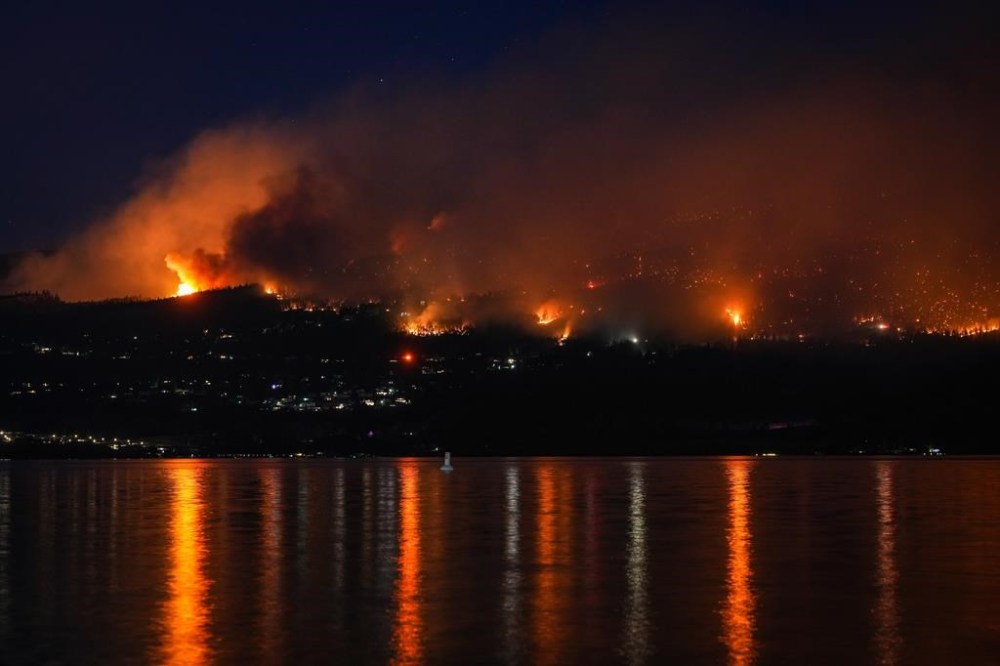
The study, conducted by non-profit FP Innovations on the request of the BC FireSmart Committee and the Institute for Catastrophic Loss Reduction, looked into the 2023 Grouse Complex of wildfires that included the McDougall Creek blaze.
The fires set more than 300 buildings ablaze, forced more than 30,000 people to flee and caused about $480 million in insured losses.
The case study found that embers and not direct contact with advancing flames were “almost exclusively” responsible for helping wildfires move into neighbourhoods.
The report also found that the presence of flammable materials within 10 metres of structures played a crucial role in whether it survived the wildfires.
The study’s recommendations included limiting development, increasing zoning bylaw setbacks for structures in heavily forested areas, and improving landscaping and fencing regulations to “establish non-combustible zones around structures.”
“Directing new urban development, be it residential, commercial, or industrial, towards existing urban centres and community hubs can reduce urban sprawl and minimize the creation of isolated, vulnerable developments in rural areas,” the report says.
“By considering and adopting these pathways, jurisdictions can significantly enhance their community’s resilience to wildfires.”
Other recommendations include looking into fire-resistant material, enhancing regulation enforcement in Wildfire Development Permit Areas, and for residents to better manage combustible items and vegetation on property.
This report by The Canadian Press was first published Nov. 28, 2024.