
US diplomats and hostage envoy in Syria on first visit since Assad ouster
Advertisement
Read this article for free:
or
Already have an account? Log in here »
We need your support!
Local journalism needs your support!
As we navigate through unprecedented times, our journalists are working harder than ever to bring you the latest local updates to keep you safe and informed.
Now, more than ever, we need your support.
Starting at $15.99 plus taxes every four weeks you can access your Brandon Sun online and full access to all content as it appears on our website.
Subscribe Nowor call circulation directly at (204) 727-0527.
Your pledge helps to ensure we provide the news that matters most to your community!
To continue reading, please subscribe:
Add Brandon Sun access to your Free Press subscription for only an additional
$1 for the first 4 weeks*
*Your next subscription payment will increase by $1.00 and you will be charged $20.00 plus GST for four weeks. After four weeks, your payment will increase to $24.00 plus GST every four weeks.
Read unlimited articles for free today:
or
Already have an account? Log in here »
Hey there, time traveller!
This article was published 19/12/2024 (469 days ago), so information in it may no longer be current.
WASHINGTON (AP) — The first U.S. diplomats to visit Syria since President Bashar Assad’s ouster earlier this month are now in Damascus to hold talks with the country’s new leaders and seek information on the whereabouts of missing American journalist Austin Tice.
Assistant Secretary of State for Near Eastern Affairs Barbara Leaf, former special envoy for Syria Daniel Rubinstein and the Biden administration’s chief envoy for hostage negotiations, Roger Carstens, made the trip for talks with Syria’s interim leaders, the State Department said early Friday.
The team is also the first group of American diplomats to formally visit Syria in more than a decade since the U.S. shuttered its embassy in Damascus in 2012.
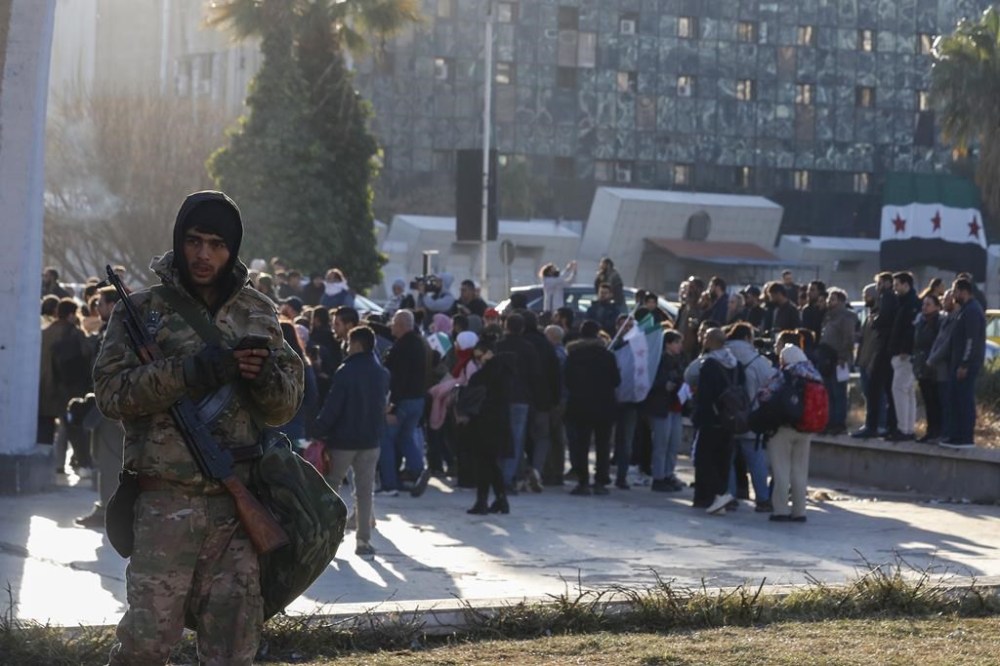
“They will be engaging directly with the Syrian people, including members of civil society, activists, members of different communities, and other Syrian voices about their vision for the future of their country and how the United States can help support them,” the State Department said.
At the top of their agenda will be information about Tice, who went missing in Syria in 2012. And they will push the principles of inclusion, protection of minorities and a rejection of terrorism and chemical weapons that the Biden administration says will be critical for any U.S. support for a new government.
The U.S. has redoubled efforts to find Tice and return him home, saying officials have communicated with the rebels who ousted Assad’s government about the American journalist. Carstens traveled previously to Lebanon to seek information.
Tice, who has had his work published by The Washington Post, McClatchy newspapers and others, disappeared at a checkpoint in a contested area west of Damascus as the Syrian civil war intensified.
A video released weeks after Tice went missing showed him blindfolded and held by armed men and saying, “Oh, Jesus.” He has not been heard from since. Assad’s government publicly denied that it was holding him.
The rebel group that spearheaded the assault on Damascus that forced Assad to flee — Hayat Tahrir al-Sham, or HTS — is designated a foreign terrorist organization by the United States and others. While that designation comes with a raft of sanctions, it does not prohibit U.S. officials from speaking to its members or leaders.
The State Department said Rubinstein, Leaf and Carstens would meet with HTS officials but did not say if the group’s leader Ahmad al-Sharaa, who was once aligned with al-Qaida, would be among those they see.
U.S. officials say al-Sharaa’s public statements about protecting minority and women’s rights are welcomed, but they remain skeptical that he will follow through on them in the long run.
The U.S. has not had a formal diplomatic presence in Syria since 2012, when it suspended operations at its embassy in Damascus during the country’s civil war, although there are U.S. troops in small parts of Syria engaged in the fight against the Islamic State militant group.
The Pentagon revealed Thursday that the U.S. had doubled the number of its forces in Syria to fight IS before Assad’s fall. The U.S. also has significantly stepped up airstrikes against IS targets over concern that a power vacuum would allow the militant group to reconstitute itself.
The diplomats’ visit to Damascus will not result in the immediate reopening of the U.S. embassy, which is under the protection of the Czech government, according to U.S. officials, who said decisions on diplomatic recognition will be made when the new Syrian authorities make their intentions clear.