
Hospital nurse in Uganda dies in country’s first Ebola outbreak in 2 years
Advertisement
Read this article for free:
or
Already have an account? Log in here »
We need your support!
Local journalism needs your support!
As we navigate through unprecedented times, our journalists are working harder than ever to bring you the latest local updates to keep you safe and informed.
Now, more than ever, we need your support.
Starting at $15.99 plus taxes every four weeks you can access your Brandon Sun online and full access to all content as it appears on our website.
Subscribe Nowor call circulation directly at (204) 727-0527.
Your pledge helps to ensure we provide the news that matters most to your community!
To continue reading, please subscribe:
Add Brandon Sun access to your Free Press subscription for only an additional
$1 for the first 4 weeks*
*Your next subscription payment will increase by $1.00 and you will be charged $20.00 plus GST for four weeks. After four weeks, your payment will increase to $24.00 plus GST every four weeks.
Read unlimited articles for free today:
or
Already have an account? Log in here »
Hey there, time traveller!
This article was published 30/01/2025 (420 days ago), so information in it may no longer be current.
KAMPALA, Uganda (AP) — A nurse in Uganda has died of Ebola in the first recorded fatality since the country’s last outbreak of the disease ended in early 2023, a health official said Thursday.
The 32-year-old male nurse was an employee of Mulago Hospital, the main referral facility in the capital, Kampala, Diana Atwine, permanent secretary of the health ministry, told reporters Thursday.
After developing a fever, he was treated at several locations in Uganda before multiple lab tests confirmed he had been suffering from Ebola. The man died on Wednesday and the Sudan strain of Ebola was confirmed following postmortem tests, Atwine said.
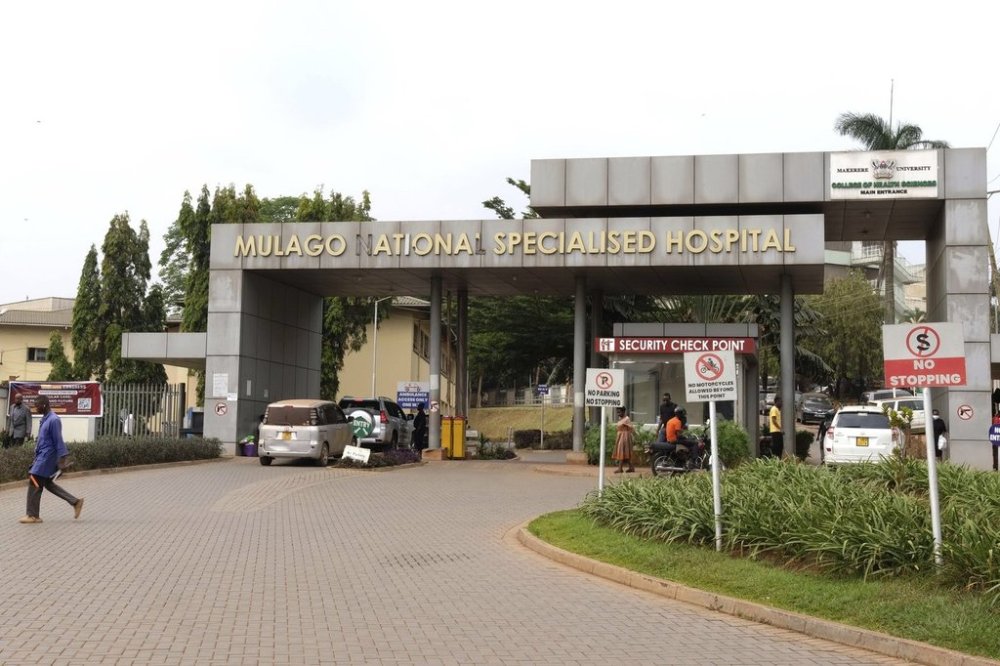
At least 44 contacts of the victim have been identified, including 30 health workers and patients at Mulago Hospital, according to Uganda’s Ministry of Health.
The health authorities are “in full control of the situation,” Atwine said, while also urging Ugandans to report any suspected cases.
Tracing contacts is key to stemming the spread of Ebola, and there are no approved vaccines for the Sudan strain of Ebola.
Uganda’s last outbreak, discovered in September 2022, killed at least 55 people before it was declared over in January 2023.
Confirmation of Ebola in Uganda is the latest in a trend of outbreaks of viral hemorrhagic fevers in the east African region. Tanzania declared an outbreak of the Ebola-like Marburg disease earlier this month, and in December Rwanda announced that its own outbreak of Marburg was over. The ongoing Marburg outbreak in northern Tanzania ‘s Kagera region has killed at least two people, according to local health authorities.
The World Health Organization will send an initial allocation of $1 million from a contingency fund to support Uganda’s response, Tedros Adhanom Ghebreyesus, the WHO director-general, said in a brief statement posted on the social platform X.
“A full scale response is being initiated by the government and partners,” the statement said.
Kampala’s outbreak could prove difficult to respond to, because the city has a highly mobile population of about 4 million. The nurse who died had sought treatment at a hospital just outside Kampala and later traveled to Mbale, in the country’s east, where he was admitted in a public hospital. Health authorities said the man also sought the services of a traditional healer.
Emmanuel Batiibwe, a physician who helped lead Uganda’s efforts to stop the country’s 2022 outbreak, told The Associated Press that he expected a swift response in tracing all possible Ebola contacts in Kampala and elsewhere.
“Our reaction should be swift, decisive and well-coordinated,” he said, speaking of lessons learned from the 2022 outbreak, whose epicenter was a town in central Uganda. “We have the means of responding quickly now.”
Ebola, which is spread by contact with bodily fluids of an infected person or contaminated materials, manifests as a deadly hemorrhagic fever. Symptoms include fever, vomiting, diarrhea, muscle pain and at times internal and external bleeding.
Scientists don’t know the natural reservoir of Ebola, but they suspect the first person infected in an outbreak acquired the virus through contact with an infected animal or eating its raw meat.
Ugandan officials are still investigating the source of the current outbreak.
Uganda has had multiple Ebola outbreaks, including one in 2000 that killed hundreds. The 2014-16 Ebola outbreak in West Africa killed more than 11,000 people, the disease’s largest death toll.
Ebola was discovered in 1976 in two simultaneous outbreaks in South Sudan and Congo, where it occurred in a village near the Ebola River, after which the disease is named.