
Book Review: From incels to trad wives, culture critic probes 21st century backlash against feminism
Advertisement
Read this article for free:
or
Already have an account? Log in here »
We need your support!
Local journalism needs your support!
As we navigate through unprecedented times, our journalists are working harder than ever to bring you the latest local updates to keep you safe and informed.
Now, more than ever, we need your support.
Starting at $15.99 plus taxes every four weeks you can access your Brandon Sun online and full access to all content as it appears on our website.
Subscribe Nowor call circulation directly at (204) 727-0527.
Your pledge helps to ensure we provide the news that matters most to your community!
To continue reading, please subscribe:
Add Brandon Sun access to your Free Press subscription for only an additional
$1 for the first 4 weeks*
*Your next subscription payment will increase by $1.00 and you will be charged $20.00 plus GST for four weeks. After four weeks, your payment will increase to $24.00 plus GST every four weeks.
Read unlimited articles for free today:
or
Already have an account? Log in here »
Hey there, time traveller!
This article was published 28/04/2025 (332 days ago), so information in it may no longer be current.
Sophie Gilbert, a London-based staff writer for the Atlantic magazine, has taken a survey of the Anglo-American pop culture landscape, and her findings aren’t pretty. In a new book, “Girl on Girl: How Pop Culture Turned a Generation of Women Against Themselves” she concludes that after decades of social and political progress for women, the patriarchy has come roaring back in the 21st century with the new-old belief that women’s proper place is in the kitchen and bedroom, not the boardroom or the military.
As a millennial herself, Gilbert wanted to explore, from the perspective of a critic, how and why seemingly every genre of entertainment in the 2000s, from movies and music to TV and fashion, was sending girls the message that it was OK to look and act like a pinup girl again.
“Why were we so easily persuaded of our own inadequacy? Who was setting the agenda? Why, for decades and even now, has virtually every cultural product been so insistently oriented around male desire and male pleasure?” she writes.
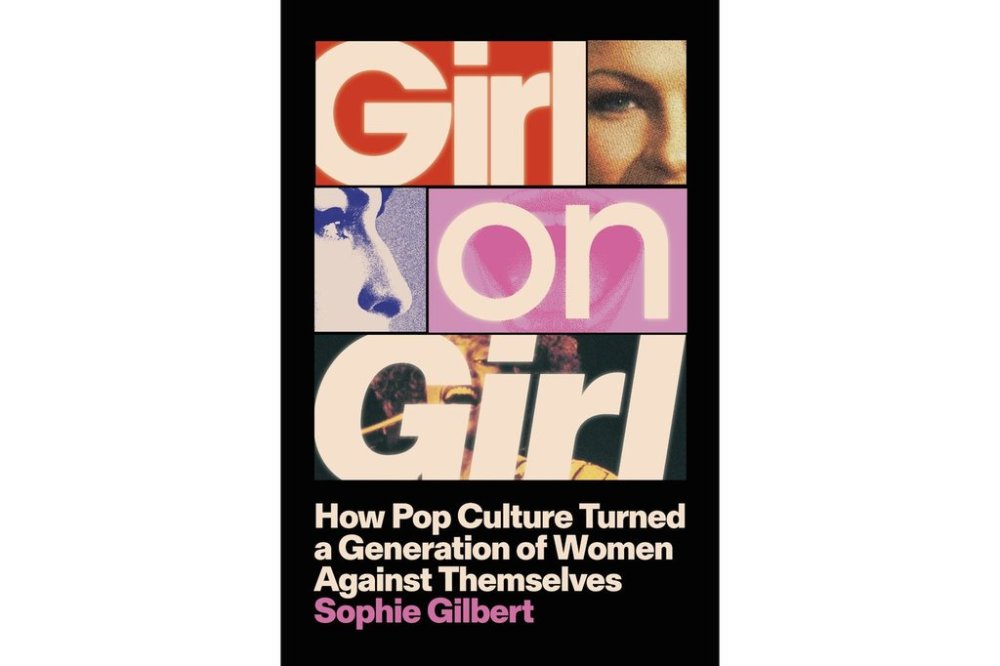
The reasons are manifold, and the results indisputably clear. In music, the “ferocious activist energy of riot grrrls” gave way to the “ hyper-commercialized Spice Girls” over the course of the 1990s. Meanwhile, the emergence of hardcore rap celebrated misogyny and sexual violence against women. In literature and later in film, “Bridget Jones pioneered an enduring new female archetype: the trainwreck.” In fashion, powerful supermodels who knew what they were worth and demanded to be paid for it “were phased out in favor of frail, passive teenagers.”
But in Gilbert’s view, nothing was as influential as the proliferation of porn, which has trained both men and women to see the latter as objects, “as things to silence, restrain, fetishize, or brutalize.” She nods to it in the meaning of her double-barreled title. “Girl on girl” is both a genre of porn and an acknowledgement of the way women have been turned against themselves and each other by the forces of postfeminism.
Chapter by chapter, Gilbert methodically shows how the backlash against second- and third-wave and riot grrrl feminism fueled the rise of incel culture, trad wives, the stay-at-home girlfriends on TikTok, and much more. There is a lot to unpack here, but it is well worth the effort. Especially if you, like Gilbert, are still coming to grips with the reversal of Roe v. Wade in 2022 and the reelection of Donald Trump last year, demonstrating the evident appeal of his message to both men and a sizable minority of women.
___
AP book reviews: https://apnews.com/hub/book-reviews