
Book Review: David Attenborough takes readers to ‘Earth’s Last Wilderness’ in ‘Ocean’
Advertisement
Read this article for free:
or
Already have an account? Log in here »
We need your support!
Local journalism needs your support!
As we navigate through unprecedented times, our journalists are working harder than ever to bring you the latest local updates to keep you safe and informed.
Now, more than ever, we need your support.
Starting at $15.99 plus taxes every four weeks you can access your Brandon Sun online and full access to all content as it appears on our website.
Subscribe Nowor call circulation directly at (204) 727-0527.
Your pledge helps to ensure we provide the news that matters most to your community!
To continue reading, please subscribe:
Add Brandon Sun access to your Free Press subscription for only an additional
$1 for the first 4 weeks*
*Your next subscription payment will increase by $1.00 and you will be charged $20.00 plus GST for four weeks. After four weeks, your payment will increase to $24.00 plus GST every four weeks.
Read unlimited articles for free today:
or
Already have an account? Log in here »
Hey there, time traveller!
This article was published 06/05/2025 (324 days ago), so information in it may no longer be current.
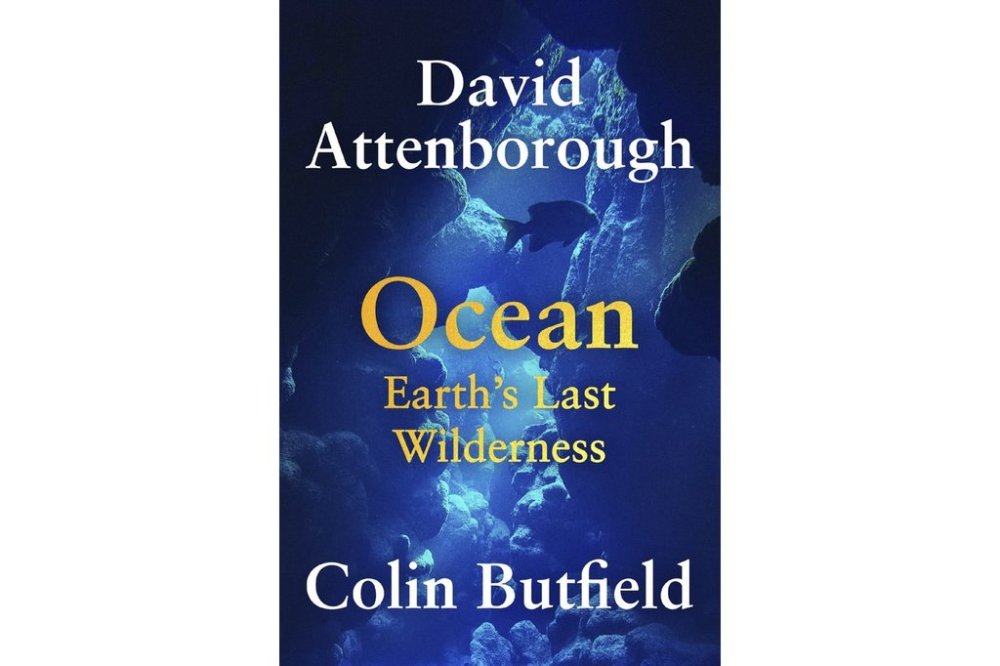
British biologist Sir David Attenborough will celebrate his 99th birthday two days after the publication of his latest book, “Ocean: Earth’s Last Wilderness,” co-written with long-time BBC collaborator Colin Butfield. And I’m willing to bet instead of a cake or any gifts, he’d appreciate it if every nation would sign on to the U.N. High Seas Treaty and stop exploiting the ocean for short-term gains.
“Ocean” is the complementary book to a National Geographic film of the same name available on the Disney family of streaming services. It will no doubt be an amazing look at the watery world that makes up two-thirds of this planet’s surface and “99% of its habitable area.” But if you don’t want to wait for the main course -— Attenborough’s dulcet tones narrating over stunning high-definition images from the deep blue — the book serves as a fine appetizer.
Covering eight unique salt-water habitats, “Ocean” transports readers to coral reefs, the deep, open ocean, kelp forests, the Arctic, mangroves, oceanic islands and seamounts, and the Southern Ocean. Attenborough begins each chapter with a story from his lifetime of exploration, including his first scuba dive in 1957. (“I was so taken aback by the spectacle before me that I momentarily forgot to breathe.”) Butfield picks up the baton from there, offering a wealth of scientific facts and history about each habitat.
Trivia buffs or people who just like to learn new stuff will delight in all the data. The end of each chapter can prompt a fun game of “Did You Know?” with friends and family. For example: The average depth of the ocean is 3,500 meters (11,483 feet), phytoplankton absorb 40% of the carbon dioxide produced by human activity, and a blue whale’s tongue weighs two tons.
Despite detailing the impact of global warming throughout the ocean ecosystem, the book is not all doom and gloom. The authors present a case study in hope near the end of most chapters, like the coral reefs of Cabo Pulmo, off the coast of Baja California. Once teeming with life, unrestricted commercial fishing decimated the region in the 1980s. But after a local fisherman teamed up with a marine professor to convince the Mexican government to declare a no-fishing zone and create a marine preserve, Cabo Pulmo recovered over the next decade, a sign, they write, that “simply leaving parts of the ocean alone creates the capacity for it to regenerate.”
Here’s hoping that reading or watching “Ocean” will help raise the level of global awareness required to protect this last wilderness.
___
AP book reviews: https://apnews.com/hub/book-reviews