
Debacle requires an explanation
Advertisement
Read this article for free:
or
Already have an account? Log in here »
We need your support!
Local journalism needs your support!
As we navigate through unprecedented times, our journalists are working harder than ever to bring you the latest local updates to keep you safe and informed.
Now, more than ever, we need your support.
Starting at $15.99 plus taxes every four weeks you can access your Brandon Sun online and full access to all content as it appears on our website.
Subscribe Nowor call circulation directly at (204) 727-0527.
Your pledge helps to ensure we provide the news that matters most to your community!
To continue reading, please subscribe:
Add Brandon Sun access to your Free Press subscription for only an additional
$1 for the first 4 weeks*
*Your next subscription payment will increase by $1.00 and you will be charged $20.00 plus GST for four weeks. After four weeks, your payment will increase to $24.00 plus GST every four weeks.
Read unlimited articles for free today:
or
Already have an account? Log in here »
Hey there, time traveller!
This article was published 27/05/2025 (335 days ago), so information in it may no longer be current.
Two months ago, it was revealed that Manitoba Public Insurance announced it had finally decided to abandon its failed Project Nova technology upgrade program after a review estimated total project costs to be $435 million, which is far higher than previously thought. As a result of the decision, monies spent to date on the final two phases of the four-phase project would be written off.
To make matters worse, it was reported yesterday that MPI has now decided to shut down one of the few working components created through via the Project Nova process because it is causing too many problems for its customers.
The Crown corporation has decided to disable a digital program that was used for special risk-extension (SRE) renewals and new policies for commercial customers. It will now return to the paper-based system it utilized prior to the doomed upgrade. The decision impacts thousands of policies.
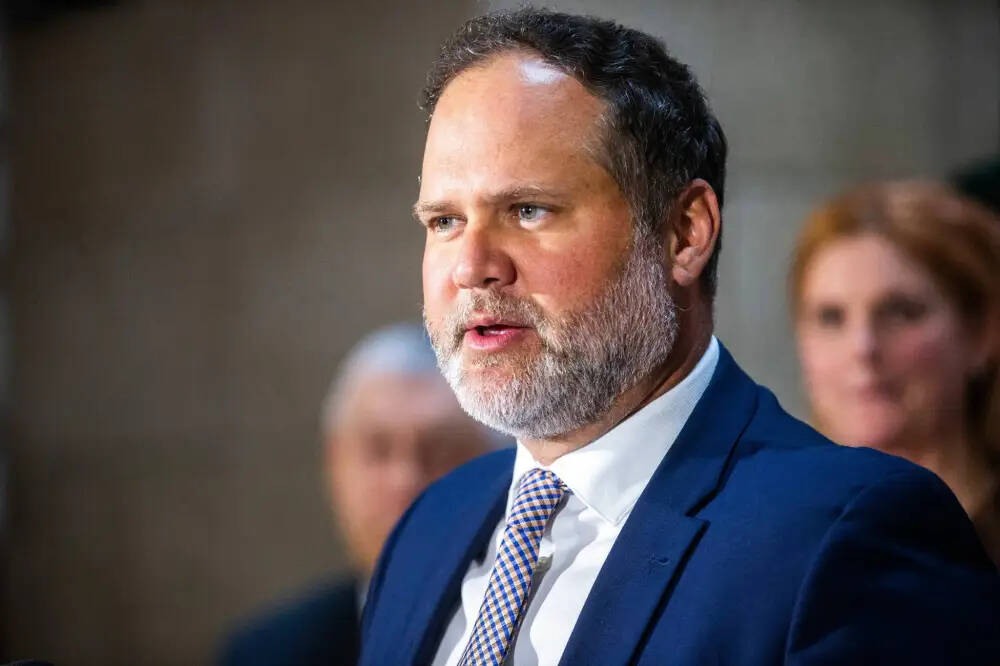
MPI chief executive officer Satvir Jatana says that “Despite our significant investments in time and resources, especially in recent months, to move this work forward, we have not seen the improvements that we anticipated. It has become clear that attempting to fix the system while working in it is not in the best interests of our teams, our broker partners or our SRE customers.”
It is commendable that the new management team at MPI has the courage to abandon a defective program that the corporation had invested so many millions of dollars in. It is fair to ask, however, why it took so long, and why so much money — funded by Manitoba drivers and vehicle owners — was needlessly wasted before MPI management finally had to the courage to stop the spending.
For those who have not been following this boondoggle, Project Nova was first announced in 2020 at a projected cost of $107 million and was expected to be completed in three years. When the project was launched, government and MPI officials promised it would massively upgrade MPI’s digital capabilities, which would provide seamless connectivity between MPI and repair shops. Most importantly, it would also vastly improve customer experience by enabling Manitobans to renew or amend their auto insurance and driver’s licences online.
By 2022, the cost of the project had ballooned to $290 million. Three years after that, it had climbed to a staggering $435 million, with virtually nothing of value to show for it.
In announcing the cancellation of Project Nova in March, Matt Wiebe, the minister responsible for MPI, said that halting the program meant that “the waste of taxpayers’ money is over.” He promised that his government would “work with MPI to upgrade its IT systems in a way that is fiscally responsible and delivers full value for Manitobans. We are not wasting one more dollar.”
Those were encouraging words, but Wiebe held a news conference last year to celebrate the completion of the second phase of Project Nova, and said at the time that “We are now starting to see the corporation get back on track.” He has yet to explain how the cost of the project exploded to more than $400 million, and has been just as silent on what specific fiscally responsible upgrades MPI will be undertaking to “deliver full value” for Manitobans who, after all, are MPI’s owners.
It its mission statement, MPI claims it is “committed to exceptional coverage, superior service and rates that are stable, predictable and among the lowest in Canada.”
It is difficult to reconcile that objective with the reality that MPI rates and the drivers’ basic insurance premium were hiked by a total of almost seven per cent last year, and that a large portion of that increase was due to the millions of dollars that had been wasted on Project Nova.
It is laudable that the government has finally decided to end the misspending and close the books on Project Nova, but that is merely a logical, if long-overdue, first step.
What is required now is a full and detailed explanation to Manitobans as to how the Project Nova mess happened, and why the situation was allowed to worsen for a number of years despite evident problems and runaway cost increases.
We must learn every lesson that can be learned from this debacle, in order that it is never repeated.