
The Royal Train will end 156 years of service as King Charles III seeks to economize
Advertisement
Read this article for free:
or
Already have an account? Log in here »
We need your support!
Local journalism needs your support!
As we navigate through unprecedented times, our journalists are working harder than ever to bring you the latest local updates to keep you safe and informed.
Now, more than ever, we need your support.
Starting at $15.99 plus taxes every four weeks you can access your Brandon Sun online and full access to all content as it appears on our website.
Subscribe Nowor call circulation directly at (204) 727-0527.
Your pledge helps to ensure we provide the news that matters most to your community!
To continue reading, please subscribe:
Add Brandon Sun access to your Free Press subscription for only an additional
$1 for the first 4 weeks*
- Enjoy unlimited reading on brandonsun.com
- Read the Brandon Sun E-Edition, our digital replica newspaper
*Your next Free Press subscription payment will increase by $1.00 and you will be charged $20.95 plus GST for four weeks. After four weeks, your payment will increase to $24.95 plus GST every four weeks.
Read unlimited articles for free today:
or
Already have an account? Log in here »
Hey there, time traveller!
This article was published 30/06/2025 (313 days ago), so information in it may no longer be current.
LONDON (AP) — The Royal Train will soon leave the station for the last time.
King Charles III has accepted it’s time to decommission the train, whose history dates back to Queen Victoria, because it costs too much to operate and would have needed a significant upgrade for more advanced rail systems, Buckingham Palace said Monday.
“In moving forwards, we must not be bound by the past,’’ said James Chalmers, the palace official in charge of the king’s financial affairs. “Just as so many parts of the royal household’s work have modernized and adapted to reflect the world of today, so too the time has come to bid the fondest of farewells, as we seek to be disciplined and forward-looking in our allocation of funding.’’
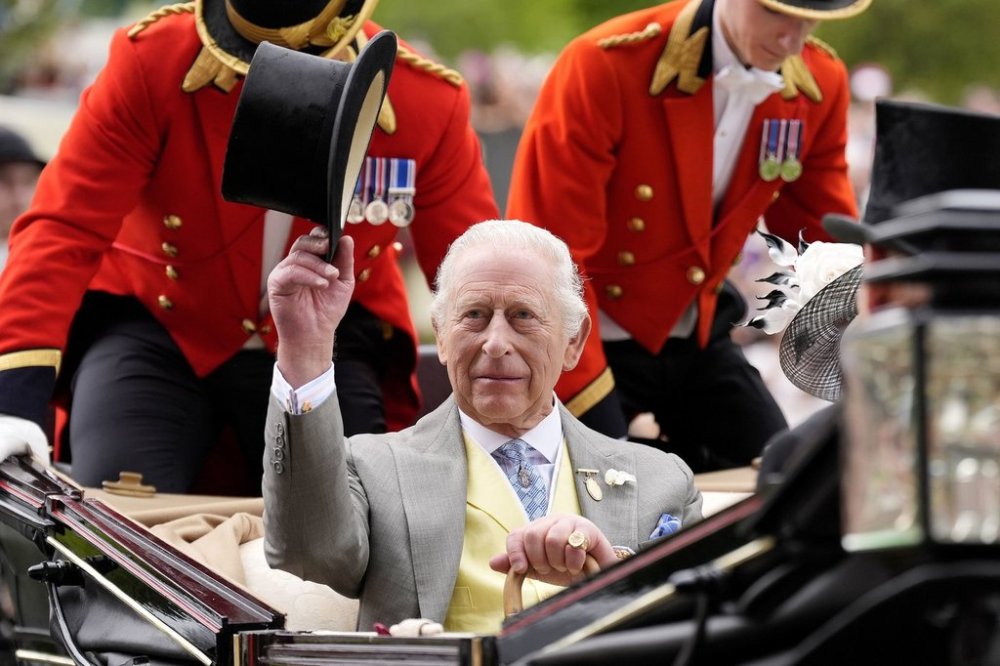
The train, actually a suite of nine railcars that can be hitched to commercial locomotives, will be decommissioned sometime before the current maintenance contract expires in 2027. That will bring to an end a tradition that dates back to 1869, when Queen Victoria commissioned a pair of special coaches to accommodate her travels.
The decision was announced during the palace’s annual briefing for reporters on the royal finances.
The royal family will for the fourth consecutive year receive public funding of 86.3 million pounds ($118 million), including 34.5 million pounds to fund the remodeling of Buckingham Palace, in the 12 months through March 2026.
This money comes from a mechanism known as the Sovereign Grant, which sets aside 12% of the net income from the Crown Estate to fund the official duties of the king and other members of the royal family.
The Crown Estate is a portfolio of properties that are owned by the monarch during his reign. The properties are professionally managed and the king can’t dispose of the assets.
The Crown Estate is one of the many relics of Britain’s feudal past. King George III, who ruled during the American Revolution, surrendered management of the crown lands to Parliament in 1760 in return for a fixed payment from the Treasury.
The royal finances remain a topic of public debate, with Charles pledging to slim down the monarchy and cut costs as he seeks to ensure the institution’s survival.
Buckingham Palace was quick to point out that while the Sovereign Grant has been unchanged for the past four years, inflation has eroded its value. If the grant had increased in line with inflation, it would have been about 106 million pounds this year, the palace said.
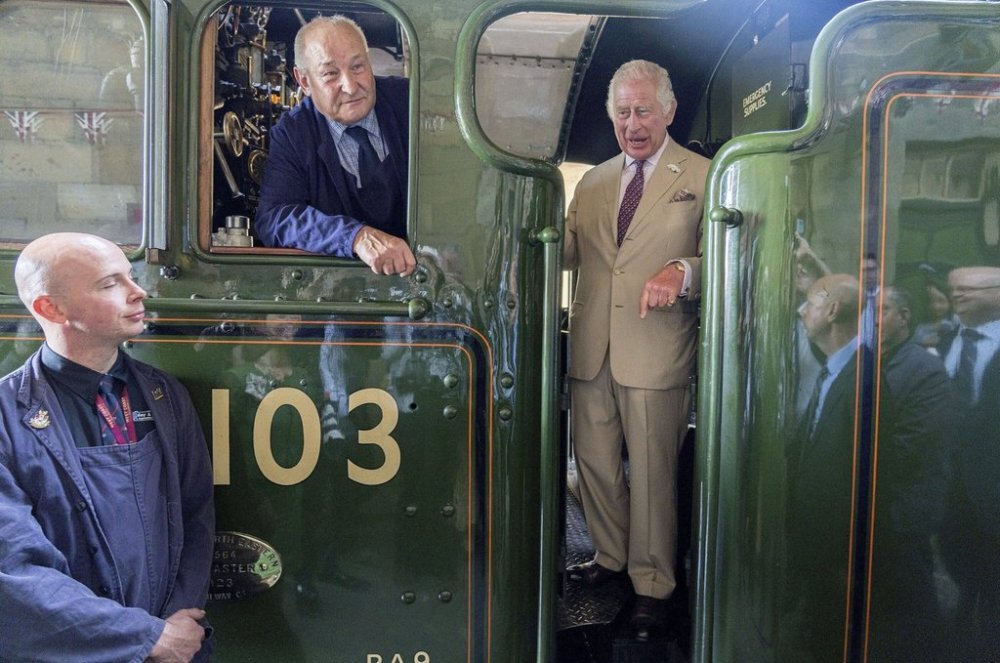
The basic grant was supplemented with 21.5 million pounds ($29.5 million) of income generated by properties outside the Crown Estate. This income increased by 1.7 million pounds, driven by a record year for visitors to Buckingham Palace and special tours of the newly renovated East Wing.
Craig Prescott, a constitutional law expert at Royal Holloway, University of London who focuses on the political role of the monarchy, said funding for the royals is relatively small when compared to the overall cost of the British state and it provides tangible benefits for the country.
“It’s something that puts Britain on the world stage in a way that few other things do,’’ he said, noting that Queen Elizabeth II’s funeral was the largest gathering of world leaders in history and the coronation was broadcast around the world. “It’s one of those things that people think about when they think about Britain.’’
Over the past year, Charles traveled to Australia and attended the Commonwealth Heads of Government Meeting in Samoa — his first as the organization’s head. The royals also took center stage at the 80th anniversaries of D-Day and V-E Day, which marked the end of World War II in Europe, and welcomed the leaders of Japan and Qatar as they made state visits to the U.K.
Overall, the royals made 1,900 public appearances in the U.K. and overseas. About 93,000 guests attended 828 events at the royal palaces.