
Separatist leanings surprise Westman politicians
Advertisement
Read this article for free:
or
Already have an account? Log in here »
We need your support!
Local journalism needs your support!
As we navigate through unprecedented times, our journalists are working harder than ever to bring you the latest local updates to keep you safe and informed.
Now, more than ever, we need your support.
Starting at $15.99 plus taxes every four weeks you can access your Brandon Sun online and full access to all content as it appears on our website.
Subscribe Nowor call circulation directly at (204) 727-0527.
Your pledge helps to ensure we provide the news that matters most to your community!
To continue reading, please subscribe:
Add Brandon Sun access to your Free Press subscription for only an additional
$1 for the first 4 weeks*
- Enjoy unlimited reading on brandonsun.com
- Read the Brandon Sun E-Edition, our digital replica newspaper
*Your next Free Press subscription payment will increase by $1.00 and you will be charged $20.95 plus GST for four weeks. After four weeks, your payment will increase to $24.95 plus GST every four weeks.
Read unlimited articles for free today:
or
Already have an account? Log in here »
Hey there, time traveller!
This article was published 02/07/2025 (441 days ago), so information in it may no longer be current.
A recent poll has found that more than half of PC and Conservative voters in Manitoba would likely vote to leave Canada if given the chance, something conservative politicians in Westman find “surprising.”
An omnibus survey conducted by Probe Research in June for the Winnipeg Free Press found that 52 per cent of provincial Progressive Conservative voters and 56 per cent of federal Conservative voters would definitely or probably vote to leave the country in a referendum vote.
“I find that a bit surprising,” Brandon-Souris MP Grant Jackson said.
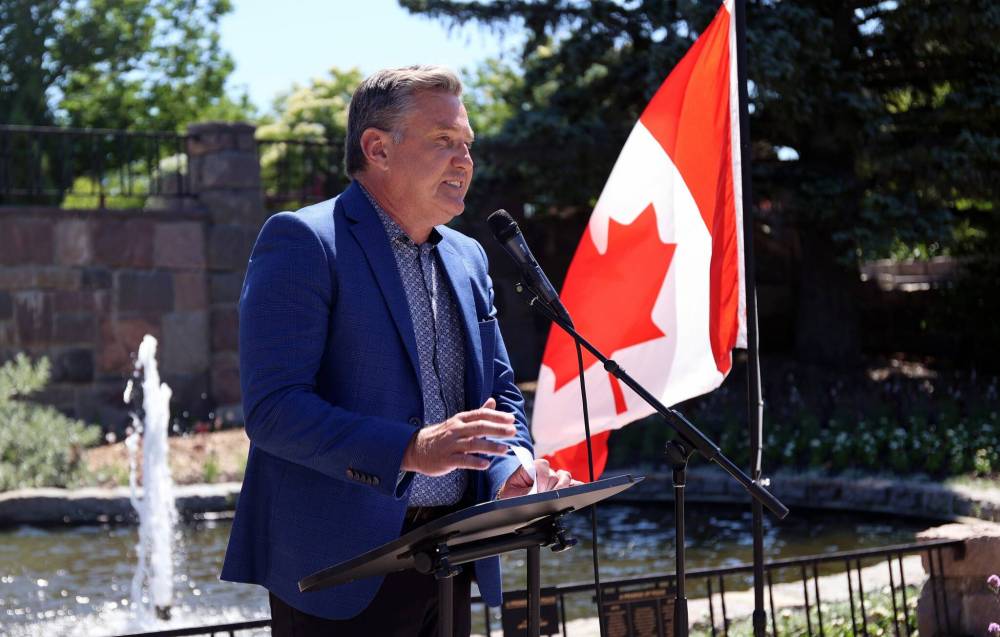
Turtle Mountain MLA Doyle Piwniuk speaks at a citizenship ceremony at the International Peace Garden south of Boissevain on Tuesday. Piwniuk said the apparent appetite for separation among some conservative voters in Manitoba shows that it's important to be united, and that western provinces need to work together. (Alex Lambert/The Brandon Sun)
Jackson said Conservatives in rural Western Canada are frustrated with how the Liberal party has treated industries here, and said that could explain the appetite for separation among some voters.
“I think any poll is a snapshot in time,” he told the Sun at a Canada Day event in Deloraine on Tuesday. “I’m not going to start panicking about that, but I think it is a reference to where some people are at right now.”
Rural residents who voted for all parties were also more likely than urban residents to vote to leave, with 36 per cent of rural respondents saying they would vote to separate compared to 13 per cent of Winnipeg respondents.
The results were based on a random and representative sample of 1,000 Manitoba adults.
Jackson said the results don’t mean Conservatives aren’t proud to be Canadian.
“I think Conservatives are proud Canadians — I certainly believe this is a great country,” Jackson said as people drove into town to start the Canada Day celebrations. “I’m a proud Canadian.”
Turtle Mountain MLA Doyle Piwniuk agreed.
“It’s a wake-up call, to say that we’ve got to work together as a party to be unified, and to have one (Progressive) Conservative Party together,” Piwniuk told the Sun after a citizenship ceremony at the International Peace Garden south of Boissevain on Tuesday.
Piwniuk added that Canadians need to stick together.
“I’d like to see us unite, because I think we get stronger when we’re working together,” he said.
“The fact is, we’ve got to work together as (western) provinces and have a bigger voice when it comes to dealing with Eastern Canada.”
PC Leader Obby Khan told the Sun that the reported separatist leanings of 52 per cent of PC voters are likely a reflection of how federal politics have recently played out.
“This last federal election didn’t deliver the kind of change people in Western Canada were looking for, so I believe some of that dissatisfaction is being expressed in the poll numbers,” Khan said in an email.
He said the apparent willingness to separate is because people in Western Canada don’t feel as though they are heard in Ottawa.
“This poll echoes a growing sentiment in Western Canada that we were never really fully equal partners in Confederation, and sadly that feeling has been around for generations,” Khan wrote.
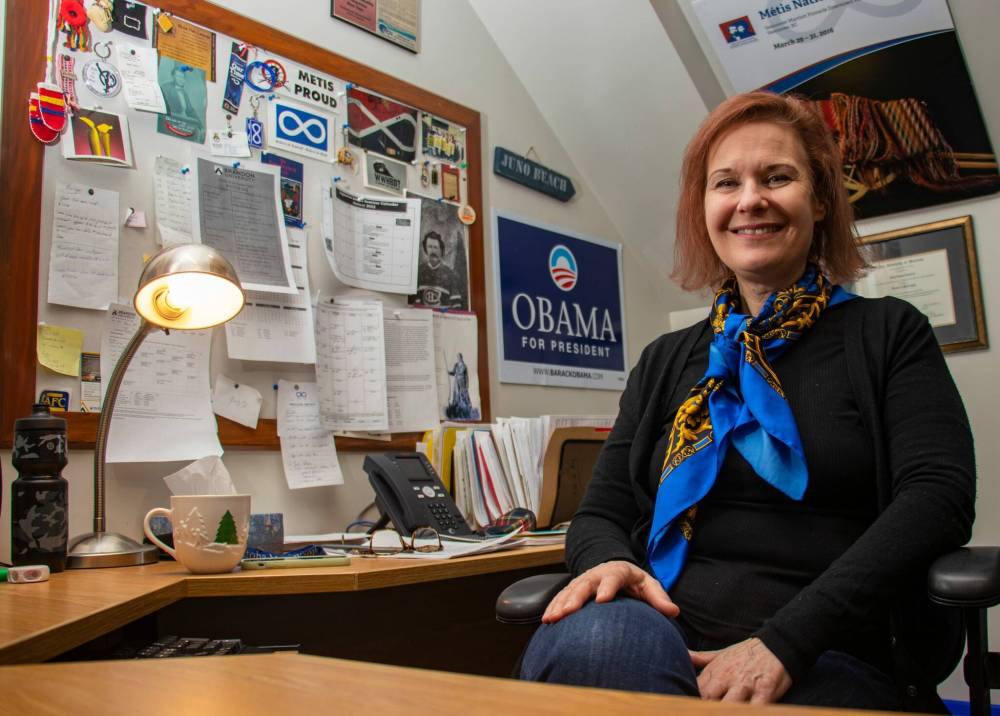
Brandon University political science Prof. Kelly Saunders. (The Brandon Sun files)
“My focus as leader is to change that perception and work for a better Manitoba within Canada.”
Brandon University political science Prof. Kelly Saunders said the results of the poll aren’t surprising to her. It makes sense that federal Conservative voters feel that way here, because there’s already a perception that decisions made in Ottawa don’t reflect the opinions of people in the West.
“There’s a long history of western alienation in this country,” Saunders said. “A dominant theme was this idea that politics was dominated by the Liberal party, that doesn’t really have a base in Western Canada, that they are not representing western Canadians.”
She said the results for the PC party are likely because the federal and provincial parties have similar voters.
The PC party, she added, is going to have to proceed with caution to not alienate part of its base.
“They’ve got to be careful, because they could lose a lot of more moderate supporters if they fall in the trap of the rhetoric of a separation,” she said. “That’s a really tough road for them to try and navigate.
“They have to very careful because it can just really blow up in their face.”
Saunders also noted the poll results aren’t representative of the average Manitoban, and separation might not be something to seriously worry about here.
“My main takeaway is not to overreact to these numbers,” she said. “I think in this moment, most Manitobans are feeling pretty patriotic about Canada and wanting to be part of Canada.”
Only two per cent of provincial NDP voters said they would vote for separation. Nine per cent of voters from other provincial parties, excluding the PCs, also said the same.
Men also had a higher chance of voting for separation, with 30 per cent of them saying they would vote for it, compared to 15 per cent of women.
» alambert@brandonsun.com