
A wise negotiating strategy for Canada
Advertisement
Read this article for free:
or
Already have an account? Log in here »
We need your support!
Local journalism needs your support!
As we navigate through unprecedented times, our journalists are working harder than ever to bring you the latest local updates to keep you safe and informed.
Now, more than ever, we need your support.
Starting at $15.99 plus taxes every four weeks you can access your Brandon Sun online and full access to all content as it appears on our website.
Subscribe Nowor call circulation directly at (204) 727-0527.
Your pledge helps to ensure we provide the news that matters most to your community!
To continue reading, please subscribe:
Add Brandon Sun access to your Free Press subscription for only an additional
$1 for the first 4 weeks*
*Your next subscription payment will increase by $1.00 and you will be charged $20.00 plus GST for four weeks. After four weeks, your payment will increase to $24.00 plus GST every four weeks.
Read unlimited articles for free today:
or
Already have an account? Log in here »
Hey there, time traveller!
This article was published 24/07/2025 (255 days ago), so information in it may no longer be current.
“They’re complex negotiations, and we’ll use all the time that’s necessary, and agree (on) something that’s in the interests of Canadians, if that’s available … It’s not our objective to have an agreement at any cost.”
— Prime Minister Mark Carney
With the Aug. 1 deadline for the completion of a trade deal between Canada and the United States rapidly approaching, it is reassuring that Prime Minister Mark Carney and his government refuse to follow the example set by a number of other nations, which have each succumbed to the pressure to reach a quick trade agreement with the Trump administration.
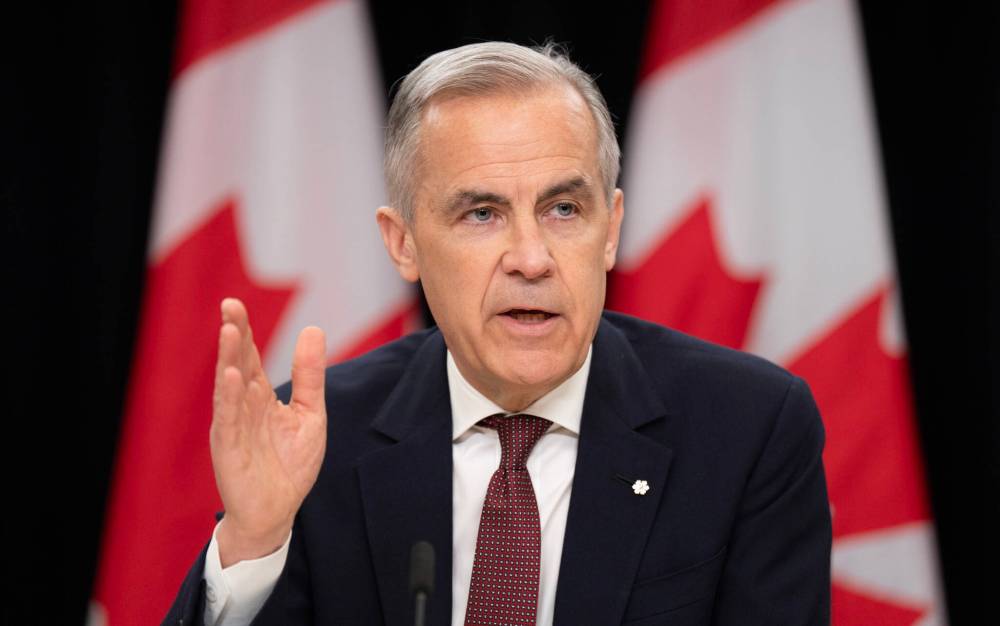
At a gathering of Canada’s premiers this week, Carney emphasized that the federal government is “only going to accept the best deal for Canada.” He described such a deal as one “that preserves, reinforces and stabilizes” the trade relationship between Canada and America, and is “also one that doesn’t tie our hands in terms of other things that we can do.”
The PM’s position appears to have received the strong support of the premiers. Ontario Premier Doug Ford told reporters, “We’re standing behind the prime minister to make sure that he has a fair and free trade deal for Canada and every single province and territory, and I’m very confident that’s going to happen.”
New Brunswick Premier Susan Holt echoed those comments, saying, “We’ve encouraged the prime minister to not make a deal at all costs … The timeline is of lesser importance than the substance of the deal.” Nova Scotia Premier Tim Houston added: “I think it’s just really important that we get the best deal for Canadians, and I’m personally not focused on the date.”
We agree with Carney and the premiers. It is better for Canada to have no deal with the Americans for the time being than a flawed agreement caused by a rushed, pressurized negotiating process. We should be in no hurry to reach an agreement that compromises Canada’s interests in any way. If the “win” isn’t there at the moment, there is no wisdom in accepting a loss simply because of an artificial timeline that is intended to escalate the pressure on Canada.
Many will recall that we were in exactly this situation not that long ago. In 2018, when the Canada-U.S.-Mexico free trade agreement was being negotiated, the Trump administration attempted to use the threat of heavy tariffs in order to extract concessions from Canada.
At the time, many so-called experts in Canada argued that even a bad deal with the U.S. was better than no deal at all. Thankfully, the Trudeau government ignored that advice. It continued to negotiate and the result was a trade agreement that has created billions of dollars in wealth and tax revenue, as well as thousands of jobs across the country. Trump may have regarded us as “nasty” negotiators, but we got the deal we wanted.
Seven years later, we are in a similar situation involving the same U.S. president, and there are compelling arguments in favour of repeating the same negotiating strategy that succeeded in the CUSMA talks.
Trump’s tariffs are causing economic harm here in Canada — which may worsen — but the true impact of his tariff strategy, imposed on dozens of nations, is only just beginning to be felt by American consumers. Everything from food to gasoline to computers is becoming more expensive, and that inflation will eventually translate into pressure on Trump from American voters to abandon his tariffs or risk losing Republican seats in next year’s mid-term elections.
As well, we should not ignore the fact that we also have leverage in the Canada-U.S. trading relationship. We are America’s biggest trading partner and a dependable source of goods, resources and services that the U.S. economy relies upon. Restricting the Canada-U.S. trade relationship would cause immediate and significant harm to the American economy. It would be impossible for the Americans to quickly and affordably replace all those Canadian products with products from other nations.
Finally, Trump’s tariff threats do not currently apply to items that are subject to the CUSMA deal, meaning that a large portion of the Canada-U.S. trade relationship will be unchanged by whatever tariffs Trump may impose in the short term. That points to the importance of next year’s CUSMA renegotiations, but that is an issue for next year.
In the interim, Carney and his team are wise to continue working toward an agreement with America that serves Canada’s long-term interests, even if it means working past the current deadline. In many ways, time is on their side.