
Saskatchewan health policy requires consent to cut hair of Indigenous patients
Advertisement
Read this article for free:
or
Already have an account? Log in here »
We need your support!
Local journalism needs your support!
As we navigate through unprecedented times, our journalists are working harder than ever to bring you the latest local updates to keep you safe and informed.
Now, more than ever, we need your support.
Starting at $15.99 plus taxes every four weeks you can access your Brandon Sun online and full access to all content as it appears on our website.
Subscribe Nowor call circulation directly at (204) 727-0527.
Your pledge helps to ensure we provide the news that matters most to your community!
To continue reading, please subscribe:
Add Brandon Sun access to your Free Press subscription for only an additional
$1 for the first 4 weeks*
*Your next subscription payment will increase by $1.00 and you will be charged $20.00 plus GST for four weeks. After four weeks, your payment will increase to $24.00 plus GST every four weeks.
Read unlimited articles for free today:
or
Already have an account? Log in here »
Hey there, time traveller!
This article was published 05/08/2025 (235 days ago), so information in it may no longer be current.
SASKATOON – Saskatchewan’s health authority is requiring staff to get consent before cutting the hair of Indigenous patients, nearly a year after a Métis man’s ponytail was cut without his approval.
A message sent to health employees says the new policy aims to respect the spiritual and cultural significance of hair to Indigenous people.
It says staff must not cut the hair of Indigenous patients unless they have consent from the patient, family or decision-maker involving their health.
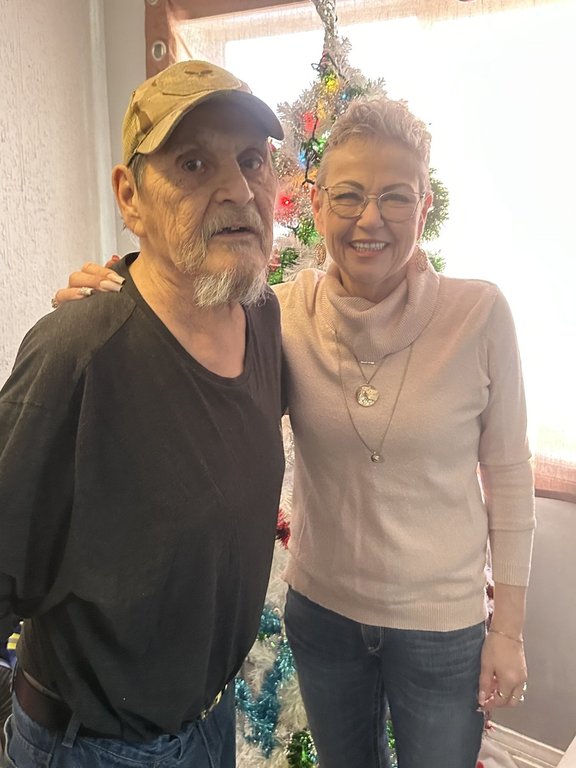
The policy says hair should only be cut when medically necessary, such as for head trauma and brain or head surgery.
The direction comes about a year after Ruben St. Charles’s ponytail was cut before he received hip surgery at a Saskatoon hospital.
Bonnie Marwood, a patient advocate for St. Charles, says the policy is a step in the right direction but he has not received an apology for his ponytail being cut.
Marwood said Tuesday that St. Charles has not been able to grow his hair out. She last spoke to him a month ago.
“He’s trying, but he’s not in the best of health and he’s in his 70s,” Marwood said. “He still wants the same thing — an apology from the woman who cut his hair.”
The Saskatchewan Health Authority didn’t immediately respond to a request for comment about an apology.
Marwood said the health authority needs to educate its staff on cultural norms. It also needs to know who its patients are, she added.
Marwood said the health authority invited St. Charles to a sharing circle at the hospital in March to acknowledge his hair being cut. She said at the ceremony, an elder gave him an eagle feather and a package of cigarettes, but St. Charles didn’t understand the cultural significance because he had never experienced such ceremonies before.
“I think it’s important to ask what people need in terms of reconciliation and what needs to be done so they actually feel whole again,” Marwood said. “At this point, I don’t think Ruben feels whole.”
Beverly Fullerton, who is responsible for health issues with Métis Nation–Saskatchewan, said she supports the new policy but Indigenous people need to be included in decision-making.
“This policy is a small but important step toward building health systems that honour the right and dignity of Indigenous people,” she said.
There have been other cases of Indigenous patients having their hair cut at hospitals.
In December, Dexter Adams’s braids were cut at Edmonton’s Royal Alexandra Hospital. His wife, Eve Adams, has said his eagle feather and some medicine were also found in a garbage can.
Alberta Health Services said it has taken a number of steps to train staff, including holding classes to learn about the cultural significance of hair.
This report by The Canadian Press was first published Aug. 5, 2025.
— By Jeremy Simes in Regina