
Trump sues BBC for $10 billion, accusing it of defamation over editing of president’s Jan. 6 speech
Advertisement
Read this article for free:
or
Already have an account? Log in here »
We need your support!
Local journalism needs your support!
As we navigate through unprecedented times, our journalists are working harder than ever to bring you the latest local updates to keep you safe and informed.
Now, more than ever, we need your support.
Starting at $15.99 plus taxes every four weeks you can access your Brandon Sun online and full access to all content as it appears on our website.
Subscribe Nowor call circulation directly at (204) 727-0527.
Your pledge helps to ensure we provide the news that matters most to your community!
To continue reading, please subscribe:
Add Brandon Sun access to your Free Press subscription for only an additional
$1 for the first 4 weeks*
- Enjoy unlimited reading on brandonsun.com
- Read the Brandon Sun E-Edition, our digital replica newspaper
*Your next Free Press subscription payment will increase by $1.00 and you will be charged $20.95 plus GST for four weeks. After four weeks, your payment will increase to $24.95 plus GST every four weeks.
Read unlimited articles for free today:
or
Already have an account? Log in here »
Hey there, time traveller!
This article was published 15/12/2025 (273 days ago), so information in it may no longer be current.
WASHINGTON (AP) — President Donald Trump filed a lawsuit Monday seeking $10 billion in damages from the BBC, accusing the British broadcaster of defamation as well as deceptive and unfair trade practices.
The 33-page lawsuit accuses the BBC of broadcasting a “false, defamatory, deceptive, disparaging, inflammatory, and malicious depiction of President Trump,” calling it “a brazen attempt to interfere in and influence” the 2024 U.S. presidential election.
It accused the BBC of “splicing together two entirely separate parts of President Trump’s speech on January 6, 2021” in order to “intentionally misrepresent the meaning of what President Trump said.”
The lawsuit, filed in a Florida court, seeks $5 billion in damages for defamation and $5 billion for unfair trade practices.
The BBC said it would defend the case.
“We are not going to make further comment on ongoing legal proceedings,” it said in a statement.
The broadcaster apologized last month to Trump over the edit of the Jan. 6 speech. But the publicly funded BBC rejected claims it had defamed him, after Trump threatened legal action.
BBC chairman Samir Shah had called it an “error of judgment,” which triggered the resignations of the BBC’s top executive and its head of news.
The speech took place before some of Trump’s supporters stormed the U.S. Capitol as Congress was poised to certify President-elect Joe Biden’s victory in the 2020 election that Trump falsely alleged was stolen from him.
The BBC had broadcast the hourlong documentary — titled “Trump: A Second Chance?” — days before the 2024 U.S. presidential election. It spliced together three quotes from two sections of the 2021 speech, delivered almost an hour apart, into what appeared to be one quote in which Trump urged supporters to march with him and “fight like hell.” Among the parts cut out was a section where Trump said he wanted supporters to demonstrate peacefully.
Trump said earlier Monday that he was suing the BBC “for putting words in my mouth.”
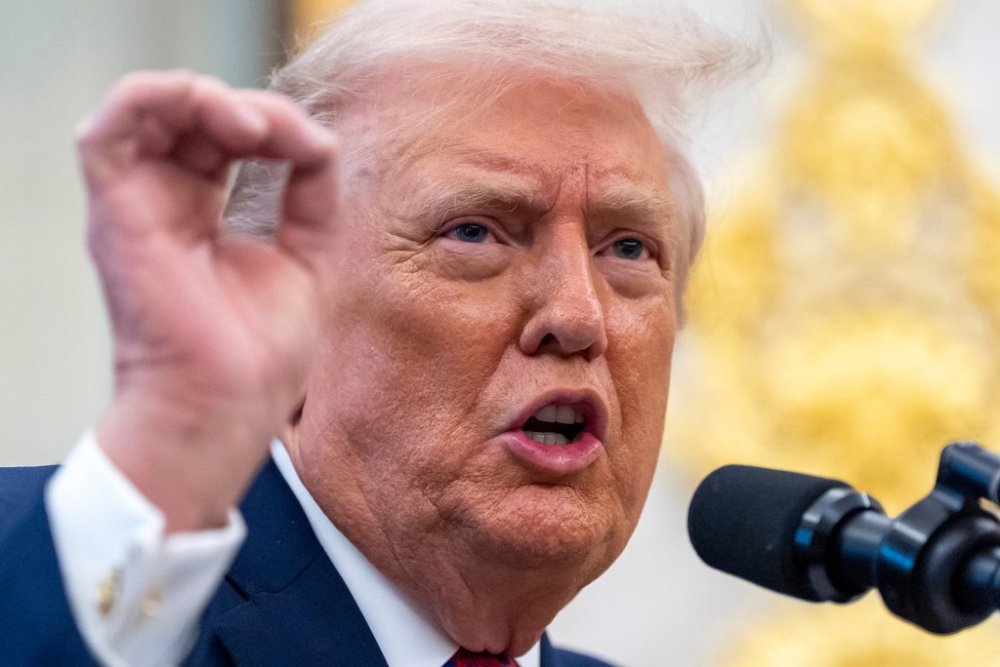
“They actually put terrible words in my mouth having to do with Jan. 6 that I didn’t say, and they’re beautiful words, that I said, right?” the president said unprompted during an appearance in the Oval Office. “They’re beautiful words, talking about patriotism and all of the good things that I said. They didn’t say that, but they put terrible words.”
The president’s lawsuit was filed in Florida. Deadlines to bring the case in British courts expired more than a year ago.
Legal experts have brought up potential challenges to a case in the U.S. given that the documentary was not shown in the country.
The lawsuit alleges that people in the U.S. can watch the BBC’s original content, including the “Panorama” series, which included the documentary, by using the subscription streaming platform BritBox or a virtual private network service.
The 103-year-old BBC is a national institution funded through an annual license fee of 174.50 pounds ($230) paid by every household that watches live TV or BBC content. Bound by the terms of its charter to be impartial, it typically faces especially intense scrutiny and criticism from both conservatives and liberals.