
Alberta, Quebec referendums likely would fail due to Canadians’ anxiety: pollster
Advertisement
Read this article for free:
or
Already have an account? Log in here »
We need your support!
Local journalism needs your support!
As we navigate through unprecedented times, our journalists are working harder than ever to bring you the latest local updates to keep you safe and informed.
Now, more than ever, we need your support.
Starting at $15.99 plus taxes every four weeks you can access your Brandon Sun online and full access to all content as it appears on our website.
Subscribe Nowor call circulation directly at (204) 727-0527.
Your pledge helps to ensure we provide the news that matters most to your community!
To continue reading, please subscribe:
Add Brandon Sun access to your Free Press subscription for only an additional
$1 for the first 4 weeks*
*Your next subscription payment will increase by $1.00 and you will be charged $20.00 plus GST for four weeks. After four weeks, your payment will increase to $24.00 plus GST every four weeks.
Read unlimited articles for free today:
or
Already have an account? Log in here »
OTTAWA – A pollster says separatist movements in Alberta and Quebec are unlikely to succeed as long as many Canadians feel a persistent sense of insecurity and anxiety about the future.
David Coletto, whose polling firm Abacus Data has been studying what it calls the “precarity mindset” in Canada for the past year, said in an interview Wednesday that uncertainty would need to ease in order for a “yes” vote to succeed in either province.
Alberta’s election agency recently announced it has approved a proposed referendum question on the province separating from Canada, meaning the question could soon be put to Albertans in a referendum if organizers collect enough signatures.
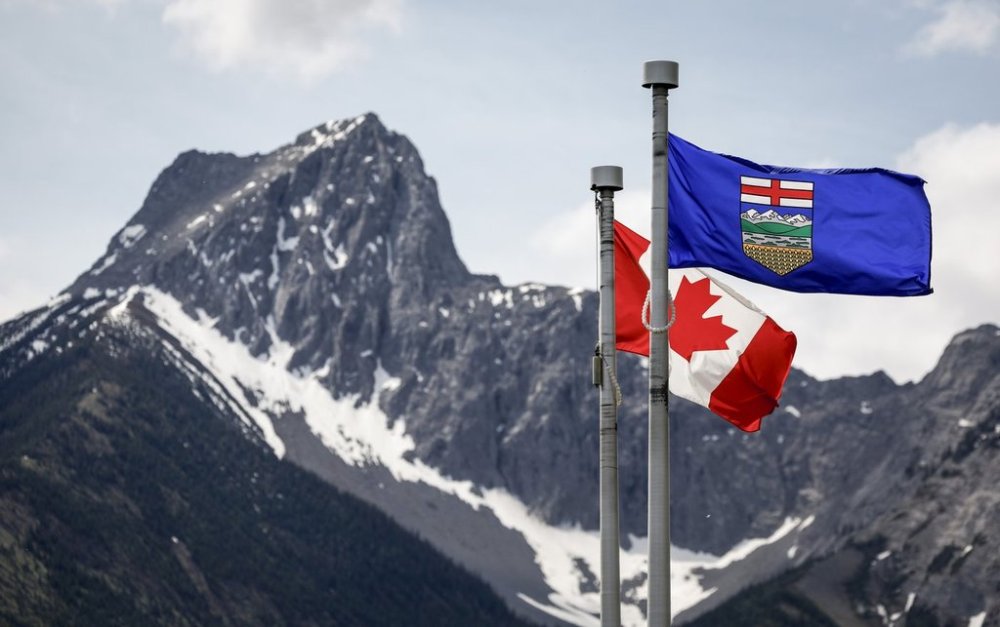
Alberta Premier Danielle Smith has said repeatedly that while she doesn’t want her province to separate, she needs to respect the wishes of Albertans.
In Quebec, Parti Québécois Leader Paul St-Pierre Plamondon is promising to hold a referendum on sovereignty during his first term if his party wins the general election scheduled for Oct. 5, 2026.
Coletto said the structural conditions that would support a successful sovereignty push in Alberta or Quebec are weaker today than they were in 1995, when Quebecers voted narrowly to stay in Canada.
“The mid-1990s were marked by relative global stability and optimism about globalization,” he wrote in a recent online essay. “The future felt expansive and the public was in a greater mood for risk taking.
“Today, it feels brittle and deeply uncertain.”
The Abacus “precarity index” reports that while the percentage of poll respondents reporting either high or extreme levels of precarity has dropped slightly — from 47 per cent in July to 43 per cent in December — “feelings of instability, uncertainty, and vulnerability remain deeply embedded in the Canadian mindset.”
The polling was conducted online. The polling industry’s professional body, the Canadian Research Insights Council, says online surveys cannot be assigned a margin of error because they do not randomly sample the population.
Coletto said in the interview that U.S. President Donald Trump’s calls for Canada’s annexation and the economic uncertainty generated by his tariff war have shifted the mindset of many Canadians, causing them to fear that the systems and structures on which they rely are vulnerable.
“Unless this mindset changes, I can’t see most people in those provinces feeling that leaving Canada would make them better off than staying,” he said.
“I think people are going to have to feel more confident about their own economic future, that their jobs are secure, or they’re going to have to overwhelmingly feel that being part of Canada is making them less well-off than if they went alone.”
Coletto said the situations in Alberta and Quebec are also quite different.
In Quebec, he said, the independence movement has been largely driven by nationalism and by Quebecers’ desire for more power to protect their language and culture.
In Alberta, he said, the movement is more about grievance and the belief that the federal government is holding the province back.
“The motivations that might be driving the two movements are different, but I think the end place is the same because of the fact that most Albertans and most Quebecers still feel a sense of precarity around the world today,” Coletto said.
Daniel Béland, director of the McGill Institute for the Study of Canada, agreed that widespread uncertainty about the economy and trade poses a huge challenge to both independence movements.
But that doesn’t mean the federal government can afford to be complacent, he added — especially given the amount of economic uncertainty even a failed sovereignty movement can generate.
Béland said “any threat to national unity” should be taken seriously, in part because it could “send a negative message about the state of national unity in Canada” that the Trump administration “could find advantageous geopolitically.”
“To me, it’s not just about whether the ‘no’ side is likely to win in Alberta and even in Quebec. It’s also about what a referendum at this point in the current international, especially bilateral Canada-U.S. context, could mean.”
This report by The Canadian Press was first published Dec. 31, 2025.