
Trump and top Iranian officials exchange threats over protests roiling Iran
Advertisement
Read this article for free:
or
Already have an account? Log in here »
We need your support!
Local journalism needs your support!
As we navigate through unprecedented times, our journalists are working harder than ever to bring you the latest local updates to keep you safe and informed.
Now, more than ever, we need your support.
Starting at $15.99 plus taxes every four weeks you can access your Brandon Sun online and full access to all content as it appears on our website.
Subscribe Nowor call circulation directly at (204) 727-0527.
Your pledge helps to ensure we provide the news that matters most to your community!
To continue reading, please subscribe:
Add Brandon Sun access to your Free Press subscription for only an additional
$1 for the first 4 weeks*
*Your next subscription payment will increase by $1.00 and you will be charged $20.00 plus GST for four weeks. After four weeks, your payment will increase to $24.00 plus GST every four weeks.
Read unlimited articles for free today:
or
Already have an account? Log in here »
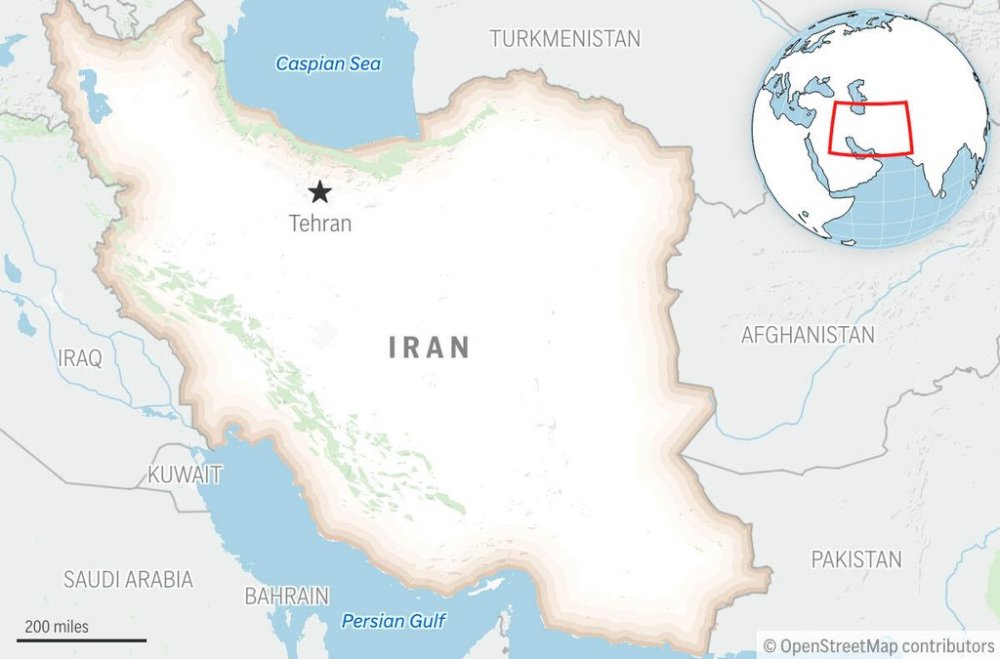
DUBAI, United Arab Emirates (AP) — U.S. President Donald Trump and top Iranian officials exchanged dueling threats Friday as widening economic protests swept across parts of the Islamic Republic, further escalating tensions between the countries after America bombed Iranian nuclear sites in June.
Trump initially wrote on his Truth Social platform, warning Iran that if it “violently kills peaceful protesters,” the United States “will come to their rescue.” At least seven people have been killed so far in violence surrounding the demonstrations, sparked in part by the collapse of Iran’s rial currency.
“We are locked and loaded and ready to go,” Trump wrote, without elaborating.
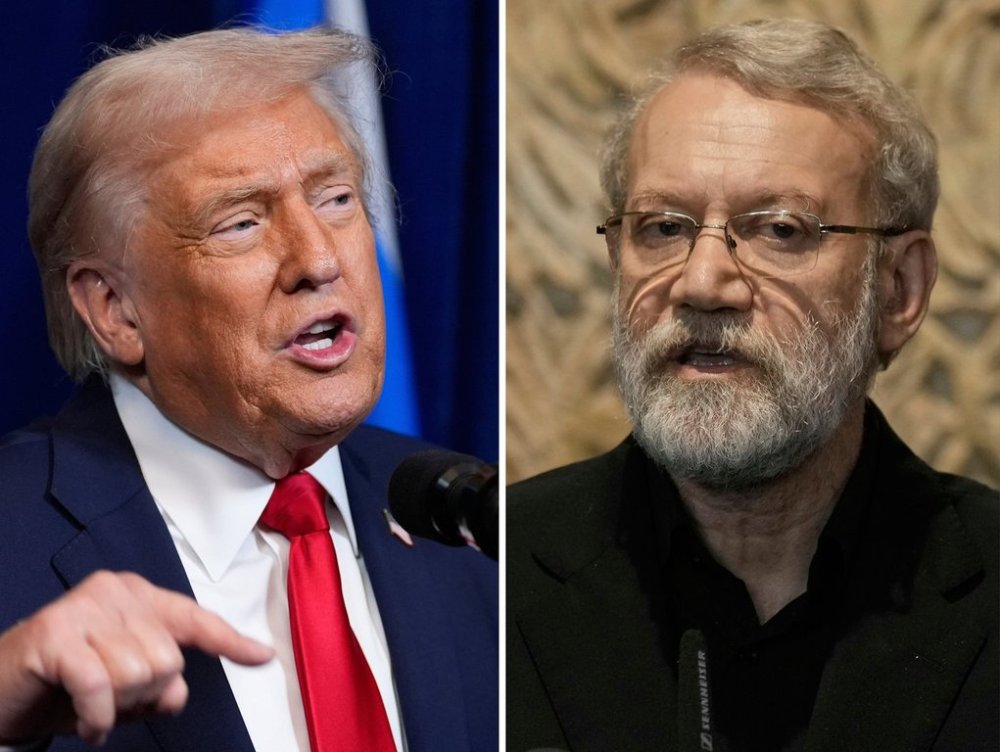
Shortly after, Ali Larijani, a former parliament speaker who serves as the secretary of Iran’s Supreme National Security Council, alleged on the social platform X that Israel and the U.S. were stoking the demonstrations. He offered no evidence to support the allegation, which Iranian officials have repeatedly made during years of protests sweeping the country.
“Trump should know that intervention by the U.S. in the domestic problem corresponds to chaos in the entire region and the destruction of the U.S. interests,” Larijani wrote on X, which the Iranian government blocks. “The people of the U.S. should know that Trump began the adventurism. They should take care of their own soldiers.”
Larijani’s remarks likely referenced America’s wide military footprint in the region. Iran in June attacked Al Udeid Air Base in Qatar after the U.S. strikes on three nuclear sites during Israel’s 12-day war on the Islamic Republic.
Ali Shamkhani, an adviser to Supreme Leader Ayatollah Ali Khamenei who previously was the council’s secretary for years, warned that “any interventionist hand that gets too close to the security of Iran will be cut.”
“The people of Iran properly know the experience of ‘being rescued’ by Americans: from Iraq and Afghanistan to Gaza,” he added on X.
The current protests, now in their sixth day, have become the biggest in Iran since 2022, when the death of 22-year-old Mahsa Amini in police custody triggered nationwide demonstrations. However, the demonstrations have yet to be countrywide and have not been as intense as those surrounding the death of Amini, who was detained over not wearing her hijab, or headscarf, to the liking of authorities.
Iran’s civilian government under reformist President Masoud Pezeshkian has been trying to signal it wants to negotiate with protesters. However, Pezeshkian has acknowledged there is not much he can do as Iran’s rial has rapidly depreciated, with $1 now costing some 1.4 million rials. That sparked the initial protests.
The protests, taking root in economic issues, have heard demonstrators chant against Iran’s theocracy as well.
Months after the war, Iran said it was no longer enriching uranium at any site in the country, trying to signal to the West that it remains open to potential negotiations over its atomic program to ease sanctions. However, those talks have yet to happen as Trump and Israeli Prime Minister Benjamin Netanyahu have warned Tehran against reconstituting its atomic program.