
First Nations CFS housing changes cause panic
Advertisement
Read this article for free:
or
Already have an account? Log in here »
We need your support!
Local journalism needs your support!
As we navigate through unprecedented times, our journalists are working harder than ever to bring you the latest local updates to keep you safe and informed.
Now, more than ever, we need your support.
Starting at $15.99 plus taxes every four weeks you can access your Brandon Sun online and full access to all content as it appears on our website.
Subscribe Nowor call circulation directly at (204) 727-0527.
Your pledge helps to ensure we provide the news that matters most to your community!
To continue reading, please subscribe:
Add Brandon Sun access to your Free Press subscription for only an additional
$1 for the first 4 weeks*
*Your next subscription payment will increase by $1.00 and you will be charged $20.00 plus GST for four weeks. After four weeks, your payment will increase to $24.00 plus GST every four weeks.
Read unlimited articles for free today:
or
Already have an account? Log in here »
WINNIPEG — Sweeping changes to how one agency supports young people aging out of care have participants panicking about whether they’ll have to camp or couch surf in the new year.
Southeast Child and Family Services, which works with eight First Nations in Manitoba, has a unit dedicated to preparing 15- to 21-year-olds for independent living by connecting them with community-based partners.
Depending on their needs, teens and young adults living off-reserve are referred to supportive-housing facilities, such as Kildonan Commons and Villa Rosa.
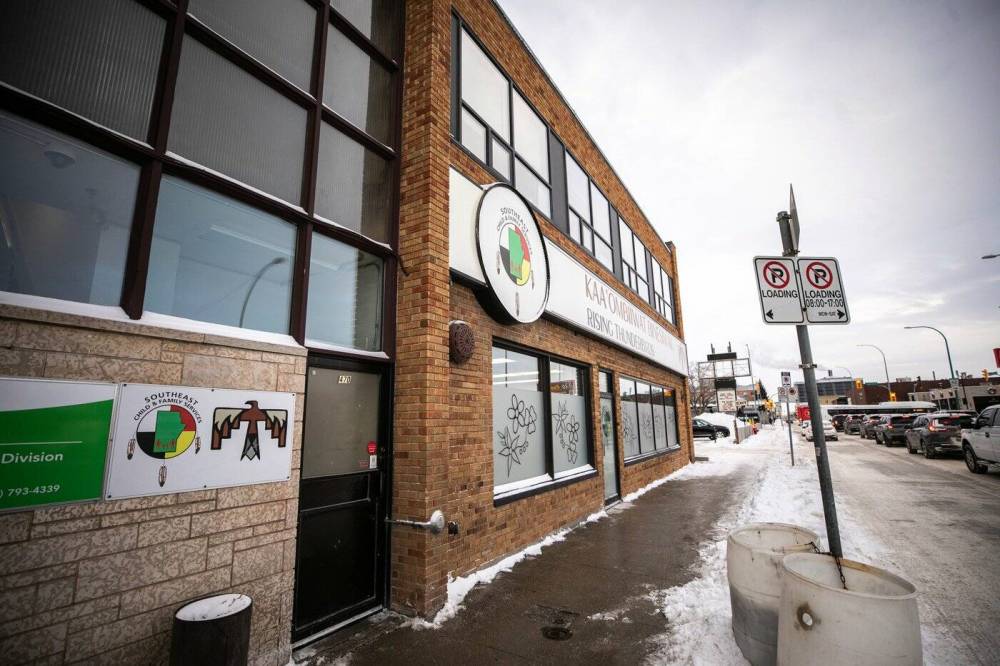
The Southeast Child and Family Services at 472 Notre Dame Ave. in Winnipeg. (Mikaela MacKenzie/Winnipeg Free Press)
Multiple age-of-majority tenants told the Winnipeg Free Press their CFS social workers informed them this fall that they’d have to move out on their own by the end of 2025.
Funding constraints were identified as the reason the residents 18 and older are being evicted, they said.
The Manitoba Government and General Employees’ Union confirmed its members were alerted Southeast CFS is changing how it supports young adults who’ve grown up in care.
MGEU, which represents roughly 130 employees at Southeast, including intake and social workers, did not provide any further details.
“I don’t know if I’m going to be homeless after Dec. 31,” one tenant who is living at a residence with wraparound supports for young people told the Free Press recently.
“It’s hard to find a place. It really is. I’ve been looking. I’ve been trying — I’ve been doing everything in my power to get my ball rolling.”
The resident said Southeast, which serves families from Brokenhead, Black River, Hollow Water, Bloodvein, Berens River, Poplar River, Little Grand Rapids and Pauingassi First Nations, gave them “false hope” by connecting them with a third-party organization that helped draft a now-irrelevant transition plan built around stable housing.
The person noted the social worker assigned to their case has shared information with them about Winnipeg’s shelter system and how to apply for Employment and Income Assistance.
“The agency is expecting us to be at the bottom of society. They expect nothing from us, so we’re going to become nothing,” they said, describing feeling frozen in panic and disassociating with reality during the holiday season.
Individuals affected by age-of-majority support changes are no longer wards of CFS, given they are adults by legal definition.
They have entered voluntary contracts, known as extension-of-care agreements, with Southeast to continue to receive assistance, including financial aid, until they turn 21. The future of that funding is uncertain amid the changes.
Their names and other identifying details are being withheld to protect their vulnerable status.
“Your 18th birthday present shouldn’t be that you’re on your own and all the supports you need to live a healthy lifestyle are gone,” said Cindy Blackstock, executive director of First Nations Child and Family Caring Society of Canada.
Blackstock said for many Indigenous youth across the country, reaching this milestone birthday means losing wraparound supports.
First Nations leaders want to see their members thrive, but they can only do so much with insufficient and inflexible funding, she said via phone from Ottawa.
Blackstock urged Manitobans to contact agencies and band offices directly to find out what support is available to them.
Government officials need to hear from people navigating the system to understand the impacts of “back-of-the-napkin” policymaking, she added.
Neither Southeast CFS executive director Rhonda Kelly nor Lee Bornhorst, who oversees age of majority programs, responded to requests for comment.
According to the agency’s website, children who’ve grown up in care are connected with mental health services, housing and cultural programming to help them ease into adulthood.
“It’s really sad and shocking — the way they’re rolling (changes) out,” said one front-line employee who receives referrals to help teens aging out of care find somewhere to live.
The worker did not have permission from their employer, a third-party agency that works closely with Southeast, to discuss the overhaul.
As far as they’re concerned, there has been little to no planning involved and vulnerable young people are facing the consequences.
The Southern First Nations Network of Care said its member organization “is reviewing rates and care plans with all (young adults).”
Network CEO Shirlene Asham said in a statement that this process may include transitioning participants into the public rental market.
Asham urged those affected to contact their agency or her network for answers.
“CFS agencies would not put youth in a situation that they are homeless,” she said in a statement.
One teenager said their CFS worker has, for the better part of the last year, failed to provide straightforward answers in a timely fashion.
Chronic communication delays have only added to their stress, uncertainty and fear about an imminent eviction, they said.
The resident said on-call staff at their supportive housing residence have helped them set up a bank account, obtain a driver’s licence and find a therapist.
The teen said they’re grateful for that advice, but don’t have specific answers about their individual case or funding status.
“Some days, I just want to lay in bed,” they said, noting their plans to re-integrate into school and find a job have been paused indefinitely to find alternative housing.
A spokesperson for Families Minister Nahanni Fontaine said in a statement that the province is following up with the agency in question. Indigenous Services Canada indicated it was looking into the changes.
» Winnipeg Free Press