
Province plans for impending intimate partner violence law
Advertisement
Read this article for free:
or
Already have an account? Log in here »
We need your support!
Local journalism needs your support!
As we navigate through unprecedented times, our journalists are working harder than ever to bring you the latest local updates to keep you safe and informed.
Now, more than ever, we need your support.
Starting at $15.99 plus taxes every four weeks you can access your Brandon Sun online and full access to all content as it appears on our website.
Subscribe Nowor call circulation directly at (204) 727-0527.
Your pledge helps to ensure we provide the news that matters most to your community!
To continue reading, please subscribe:
Add Brandon Sun access to your Free Press subscription for only an additional
$1 for the first 4 weeks*
*Your next subscription payment will increase by $1.00 and you will be charged $20.00 plus GST for four weeks. After four weeks, your payment will increase to $24.00 plus GST every four weeks.
Read unlimited articles for free today:
or
Already have an account? Log in here »
Women’s shelters, police and the province are preparing for a long-awaited law that aims to prevent Manitobans from becoming the next victim of an intimate partner.
Manitoba’s Disclosure to Protect Against Intimate Partner Violence Act, which will come into law March 1, will allow someone who believes they might be at risk of violence from a current or former partner to apply for verbal disclosure about the significant other’s documented history of violence.
“By allowing individuals to access information about a partner’s history of violence, people are able to better assess risk and make decisions that may prevent harm before it actually escalates,” Manitoba Association of Women’s Shelters provincial co-ordinator Tsungai Muvingi Van Landeghem said.
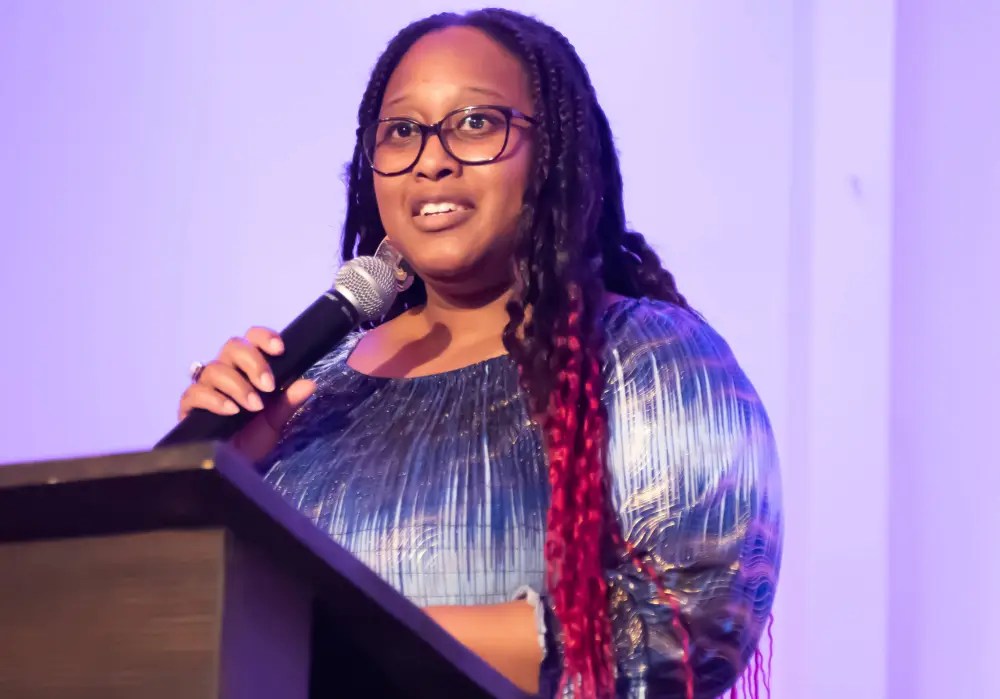
“As it is, we’re seeing families or individuals who are going into relationships and then, on the back end of things, learning that there was a history that maybe would have prevented them from actually entering into a relationship with an individual or better preparing themselves,” she said.
Wayne Balcaen, the Progressive Conservative justice critic and a former police chief, asked why the law has been sitting on the books in Manitoba even though it received royal assent more than three years ago.
“How many people in that three years could have been helped, could have been saved, could have not been the victim of domestic family or sexual violence had this opportunity been there for people?” the Brandon West MLA said.
He said discussions about the law in Manitoba dated back more than five years and blamed the NDP government for stalling.
Families Minister Nahanni Fontaine said it was the PCs that did nothing to turn the bill into law, while the NDP have consulted with service providers, law-enforcement agencies and women’s organizations, set aside funding, prepared regulations and looked at how to ensure privacy rights are protected over the past two years.
“They didn’t do any of the work. The first thing was the bill, but they didn’t do any of the work. They literally just had the bill sitting on someone’s desk,” she said in an interview Sunday evening. “You have to build up the infrastructure to execute the bill.”
Clare Wood was murdered in England in 2009 by an ex-boyfriend who had a lengthy criminal record of sexual violence. The United Kingdom was the first jurisdiction to adopt such legislation.
“Our hope is that Clare’s Law in Manitoba will increase safety through informed choice,” Muvingi Van Landeghem said.
Shelters and community organizations will be able to help people applying for Clare’s Law, a provincial government spokesman said in an email Friday. The justice department will work with police agencies to gather information and conduct risk assessments. Applicants will be offered trauma- and culturally informed safety planning supports even if their request is denied, the spokesman said.
“Disclosure can then be a tool for empowerment, whether it’s a protection order or to put that safety planning in place to prevent violence from escalating,” Muvingi Van Landeghem said.
“It will also help to reinforce that that intimate kind of violence is preventable and that it is not a private issue — which is some of the challenge that we’re experiencing in this sector, where it’s still considered a behind-closed-doors issue.”
Manitoba Justice is finalizing internal program policies and procedures, providing staff training and information sessions for law enforcement and community partners, the province said. A Clare’s Law working group is bringing together public service workers, community organizations and law-enforcement agencies who helped design it.
The working group designed the program, Fontaine said.
“It’s been all hands on deck, and we’ve been working in concert with police, community organizations, the public service, ministers, all of that, to get the law underway,” she said.
“I take exception, and I disabuse what the critic for justice has put forward… he clearly doesn’t understand what it takes to make sure that a law such as this, a really important law like this, what it takes to be able to have the infrastructure to do it.”
The Winnipeg Police Service and the Manitoba RCMP confirmed meetings with the province to discuss the law’s rollout, but declined further comment.
It’s taken a “person-centered, trauma-informed and culturally safe approach to ensure disclosures are appropriately respectful,” the province said in a statement.
It aims to balance the rights of those at risk of intimate partner violence to access information while maintaining the confidentiality of the person whose documented information is requested, the spokesman said.
Fontaine said the ultimate goal of the law is to mitigate the risk of intimate-partner violence.
“It’s not lost, and it shouldn’t be lost on anybody, that Manitoba has some of the highest levels of gender-based violence and intimate-partner violence,” Fontaine said.
She called it a tangible approach to dealing with the high rates of such violence in Manitoba.
Trusting the police to help might be a challenge for some, Muvingi Van Landeghem noted.
“Past history has caused some of that,” Balcaen said. “I know the police services have worked diligently to change that at the national level, at the provincial and at the local levels.”
Manitoba’s ongoing crisis of missing and murdered Indigenous women, girls and two-spirit people is another reason Clare’s Law should’ve been in force by now, Balcaen said.
“It needed to be rolled out very quickly and needs to be something that the public can really trust is going to help them.”
More than just a law is required — mental health support, trauma-informed counselling, legal advocacy and housing needs to be included, the association of women’s shelters leader said.
“Shelters are seeing families — women and children — returning to abusive situations and dangerous situations,” Muvingi Van Landeghem said. “When there’s no affordable housing, then there’s nowhere else for them to go.”
— with files from Erik Pindera
» carol.sanders@freepress.mb.ca