
Turbulent times in U.S. worth a travel advisory
Advertisement
Read this article for free:
or
Already have an account? Log in here »
We need your support!
Local journalism needs your support!
As we navigate through unprecedented times, our journalists are working harder than ever to bring you the latest local updates to keep you safe and informed.
Now, more than ever, we need your support.
Starting at $15.99 plus taxes every four weeks you can access your Brandon Sun online and full access to all content as it appears on our website.
Subscribe Nowor call circulation directly at (204) 727-0527.
Your pledge helps to ensure we provide the news that matters most to your community!
To continue reading, please subscribe:
Add Brandon Sun access to your Free Press subscription for only an additional
$1 for the first 4 weeks*
*Your next subscription payment will increase by $1.00 and you will be charged $20.00 plus GST for four weeks. After four weeks, your payment will increase to $24.00 plus GST every four weeks.
Read unlimited articles for free today:
or
Already have an account? Log in here »
International sentiment regarding Donald Trump’s America has been growing increasingly negative over the last 12 months.
Widespread concern over the Don’s aggressive foreign policy actions — particularly toward historic U.S. allies such Denmark and Canada — coupled with the U.S. president’s self-inflicted economic instability through the imposition of tariffs on dozens of countries, has been driving much of that opinion.
Trump’s most recent comments regarding the pending invasion of Greenland, as well as Cuba and Mexico has put much of the world’s leadership on edge.
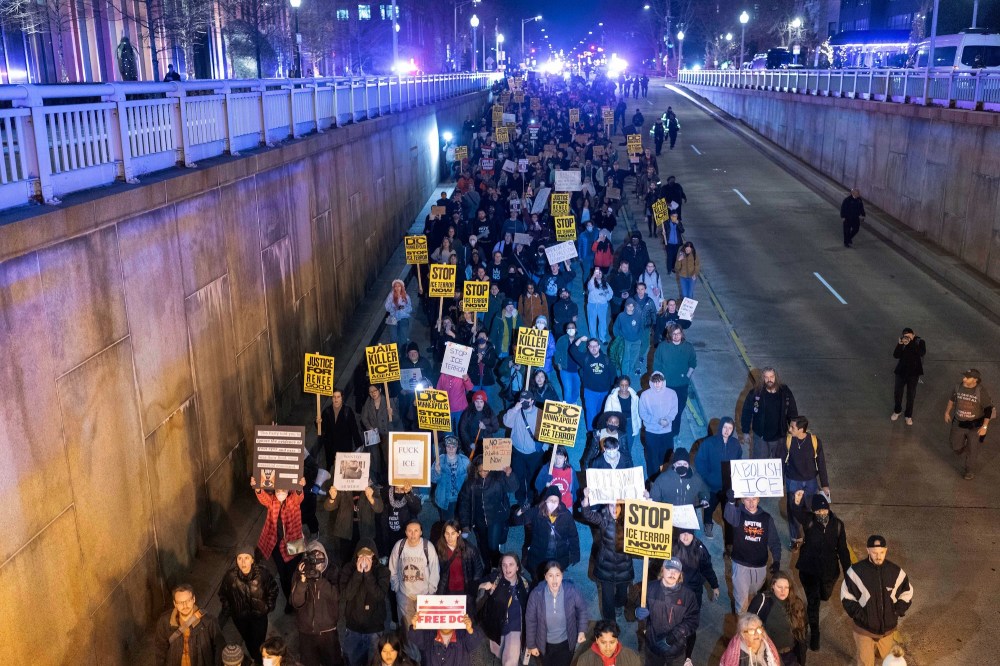
At the same time, there is growing domestic turmoil in the United States. Trump’s unhinged U.S. Immigration and Customs Enforcement agents have reportedly been involved in dozens of shooting incidents, with the most high profile being the death of Renee Nicole Good in Minneapolis last Wednesday at the hands of an ICE agent.
As the BBC reported, the Trump administration said the agent who fired the shots acted in self-defence, while local officials refute that assertion, saying Good posed no danger. As a result, thousands of Americans took to the streets in cities across the country this past weekend in anti-ICE protests, including Minneapolis, where the Trump administration promised to send even more ICE agents.
Yet in spite of what you may be reading and watching on social media or reading in the news as international leaders react, the world seems to be slow in waking up to the threat posed by Trump to international order.
Case in point, the Government of Canada’s list of travel advisories makes no mention of the unrest currently underway in many major American cities. In fact, the “risk level” associated with travel advice for the United States is to take “normal” security precautions.
There are some updated warnings for travellers to meet all entry requirements at border security, including having valid travel documents. And there is also mention of new U.S. airport policies that allow expanded biometric screenings — including possible requests for DNA from international travellers.
Many European countries have a similar level of warning regarding the United States. While the United Kingdom currently advises British nationals to “exercise increased caution” — mostly due to terrorism threats and strict U.S. entry rules — the government has not issued any “do not travel” warnings.
The current travel advisory from the Netherlands suggests travel for the U.S. is green (you can travel there), though the country’s website notes the U.S. government has tightened entry regulations for foreign visitors.
Japan has a long-standing travel advisory to the United States, noting gun crime as a major pubic safety concern, and the high number of hate crimes targeting peace, religion and sexual orientation. Nevertheless, Japan indicates the U.S. is still safe for travel, and advise Japanese nationals to exercise normal precautions. Australia is the same.
New Zealand is perhaps the outlier of this group, as it has advised travellers to exercise increased caution due to the threat of terrorism. But that advisory update was made on Nov. 29, 2024.
To be fair, unless you are going looking for trouble in the United States, most Canadian tourists will likely not come up against major issues while travelling through the country. Thousands of people still cross the border between Canada and the U.S. every day, without major incidents.
But that doesn’t mean there haven’t been any incidents.
Last August, reports surfaced that at least 150 Canadians had been held by ICE agents in the first six months of 2025, with the federal NDP calling upon the Liberal government that holding Canadian citizens was a violation of their human rights, and a violation of due process.
While some Canadians continue to travel to the U.S. without incident, a growing number have already been making the decision to avoid travelling south of the border, and instead travel to Europe, Mexico or other international locales.
Information released yesterday by Statistics Canada showed that the number of Canadian resident return trips from the United States by air fell 18.7 per cent in December 2025, compared with the same month one year earlier. Moreover, Canadian resident return trips by vehicle through the U.S.-Canadian border dropped 30.7 per cent for the same period — the lowest since the pandemic in 2021.
If Canadians can see the writing on the wall, it may behoove the federal government to at least make mention on its travel advisory website that there are some potentially dangerous locations in the U.S. right now.
And the current tensions in Minneapolis should top the list.