
Federal money for Arctic projects should go to the territories: N.W.T. premier
Advertisement
Read this article for free:
or
Already have an account? Log in here »
We need your support!
Local journalism needs your support!
As we navigate through unprecedented times, our journalists are working harder than ever to bring you the latest local updates to keep you safe and informed.
Now, more than ever, we need your support.
Starting at $15.99 plus taxes every four weeks you can access your Brandon Sun online and full access to all content as it appears on our website.
Subscribe Nowor call circulation directly at (204) 727-0527.
Your pledge helps to ensure we provide the news that matters most to your community!
To continue reading, please subscribe:
Add Brandon Sun access to your Free Press subscription for only an additional
$1 for the first 4 weeks*
- Enjoy unlimited reading on brandonsun.com
- Read the Brandon Sun E-Edition, our digital replica newspaper
*Your next Free Press subscription payment will increase by $1.00 and you will be charged $20.95 plus GST for four weeks. After four weeks, your payment will increase to $24.95 plus GST every four weeks.
Read unlimited articles for free today:
or
Already have an account? Log in here »
Hey there, time traveller!
This article was published 28/01/2026 (196 days ago), so information in it may no longer be current.
OTTAWA – Federal money meant for Arctic projects and programs should go to the territories, Northwest Territories Premier R.J. Simpson said on Wednesday.
Simpson made the remarks while taking questions on the sidelines of the premiers’ meeting in Ottawa.
The latest federal budget promised a $1 billion Arctic Infrastructure Fund to invest in “major infrastructure projects in the North.”
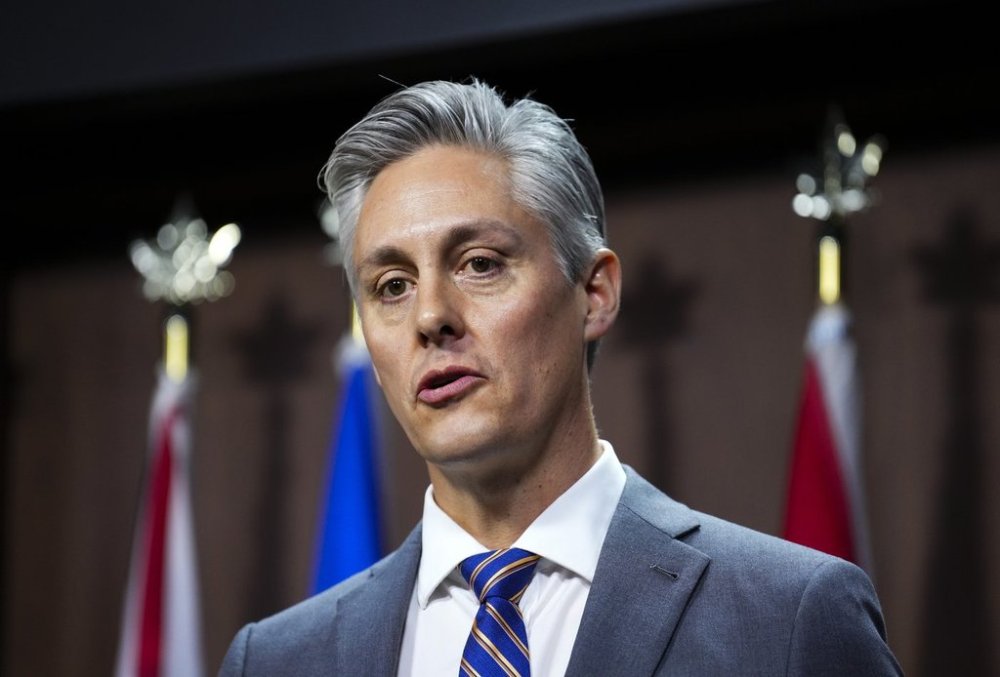
While the fund’s terms are still in the works, Simpson said the message being delivered by northern premiers in Ottawa this week is that money earmarked for “the North” should go to the territories.
“When the federal government starts rolling out Arctic programs, it really needs to look to the North,” Simpson said, referring to the three territories.
While Simpson said there are northern parts of provinces that could “rightly be called the Arctic,” he stressed the need for federal support in the territories.
“That’s where our focus is, ensuring those lines don’t get blurred and moneys that are carved out for the North come to the North where it’s needed.”
In a follow up interview with The Canadian Press, Simpson said while they’re not seeing any lines being blurred with that respect, his concern is the lack of criteria so far within the scope of the fund.
“Is it just for territories? Is it provinces and territories? So, it’s just a lack of clarity.”
Manitoba Premier Wab Kinew posted on social media last week a proposal to build a new port in Churchill, Man., which he pitched as a project to assert Arctic sovereignty.
The Port of Churchill project was among six “strategies” cited by Ottawa for consideration by the major projects office back in September.
Those strategies were said to be in earlier stages of development than the five projects referred to the major projects office for immediate consideration.
They also include the proposed Alto High-Speed Rail project. The federal budget committed to legislative changes to streamline approvals and reduce regulatory uncertainty for the planned rail line.
Taking questions from reporters in Ottawa Wednesday, Kinew said the port project should be eligible for funding under the Arctic Infrastructure Fund, and reiterated its benefits to the Arctic.
“I think we’re going to work together,” Kinew said of the territories, pointing to a commitment to set aside electricity to Nunavut should a new transmission line project to communities north of Manitoba come to fruition.
“I think that there’s an opportunity to only do more of that in the future. I fully support projects in Nunavut, like Grays Bay. But if we want to build Grays Bay? Potentially from the Port of Churchill.”
Kinew said a “charter” has been drafted for the project in partnership with the federal major projects office, and work is now underway to find a proponent.
“I think there’s going to be multiple times that the federal government has the opportunity to invest. Same thing for us,” Kinew said.
“The funds that they’ve announced in Budget 2025 are going to be an important source.”
Nunavut Premier John Main said the Churchill port project should benefit Nunavut, particularly his home region of Kivalliq.
“In terms of developing the North, I recognize that we need partners. And we view the province of Manitoba as a partner in what we’re trying to do in Nunavut,” Main said.
The three territorial leaders met with federal Transportation Minister Steven MacKinnon on Wednesday. Transport Canada is the department responsible for developing the Arctic Infrastructure Fund.
MacKinnon was unavailable for comment on the meeting, or to offer an update on the status of the fund.
Simpson said the legislative structure of the territories — which limits the amount of debt they’re allowed to take on — means they need special consideration when Ottawa decides how it will allocate funds for northern projects.
“We need to recognize that the territories are not provinces. Provinces have larger populations, they have corporate bodies in them. All of this helps them raise tax revenue. We don’t have that luxury,” Simpson said.
“If we want new infrastructure, new programming, we’re dependent on the federal government.”
Yukon Premier Currie Dixon said the territorial leaders are pointing out those “profound” differences in their meetings with federal officials this week.
“That’s why we met with Minister MacKinnon to raise our questions around the Arctic Infrastructure Fund and what that was going to look like. And so we await to see what the federal government wants to do with that,” Dixon said.
“The details haven’t been determined yet, we learned. So we look forward to learning more about how the federal government will be deploying those investments. We’re eager to see them flow.”
This report by The Canadian Press was first published Jan. 28, 2026.