
‘Dire straits’: Calgary police chief wants staffing boost over next four years
Advertisement
Read this article for free:
or
Already have an account? Log in here »
We need your support!
Local journalism needs your support!
As we navigate through unprecedented times, our journalists are working harder than ever to bring you the latest local updates to keep you safe and informed.
Now, more than ever, we need your support.
Starting at $15.99 plus taxes every four weeks you can access your Brandon Sun online and full access to all content as it appears on our website.
Subscribe Nowor call circulation directly at (204) 727-0527.
Your pledge helps to ensure we provide the news that matters most to your community!
To continue reading, please subscribe:
Add Brandon Sun access to your Free Press subscription for only an additional
$1 for the first 4 weeks*
*Your next subscription payment will increase by $1.00 and you will be charged $20.00 plus GST for four weeks. After four weeks, your payment will increase to $24.00 plus GST every four weeks.
Read unlimited articles for free today:
or
Already have an account? Log in here »
CALGARY – A large sign on the front doors of the Calgary Police Service headquarters doesn’t mince words: “We are hiring.”
“We’re the third largest municipal police service in the country,” Chief Const. Katie McLellan said in an interview.
“When you look at that and look at our population, we’re in dire straits with respect to the amount of people that we have.”
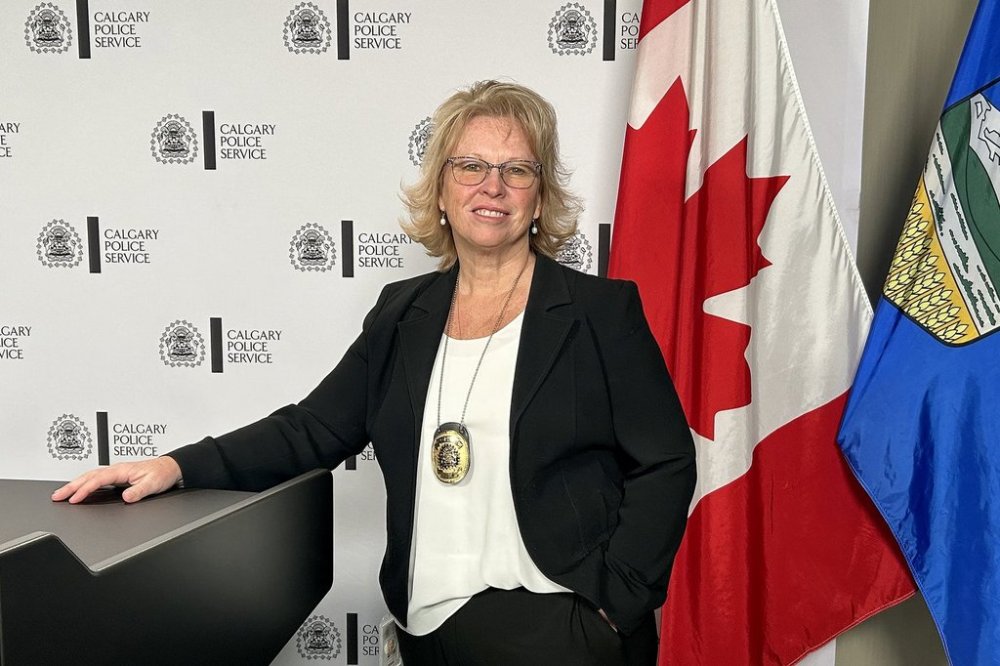
The force has about 3,200 employees, with 2,300 of them front-line officers. McLellan plans to approach city council this year with a four-year plan to hire another 660 officers.
“The strain right now is the front line,” she said.
“With the number that’s so low, they’re basically just being reactive police officers. There’s not a lot of time for proactive work out there.”
The job takes a toll. About 13 per cent of officers have been reassigned to different duties within the service, McLellan said. Six per cent are not at work at all, for reasons including medical leave.
The chief joined the service 35 years ago. The job is more challenging now, she said, especially for new officers.
“If we got a gun callback in the early ’90s, it would be the call of the year.
“Now our young members are seeing guns and drugs and weapons every day, and they’re dealing with mental health issues every day.
“People are calling because they’re in crisis.”
There’s an opportunity cost when police are busy reacting to what has already happened, McLellan added
“We’ve seen sadly and unfortunately youth crime has gone up,” she said. “We need to engage with them. We need to be able to explain to them what the potential consequences (of crime) can be.”
The hunt is on in earnest for new recruits: at job fairs, boot camps, school visits and meetings with sports teams.
The force is trying to make it easier to apply by having applicants write the admission test online and complete a voice test instead of a polygraph. Applicants must be 18 or older.
To date, McLellan said, it’s making a difference: “We actually have, finally, a (talent) pool.”
Justice studies professor Doug King said finding new officers isn’t just a Calgary problem.
“Every major police agency in Canada is experiencing the same challenge,” said King, with Mount Royal University in Calgary.
Some of it, he said, is just simple demographics, with more officers hitting retirement age.
King said there are two untapped groups that recruitment can focus on: women, who make up only 20 per cent of current officers, and racialized minorities.
He said that over the last two decades, police forces, rather than finding their own recruits, have been taking from each other.
“Half of the people the police agencies hire are experienced officers that are coming in from another agency,” King said. “They’re picking the carcass of each other. We’ll take some from Edmonton, but Vancouver will take some from Calgary.”
King said services should focus a lot of their recruiting efforts on post-secondary institutions, which have a “huge pool of people.”
This report by The Canadian Press was first published Feb. 1, 2026.