
B.C.’s Warm weather forces those in ice-fishing derby into boats
Advertisement
Read this article for free:
or
Already have an account? Log in here »
We need your support!
Local journalism needs your support!
As we navigate through unprecedented times, our journalists are working harder than ever to bring you the latest local updates to keep you safe and informed.
Now, more than ever, we need your support.
Starting at $15.99 plus taxes every four weeks you can access your Brandon Sun online and full access to all content as it appears on our website.
Subscribe Nowor call circulation directly at (204) 727-0527.
Your pledge helps to ensure we provide the news that matters most to your community!
To continue reading, please subscribe:
Add Brandon Sun access to your Free Press subscription for only an additional
$1 for the first 4 weeks*
*Your next subscription payment will increase by $1.00 and you will be charged $20.00 plus GST for four weeks. After four weeks, your payment will increase to $24.00 plus GST every four weeks.
Read unlimited articles for free today:
or
Already have an account? Log in here »
Krista Clark is an avid ice fisher, but it was a late start to the season in British Columbia’s East Kootenay region where she’s lived for 47 years.
“This year, it’s been just waiting and waiting for ice conditions to even appear,” she said.
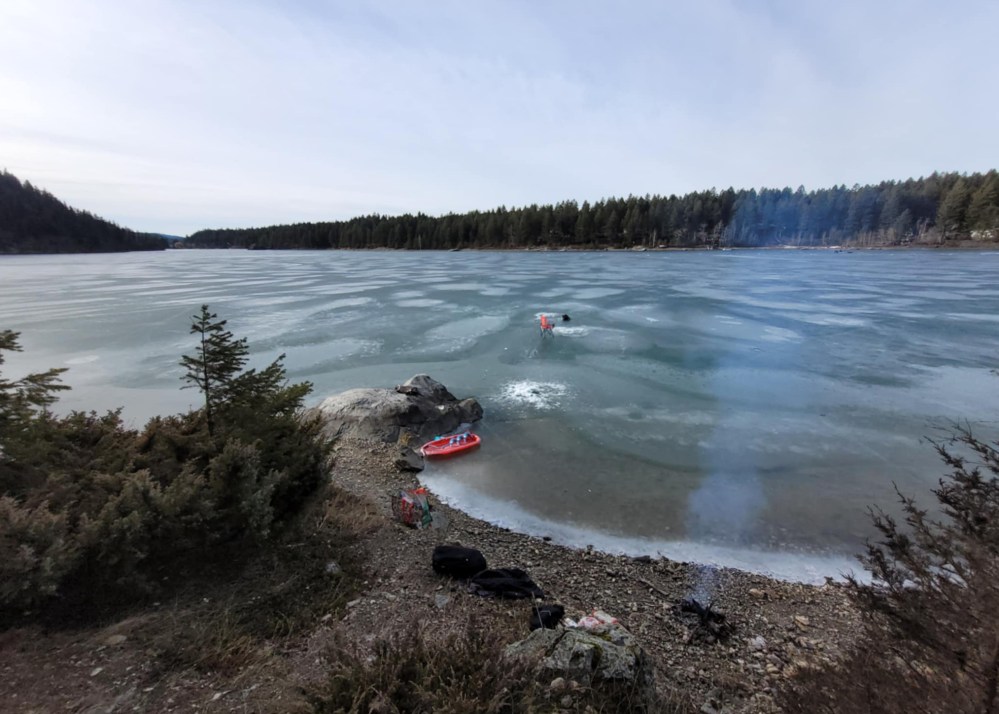
Now, fishers in the region say unseasonably warm temperatures are causing local lakes to melt earlier than normal, forcing an annual derby to rely on boats and causing emergency officials to warn of the risk.
Environment Canada said 17 B.C. communities saw their daily high temperature records matched or broken on Thursday brought in by a ridge of high pressure moving over the province’s coast.
The community of Moyie, located about 30 km south of Cranbrook, changed its annual ice fishing derby to a fishing derby because there is not enough ice on the lake.
“I’ve been here for 24 years and I’ve never seen these conditions,” derby organizer Wanda Cavelle said.
She said the lake would normally have ice until the end of March or beginning of April and be thick enough to carry the weight of quads and snowmobiles.
This year, the lake “is open about 30 feet out from the shore,” and there is more unstable, “rotten” ice, Cavelle said.
The derby usually sees at least 200 ice fishers scattered along both sides of the lake from dawn until dusk as they attempt to catch ling cod and Kokanee during the annual charity event, but this year Cavelle said she expects around 70 or 80 people.
The poor ice conditions mean participants will fish from boats or off docks during Saturday’s derby.
“We’ve just had to say basically, nobody go on the ice whatsoever,” Cavelle said. “It’s very unsafe.”
Lorrie Hamilton, one of the organizers of the Adams Army charity fishing derby that takes place on lakes near the B.C. community of Wasa next weekend, said not all of them are safe for ice fishing.
“This is our first year where we’re really concerned about it,” she said. “We have to be really cautious and make sure everybody’s using common sense and checking ice thickness … before they’re out on it.”
The Columbia Valley Rural Fire & Rescue Services, recommended “extreme caution” for those planning to go out on several East Kootenay lakes, in a notice posted to Facebook on Thursday.
While Lake Windermere had good skating conditions last month, “the lake surface has been deteriorating,” Chief Drew Sinclair said.
“Normally people are recreating on the lake prior to Christmas,” he said. “So, yeah, this year is quite an oddity.”
He said that while the fire service hasn’t responded to any ice-related incidents on the lake, they’re ready for the potential because of the warm weather.
Sinclair added that they normally see dozens of ice fishing shacks on the lake, but have only spotted three recently.
Cranbrook-based fishing guide Evan Kotyluk said the ice fishing season normally starts the first week of December but didn’t start until around Christmas this year.
“There was just no ice anywhere,” he said.
He and Clark said that most experienced ice fishers aren’t worried about safety with the thinning ice, but they’re still taking precautions. “I would just be careful of those first few steps,” he said.
Clark said this season’s conditions are “odd” compared to previous years.
“Even when I was out last Saturday, the ice was actually melting while I was on it and it was getting slipperier and slipperier, harder to walk on,” she said.
Clark said the warm temperatures aren’t just impacting human activities around the lake — animals like elk are venturing closer to munch on grass that would usually be covered with snow.
“We were out hiking the other day, and we had the first sign of a bear. They’re already coming out early,” she said.
This report by The Canadian Press was first published Feb. 6, 2026.