
Arviat, Nunavut chosen as main campus location for Inuit Nunangat University
Advertisement
Read this article for free:
or
Already have an account? Log in here »
We need your support!
Local journalism needs your support!
As we navigate through unprecedented times, our journalists are working harder than ever to bring you the latest local updates to keep you safe and informed.
Now, more than ever, we need your support.
Starting at $15.99 plus taxes every four weeks you can access your Brandon Sun online and full access to all content as it appears on our website.
Subscribe Nowor call circulation directly at (204) 727-0527.
Your pledge helps to ensure we provide the news that matters most to your community!
To continue reading, please subscribe:
Add Brandon Sun access to your Free Press subscription for only an additional
$1 for the first 4 weeks*
*Your next subscription payment will increase by $1.00 and you will be charged $20.00 plus GST for four weeks. After four weeks, your payment will increase to $24.00 plus GST every four weeks.
Read unlimited articles for free today:
or
Already have an account? Log in here »
OTTAWA – The main campus of the new Inuit Nunangat University will be located in Arviat, Nunavut, Inuit Tapiriit Kanatami president Natan Obed announced Wednesday.
The school also moved a step closer to being built with the announcement of a $50 million investment from Nunavut Tunngavik Inc., and another $85 million through the Nunavut Agreement Implementation Contract.
The Mastercard Foundation previously committed $50 million toward the development of the university.
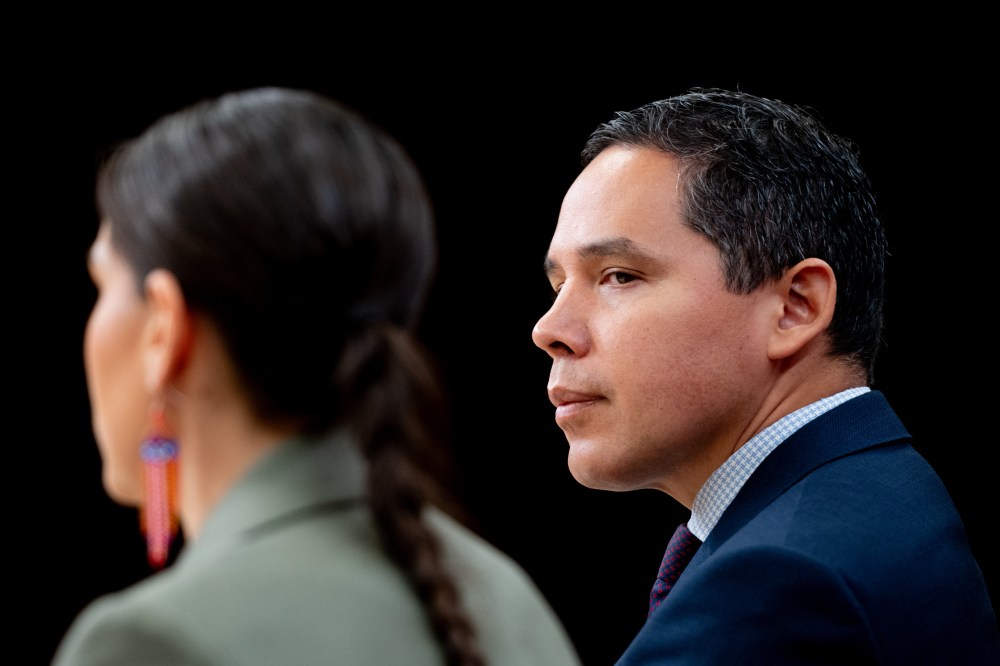
The university, expected to open in 2030, will be the first based in the North and the first in Canada operated by and for Inuit. It will be tasked with promoting Inuit language retention and revitalization and supporting economic and cultural opportunities in the region.
Obed said the university will benefit Inuit across their territories and that locations for secondary campuses are being discussed. Once it’s built, he said, the university will allow Inuit students in Canada to obtain a post-secondary education without having to travel south.
Statistics Canada data shows about 6.2 per cent of Inuit adults hold university degrees, compared with 34 per cent of non-Indigenous Canadians. The vast majority of Inuit with some form of post-secondary education — 85 per cent — had to leave their communities to get it.
“First and foremost, we are creating this ourselves. And it is an incredible show of self-determination and also of partnership,” Obed said.
“For the first time in our modern history we are going to be able to say that our children may go to a university within our homeland.”
A 2024 document outlining how the university will operate and be governed suggested there would be six faculties representing Inuit values and cultures.
They include the faculty of resourcefulness and sustainability — which will offer major and minor degree programs in economics, hunting and engineering — and the faculty of sovereignty, which will offer major and minor programs in governance, leadership, land claims and Inuit self-determination.
Inuit Tapiriit Kanatami envisions a main campus in Arviat that will serve as the central education hub for students across Inuit Nunangat, along with knowledge centres placed throughout its four regions that will offer courses that respect each community’s cultural context.
The funding from Nunavut Tunngavik Inc. will be used to develop student housing in the community of about 8,000 people. Obed said he’s still waiting for the federal government to announce its contributions to the financing.
Obed said Prime Minister Mark Carney has said Ottawa will allocate $50 million to support the university, and that the federal government sees it as a priority.
Obed is also lobbying the federal government to introduce legislation to ensure the university can operate across jurisdictions in the North, including Nunavut and Quebec.
“This is a nation-building exercise and we do hope that the federal government will see it this way,” he said.
This report by The Canadian Press was first published Feb. 11, 2026.
Note to readers:This is a corrected story. A previous version said Nunavut Tunngavik Inc. was providing $85 million to support the university.