
Province shifts tax load to rural school divisions
Advertisement
Read this article for free:
or
Already have an account? Log in here »
We need your support!
Local journalism needs your support!
As we navigate through unprecedented times, our journalists are working harder than ever to bring you the latest local updates to keep you safe and informed.
Now, more than ever, we need your support.
Starting at $15.99 plus taxes every four weeks you can access your Brandon Sun online and full access to all content as it appears on our website.
Subscribe Nowor call circulation directly at (204) 727-0527.
Your pledge helps to ensure we provide the news that matters most to your community!
To continue reading, please subscribe:
Add Brandon Sun access to your Free Press subscription for only an additional
$1 for the first 4 weeks*
- Enjoy unlimited reading on brandonsun.com
- Read the Brandon Sun E-Edition, our digital replica newspaper
*Your next Free Press subscription payment will increase by $1.00 and you will be charged $20.95 plus GST for four weeks. After four weeks, your payment will increase to $24.95 plus GST every four weeks.
Read unlimited articles for free today:
or
Already have an account? Log in here »
“At this point, the board has not decided yet what they’re doing, but they will need to consider both a reduction in staffing allocations and an increase in local taxation.”
— Beautiful Plains School Division secretary-treasurer Shannon Bayes
Last November, Brandon School Division officials were sounding the alarm over the potential for significant increases to the school portion of their 2026 property taxes. It’s now quite clear that BSD is hardly the only school division facing difficult financial decisions ahead.
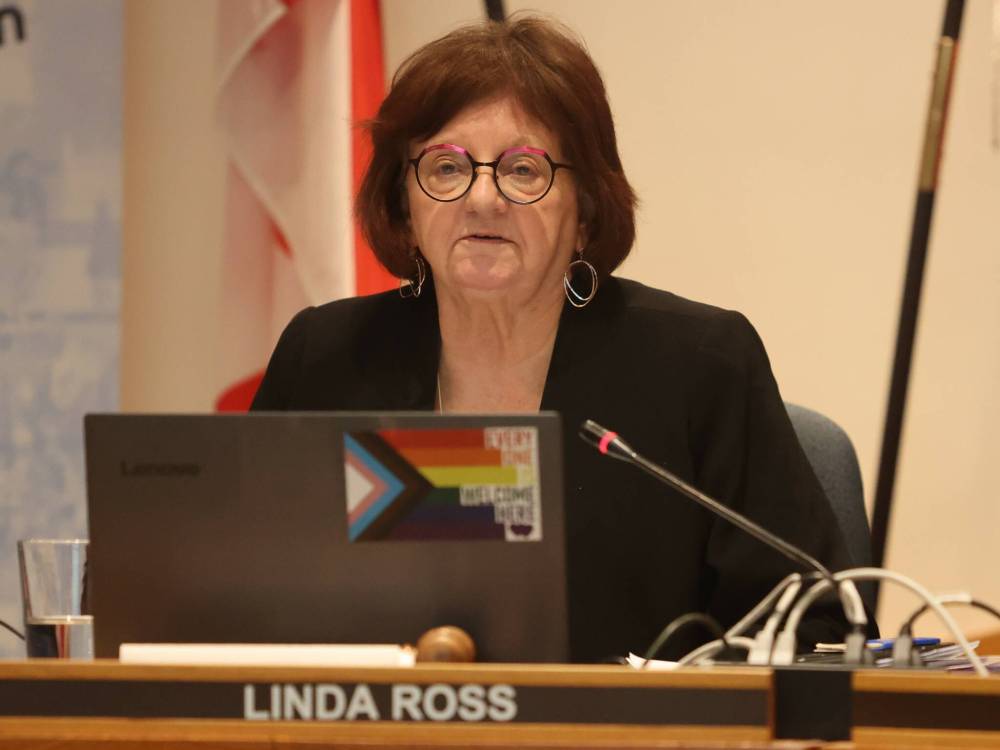
Brandon School Division board of trustees chair Linda Ross was among those who warned in November that local residents may face a hike to the school portion of their property taxes if the province didn't come through with more funding. In the case of the Brandon division, the province increased its share significantly, but that's not so for other western Manitoba school divisions. (The Brandon Sun files)
Teacher salary harmonization — a new provincial policy that ensures that teachers are paid the same wages across the province — is slated to have a significant and permanent impact on the Brandon School Division’s payroll.
Late last year, the concern in Brandon was that the local school board would have to increase property taxes by 10 per cent to help raise enough funds to pay for rising teacher salaries.
Both BSD board of trustees vice-chair Duncan Ross and board chair Linda Ross had used incredibly strong language as a warning to the public that the potential was there for the province to offload a lot of the cost for teacher salary harmonization on school divisions.
“We’re looking at a pretty hefty tax increase unless we start cutting things. But there’s nothing left to cut,” Duncan Ross said last November. “We have one of the highest mill rates in the province, and yet somehow we’re still short-changed by the province.”
And according to Linda Ross, the situation was indeed dire for any school board located beyond the Perimeter Highway.
“The cost to divisions in Winnipeg will be negligible, but for the rest of the province, it’s going to be a lot … What we’re trying to tell you is bad. It’s really bad,” she said.
However, the tone of Brandon’s school board leadership changed quite dramatically after the province announced earlier this month that BSD would receive a $5-million increase in provincial funding for the next school year, amounting to a 6.4 per cent jump from the previous year.
That increase was part of a $79.8-million increase in overall public school funding announced by the province.
“They are putting aside money specifically to help with harmonization, which they previously had indicated they would not,” Duncan Ross told the Sun earlier this month, following the provincial announcement. “So that shows that they are listening to the concerns that we and other divisions brought forward.”
Curiously, only the Division scolaire franco-manitobaine, at nine per cent, and Portage la Prairie, at 6.8 per cent, were pegged to receive larger percentage increases than Brandon this year.
As part of this increase, $11.4 million in grants was set aside to support divisions most impacted by teacher salary harmonization — but that’s really a drop in the bucket of what is actually required.
Many smaller rural school divisions will see only minor increases in their total funding allotment from the province.
In western Manitoba, for example, most school divisions outside of Brandon will receive less than two per cent increases to their overall funding, with Mountain School Division in Dauphin rising by a paltry 0.7 per cent. Only Southwest Horizon School Division and Turtle Mountain School division will see a significant increase in funding — by 2.7 per cent and 2.3 per cent, respectively.
Nevertheless, this will not be enough for rural school divisions to handle the rising costs of teacher salary harmonization — particularly as teacher and staff salaries generally make up the lion’s share of any given school division’s budget.
For example, Beautiful Plains School Division — which is slated to receive a 1.9 per cent funding increase from the province, or about $340,000 — has no choice but to consider a property tax increase and budget cuts in order to balance the books.
As secretary-treasurer Shannon Bayes said following Tuesday evening’s school board meeting in Neepawa, the provincial increase doesn’t even cover the teacher salary harmonization costs that the division will incur, which she expects will amount to $590,000.
And that funding gap only grows, she said, when inflation, staffing pressures and other operational expenses are factored in.
Unfortunately for Beautiful Plains, that means other needed funding increases for programming and maintenance will go unaddressed, unless the division raises taxes and cuts staff. As Bayes said, these are incredibly difficult decisions, and we have little doubt that other rural school divisions are facing the same situation.
It has become rather clear why Manitoba’s NDP government decided not to remove property taxes from education funding — let alone come up with a more equitable formula to pay for education in this province.
Offloading the responsibility of having to raise taxes to local school divisions and their elected officials is the easiest way to pass the buck.