
Métis leaders unveil 1920s model dog sled repatriated from Vatican
Advertisement
Read this article for free:
or
Already have an account? Log in here »
We need your support!
Local journalism needs your support!
As we navigate through unprecedented times, our journalists are working harder than ever to bring you the latest local updates to keep you safe and informed.
Now, more than ever, we need your support.
Starting at $15.99 plus taxes every four weeks you can access your Brandon Sun online and full access to all content as it appears on our website.
Subscribe Nowor call circulation directly at (204) 727-0527.
Your pledge helps to ensure we provide the news that matters most to your community!
To continue reading, please subscribe:
Add Brandon Sun access to your Free Press subscription for only an additional
$1 for the first 4 weeks*
*Your next subscription payment will increase by $1.00 and you will be charged $20.00 plus GST for four weeks. After four weeks, your payment will increase to $24.00 plus GST every four weeks.
Read unlimited articles for free today:
or
Already have an account? Log in here »
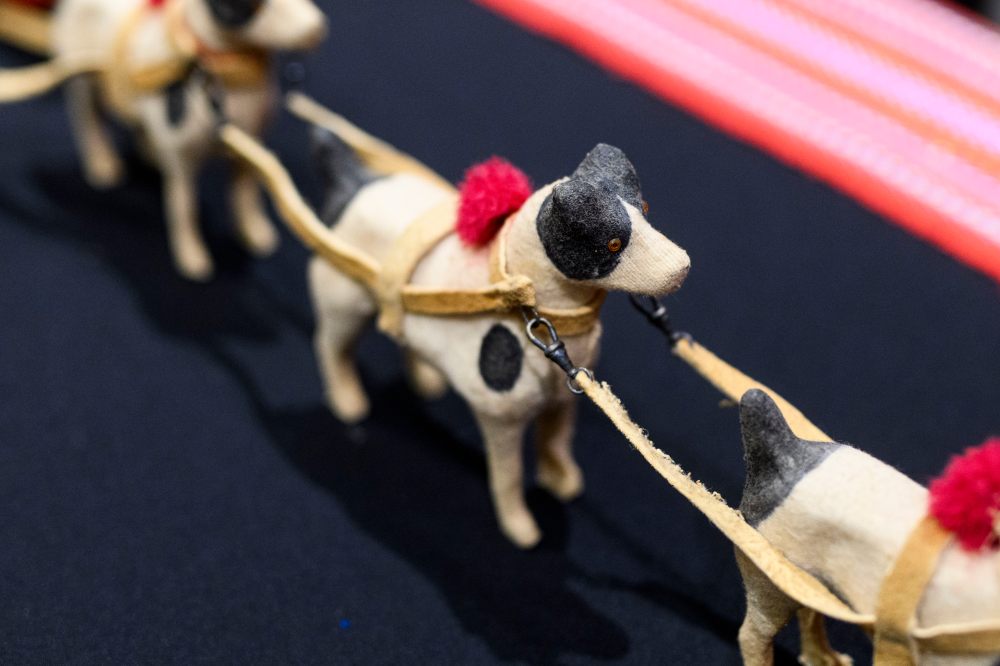
OTTAWA – Métis leaders on Wednesday unveiled a model dog sled repatriated to their communities after more than a century in the Vatican collection.
The sled, made in the 1920s of leather, wood and glass beads, was one of 62 items repatriated to Indigenous Peoples from the Vatican last year after decades of calls for their return.
“We’re not simply opening a box. We’re welcoming something very special home. We’re beginning a new chapter, a chapter that’s grounded in relationship, kinship and connection,” Métis National Council president Victoria Pruden said during the ceremony.
“These are not artifacts in the Western sense. These are carriers of memory – that Kiyas Kiskiowin Oma – remembering who we are, our memories returning. They hold the imprint of the hands that made them, and the communities who once knew them.”
Métis dog sled teams were used for trapping and to transport goods, mail and passengers from the 18th to early 20th century. Often adorned with beadwork, bells, pom poms and ribbons, the sleds were a blend of functionality and art, Pruden said.
The repatriated model sled is believed to have been donated to the Vatican Missionary Exhibition in the mid-1920s. Initial research suggests it was made by a northern Métis artist and may have been a gift to a visiting dignitary.
“Even as a miniature, it carries weight,” Pruden said. “It reflects movement across snow-covered landscapes, winter trade routes, community gatherings and the arrival and the departure of relatives.”
Métis officials will for now house the model at the Canadian Museum of History while they work with experts to determine where it came from. The Métis National Council, which does not claim ownership of the sled, says it’s working as an intermediary in the process to bring it back to its community of origin.
Pruden told The Canadian Press her initial viewing of the model sled — which she suggested may have been made by a husband and wife — was an “overwhelming” experience. She said she could almost hear the model dogs barking and was struck by the intricacy of their design.
“Their eyes are little beads. And each one is unique, just like a dog on a dog team,” she said.
Culture Minister Marc Miller, who attended the ceremony alongside Gov. Gen. Mary Simon, said the sled symbolizes the return of traditional knowledge and that while it may have lived for years at the Vatican, it has more value to the community where it was made.
“It represents hope, which does spring eternal, despite what we see today,” Miller said, reflecting on Canada’s legacy of colonization.
In a media statement, Simon said the return of the objects held by the Vatican honours reconciliation and the work of First Nations, Inuit and Métis people.
“Seeing this artifact in its rightful place is a potent reminder that the work of reconciliation is worthwhile and produces tangible results,” Simon said.
Inuit leaders unveiled their own items repatriated from the Vatican in December. They included a rare kayak made of driftwood, sealskin and sinew. The Assembly of First Nations has yet to unveil the First Nations objects now in its possession; AFN officials told The Canadian Press last year they were working to determine their origins.
In 2022, an Indigenous delegation met with Pope Francis in Rome a year after the Tk’emlúps te Secwépemc First Nation announced that potential unmarked graves had been found at the site of the former residential school in Kamloops, B.C. The news sparked global outrage and a national push for reconciliation with Indigenous Peoples.
During the Rome visit, delegates were given a private viewing of items held by the church — some which had not been seen in public in decades.
The 62 items were among thousands sent to Rome by missionaries around the world for an exhibit organized by Pope Pius XI in 1925.
In November, Pope Leo XIV said the items would be transferred to the Canadian Conference of Catholic Bishops, which said it would immediately turn them over to Indigenous communities in Canada. That decision followed years of negotiations that at times involved former prime minister Justin Trudeau.
During the Métis and Inuit repatriation ceremonies, the returned objects were not positioned behind glass casings or out of arm’s reach of the community members who gathered to witness their return.
Instead, community members were allowed to handle the objects. Shortly after it was unveiled, a Métis elder smudged the sled and offered it to community members who gathered in a circle around the table on which it was placed.
“To feel, to look closely, to hear the stories and spend time with these items is really important,” Pruden said.
“It’s an awakening of spirit, (an) awakening of history and belonging.”
This report by The Canadian Press was first published Feb. 25, 2026.