
Alberta government to earmark $10.8B for education ahead of deficit budget
Advertisement
Read this article for free:
or
Already have an account? Log in here »
We need your support!
Local journalism needs your support!
As we navigate through unprecedented times, our journalists are working harder than ever to bring you the latest local updates to keep you safe and informed.
Now, more than ever, we need your support.
Starting at $15.99 plus taxes every four weeks you can access your Brandon Sun online and full access to all content as it appears on our website.
Subscribe Nowor call circulation directly at (204) 727-0527.
Your pledge helps to ensure we provide the news that matters most to your community!
To continue reading, please subscribe:
Add Brandon Sun access to your Free Press subscription for only an additional
$1 for the first 4 weeks*
*Your next subscription payment will increase by $1.00 and you will be charged $20.00 plus GST for four weeks. After four weeks, your payment will increase to $24.00 plus GST every four weeks.
Read unlimited articles for free today:
or
Already have an account? Log in here »
EDMONTON – The Alberta government says it hopes its new education budget will show understanding for teachers following a mass strike last year that ended with the province forcing on educators a contract many had previously rejected.
Education Minister Demetrios Nicolaides said Wednesday that, if passed, the government’s new budget will allocate $10.8 billion for education — marking a seven per cent hike from last year.
“We had probably the largest expression of teacher voices just a few months back, and so we were able to listen carefully to some of those concerns,” Nicolaides said of the strike and the new budget, set to be unveiled Thursday.
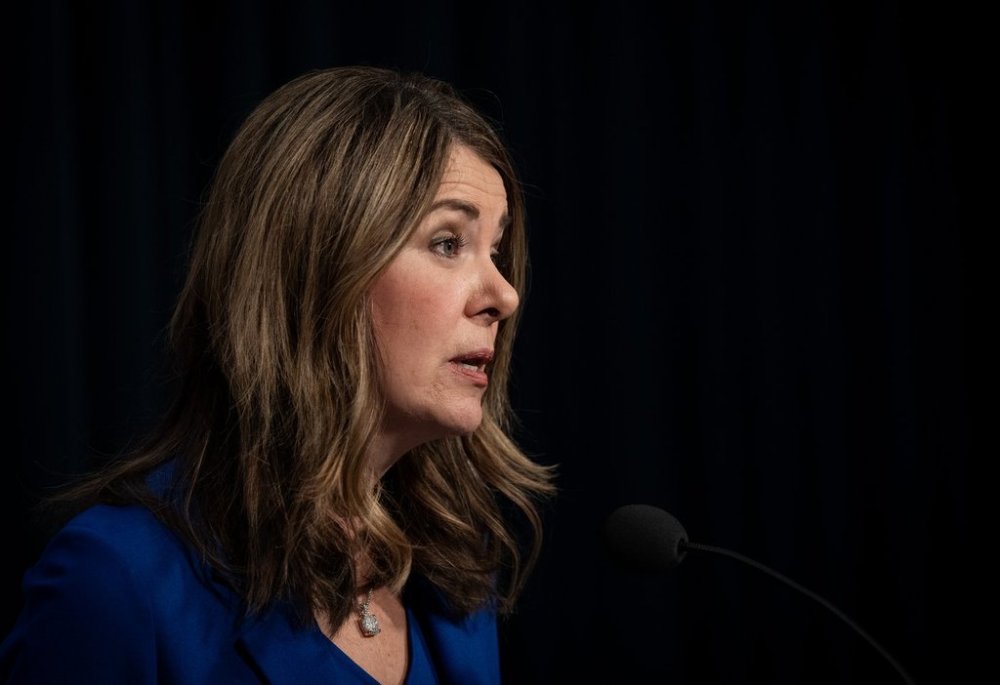
“I think our investment today and through budget 2026 … demonstrates that we’re listening very carefully, but more importantly, we’re taking teacher concerns and parent concerns very seriously and acting on those concerns.”
Premier Danielle Smith, speaking alongside Nicolaides, said as part of the budget, the province will hire 1,600 teachers and 800 support staff in the next school year. Nicolaides said 5,000 teachers will be hired over the next three years.
The seven per cent funding increase is a sharp jump from the government’s last budget, which allocated a 4.5 per cent increase for schools and teachers. Critics at the time said education wasn’t a priority for Smith’s government.
Smith said Wednesday while this year’s increase was “tied” to the fall strike, another factor was responding to provincewide classroom size and complexity issues. The province had asked school boards to provide the data following the strike.
“That, I think, was the biggest insight,” Smith said.
Nicolaides said about $350 million of the education budget will be earmarked for dealing with classroom complexity, which refers to the varying needs of students in one class, such as those with learning disabilities or who speak English as a second language.
Complexity concerns and overcrowded classrooms were key reasons teachers went on strike last fall, alongside demands for higher pay.
Opposition NDP education critic Amanda Chapman told reporters the funding increase wasn’t enough to make up for past years of underfunding or for the disrespect teachers were shown in the fall.
“This is a system that has been starved of resources for six years under a (United Conservative) government,” Chapman said Wednesday.
Jason Schilling, the president of Alberta’s teachers’ union, said the government still has much to atone for on how it handled the strike, but said the new budget was a big step in the right direction.
‘In my seven years as president, I have not witnessed such a significant investment into our schools,” he told reporters.
Schilling said the government’s track record meant he was expecting the “bare minimum” for new education spending, and that the credit for change belonged to teachers who took a stand.
“This investment in Alberta’s classrooms belongs to every teacher who shared their story and every Albertan who stood beside them,” Schilling said.
The education spending was the latest detail shared ahead of the government’s new budget. It’s expected to include a multibillion-dollar deficit that the government is attributing to low oil prices and population growth.
Smith said the deficit has led to some “tough decisions,” but said that didn’t apply to critical areas like education spending.
The NDP has criticized Smith for running deficits even with slumping oil prices, noting past governments had dealt with far lower per-barrel prices and didn’t have the benefit of record oil production that Alberta’s currently seeing.
On Monday, the premier said the government’s last budget, which is also expected to finish with a multibillion-dollar deficit, needed West Texas Intermediate, the benchmark North American oil index, to average US$74 per barrel to balance.
“Going from US$74 WTI to averaging US$60 or less, as we have this past year, blows about a $12-billion hole into our budget,” Smith said Monday.
“To try to cut billions of dollars out of a health budget right now, I invite the NDP leader to tell me where (he’d cut spending).”
This report by The Canadian Press was first published Feb. 25, 2026.