
The crisis? The point? For ‘Bridgerton,’ the word ‘orgasm’ wouldn’t quite do
Advertisement
Read this article for free:
or
Already have an account? Log in here »
We need your support!
Local journalism needs your support!
As we navigate through unprecedented times, our journalists are working harder than ever to bring you the latest local updates to keep you safe and informed.
Now, more than ever, we need your support.
Starting at $15.99 plus taxes every four weeks you can access your Brandon Sun online and full access to all content as it appears on our website.
Subscribe Nowor call circulation directly at (204) 727-0527.
Your pledge helps to ensure we provide the news that matters most to your community!
To continue reading, please subscribe:
Add Brandon Sun access to your Free Press subscription for only an additional
$1 for the first 4 weeks*
*Your next subscription payment will increase by $1.00 and you will be charged $20.00 plus GST for four weeks. After four weeks, your payment will increase to $24.00 plus GST every four weeks.
Read unlimited articles for free today:
or
Already have an account? Log in here »
LONDON (AP) — Francesca can’t get no satisfaction in Season 4 of “Bridgerton.”
“I can’t tell you how many times I’ve said the word ‘pinnacle’ in the last year of my life,” laughs Hannah Dodd, the actor who plays her in the Netflix series returning Thursday.
That’s because the sixth Bridgerton sibling is on a personal quest to discover the secrets of female pleasure, and “pinnacle” is the word she, repeatedly, uses for the orgasm that eludes her.
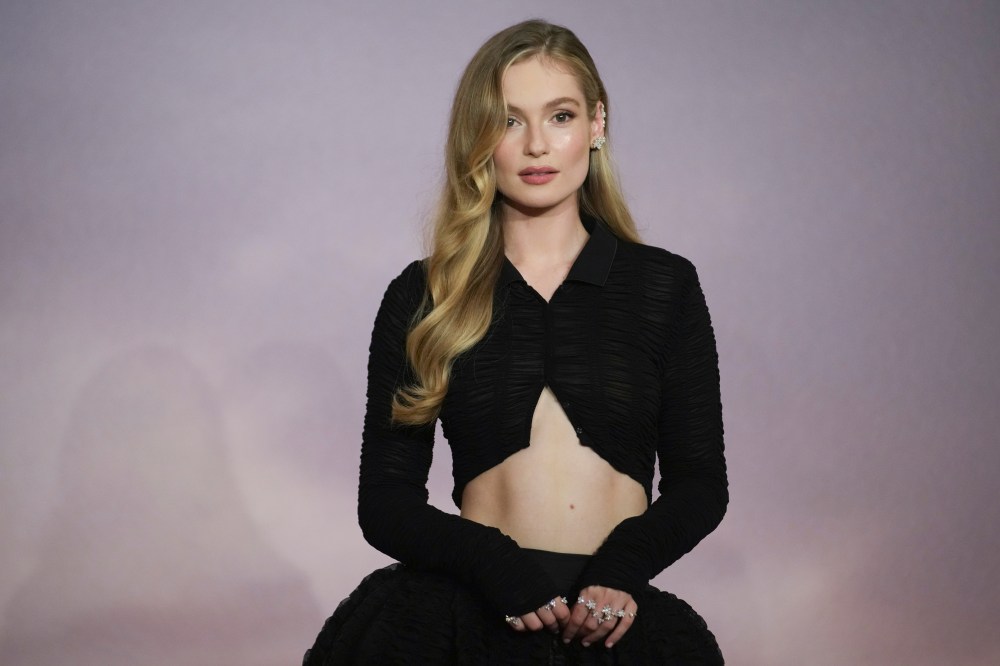
Part two of the fourth season continues the fairytale love story between Benedict Bridgerton and the mysterious, masked Sophie, but also includes updates on the rest of the sprawling family’s romantic adventures. Newly wed to the Earl of Kilmartin, played by Victor Alli, Francesca realized that she is ignorant about what happens in a four-poster bed and resolves to discover the secrets of sex from her married friends and family.
“I wonder if that was a bit of a workshop with, like, what word they were going to use for it?” Dodd mused during an interview.
The answer is yes.
Showrunner Jess Brownell confirms that they researched and discussed which term to use. A thesaurus helped.
“It felt like ‘orgasm’ wasn’t a word that was used in that time period,” says Brownell. The show, based on the books by Julia Quinn and produced by Shondaland, is set during Britain’s Regency era, the early 19th century. “It needed to be a word that sounded right coming out of Francesca’s mouth over and over again,” Brownell adds.
“Pinnacle” was eventually deemed obscure and funny enough for the character to use.
So did that term hit the spot?
Jessica Cale, a novelist and historian of sex, says that “pinnacle” isn’t quite historically accurate — but it is “very effective.”
“One of the more common terms that comes up a lot is ‘the crisis,’ which I think is probably the funniest one,” Cale says.
The word “orgasm” was indeed around then — Oxford English Dictionary dates use of it to the late 1600’s — but it was usually used as a clinical term, the first evidence of its use is in medical literature by physician George Thompson in 1671.
Euphemisms have abounded for centuries. Cale references popular erotic fiction like “Fanny Hill,” also known as “Memoirs of a Woman of Pleasure,” which was published in parts during the late 1740s — well before the “Bridgerton” era. The novel by John Cleland refers to orgasms as “‘the point.’ ‘The critical period.’ ‘The die-away moment,’ and — this is the best one — ‘the critical ecstasy, the melting flow, into which nature, spent with an excess of pleasure, dissolves and dies away,’” Cale says.
Whether Francesca’s storyline resolves in crisis of the literal or more figurative kind, her character’s pinnacle of another sort is yet to come, as Dodd is expected to take a larger role in a future season.