
Wildlife group wants feds out of land management
Advertisement
Read this article for free:
or
Already have an account? Log in here »
We need your support!
Local journalism needs your support!
As we navigate through unprecedented times, our journalists are working harder than ever to bring you the latest local updates to keep you safe and informed.
Now, more than ever, we need your support.
Starting at $15.99 plus taxes every four weeks you can access your Brandon Sun online and full access to all content as it appears on our website.
Subscribe Nowor call circulation directly at (204) 727-0527.
Your pledge helps to ensure we provide the news that matters most to your community!
To continue reading, please subscribe:
Add Brandon Sun access to your Free Press subscription for only an additional
$1 for the first 4 weeks*
*Your next subscription payment will increase by $1.00 and you will be charged $20.00 plus GST for four weeks. After four weeks, your payment will increase to $24.00 plus GST every four weeks.
Read unlimited articles for free today:
or
Already have an account? Log in here »
The Manitoba Wildlife Federation is trying to prevent the federal government from gaining control over land-management decisions in Manitoba due to concerns about public access, a senior adviser told the Sun on Friday.
The federation put out a call to action on Thursday for the provincial government to create a “Made in Manitoba” solution to manage protected areas and parks in the province.
Senior policy adviser Chris Heald said the goal is to keep land-management decisions local to Manitoba, where politicians are more accountable to the public.
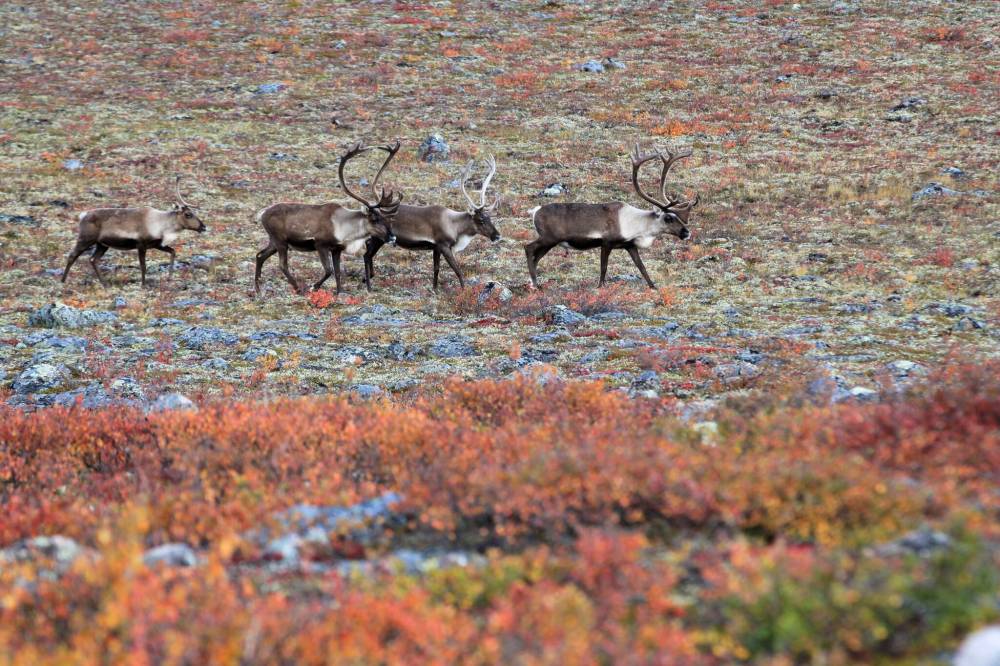
The pristine Seal River watershed is one of eight areas in Manitoba proposed for federal protection. All of them raise concerns about public access, a Manitoba Wildlife Federation senior adviser says. (The Brandon Sun files)
“If we don’t like the way they’re managing our park system or the protected areas, we have the ability, in four years, to elect a different government,” he said. “With the federal government, it’s a lot different, right? Because then the Parks Canada bureaucracy is managing that.”
The federation has been running a campaign called “Access for All,” advocating for parks and protected areas to remain open to the public. The group says it is working proactively to resist changes that are taking place in other areas of the country.
“The concern is, when you turn control over to the feds or a management board … you lose a lot of local control,” Heald said in a phone interview. “We’re seeing, in other jurisdictions, parks being created and then access being denied at certain times and for certain reasons.”
The Seal River watershed, a proposed 50,000-square-kilometre area near Churchill, is one example, he said. The rules for access and control are yet to be known as the project is underway, but Heald said the federation is keeping its eyes on the project and looking forward to consultations.
The watershed was one of eight areas in Manitoba proposed for protection under former federal environment minister Steven Guilbeault, Heald said. All of them raise concerns about land-use restrictions, he said.
As part of its access campaign, the federation commissioned a poll last week to gauge public opinion surrounding land management. The results, released Thursday, found that 64 per cent of Manitobans felt more comfortable with the provincial government controlling access to parks, while 15 per cent felt more comfortable leaving that job to the federal government.
In an interview Friday, Environment and Climate Change Minister Mike Moyes said Manitoba takes a lead role in land-management decisions.
“All of these processes are being led by Manitobans, for Manitobans,” Moyes said. “We’re going to continue to do that work, and excited to work with the wildlife federation moving forward.”
Moyes said the results of the poll confirm what the province already knows: the public loves parks, and wants to see land protected and preserved for generations to come. He will continue to do that work, he said.
The Leger poll surveyed 807 Manitobans balanced across a mix of genders, education levels and ethnicities from ages 18 to 65. It was conducted last week in order to see if the federation was in touch with public opinion, Heald said.
The “Access to All” campaign launched in 2024. It cites several land-use concerns in Manitoba, such as the federal government’s goal to protect 30 per cent of lands and waters by 2030, as well as programs like Indigenous Protected and Conserved Areas and ecological corridors, and a decision in 2024 to cut licensed moose hunting tags by 75 per cent in some areas.
The federation was outspoken last year when Parks Canada proposed an ecological corridor for Westman. The Assiniboine West Watershed District rejected $1 million in funding from Parks Canada for that project, citing “extreme opposition” from locals. The project aimed to repurpose land currently owned by private citizens, municipalities and First Nations, and turn it into an environmentally focused area.
Heald said that the federation takes issue with federal parks being formed in Manitoba, because the decision-making leaves local hands.
“Clear Lake was a prime example with the aquatic invasive species stuff,” Heald said. “We lost that local input, and we’ve had problems with Riding Mountain for years. They had gone into a very protectionist mode on Riding Mountain.”
» cmcdowell@brandonsun.com