
Union files grievance, asks feds to suspend early retirement program
Advertisement
Read this article for free:
or
Already have an account? Log in here »
We need your support!
Local journalism needs your support!
As we navigate through unprecedented times, our journalists are working harder than ever to bring you the latest local updates to keep you safe and informed.
Now, more than ever, we need your support.
Starting at $15.99 plus taxes every four weeks you can access your Brandon Sun online and full access to all content as it appears on our website.
Subscribe Nowor call circulation directly at (204) 727-0527.
Your pledge helps to ensure we provide the news that matters most to your community!
To continue reading, please subscribe:
Add Brandon Sun access to your Free Press subscription for only an additional
$1 for the first 4 weeks*
*Your next subscription payment will increase by $1.00 and you will be charged $20.00 plus GST for four weeks. After four weeks, your payment will increase to $24.00 plus GST every four weeks.
Read unlimited articles for free today:
or
Already have an account? Log in here »
OTTAWA – The Public Service Alliance of Canada has filed a policy grievance and is asking the federal government to halt its planned early retirement program for public servants.
The most recent federal budget outlined an early retirement incentive as part of the government’s ongoing effort to cut the number of public servants. The program, known as ERI, is designed to allow federal workers to retire early without a penalty to their pension.
But PSAC said the launch of the program has been “botched” and asked for it to be suspended, arguing it avoids obligations under workers’ collective agreements.
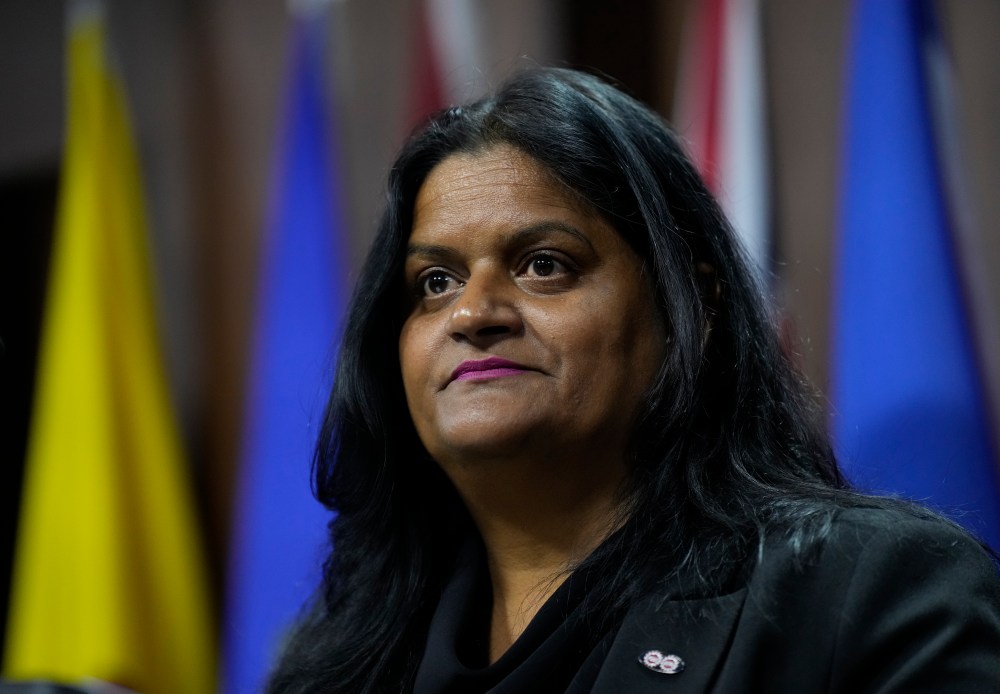
Sharon DeSousa, national PSAC president, said the rollout of the program was rushed and that unions need to be consulted before the government takes any further steps.
The federal government sent letters with information on its planned early retirement program to almost 68,000 public servants who may be eligible, but the government’s website says the program is not yet available.
A spokesperson for Treasury Board President Shafqat Ali said the department doesn’t know at this point how many people the government expects, or wants, to take up the early retirement offer.
The changes required to enact the program are contained in an omnibus budget implementation bill, and the government said it can’t be implemented until that bill comes into force.
Bill C-15 passed the House of Commons last week but still must clear the Senate before it can receive royal assent.
DeSousa said the union doesn’t oppose early retirement options but those efforts must be “negotiated, lawful and protect workers’ rights.”
“They rushed it out without consulting the union, before full details were available, and without properly explaining workforce adjustment rights,” said DeSousa. “No one should ever be pressured into giving up hard-won protections.”
The planned rollout of the early retirement program comes as the federal government is announcing thousands of job cuts in hopes of finding savings.
Ottawa is looking to cut program spending and administration costs by about $60 billion over the next five years through its “comprehensive expenditure review.”
The federal budget said the exercise will involve “restructuring operations and consolidating internal services.” It said it also will involve workforce adjustments and attrition to return the size of the public service to “a more sustainable level.”
The government plans to cut the number of public service jobs by about 40,000 from a peak of 368,000 in 2023-24.
The government says it’s trying to boost the rate of attrition and avoid a disproportionate effect of the cuts on younger workers by offering the voluntary early retirement program.
Anne Lavergne received a letter in January indicating her administrative position at Health Canada is being cut.
Lavergne, who has been a public servant for 26 years, said she believes she has since found someone willing to voluntarily leave the public service to swap positions with her, but that the timing of the early retirement program made it much more difficult to do so.
“It’s delaying the decision of some people to alternate with people affected by workforce adjustment because they’re waiting to see what deal the retirement package might hold,” she said. “Because they announced it but did not produce it, it’s stopping others from making a decision.”
If it comes into force, ERI would be available to workers with at least 10 years of employment in the public service, and at least two years of pensionable service. To be eligible, workers must be either at least 50 years old and have joined the public service pension plan before 2013, or be at least 55 years old and have joined the plan after Jan. 1, 2013.
The pension rules currently mean anyone who retires before the pension age and service requirements are met would have their pension cut by five per cent for every year they retire early. Under the ERI, there would be no such reduction, and the annual pension amount will be calculated based on total years of pensionable service before they retired.
Before accepting an application for an employee under ERI, department heads must confirm their organization has to reduce its workforce, that it can maintain services to Canadians and meet both current and future operational and business requirements.
This report by The Canadian Press was first published March 2, 2026.