
‘Good health policy’: Alberta’s Smith calls on Ottawa to relax nicotine pouch rules
Advertisement
Read this article for free:
or
Already have an account? Log in here »
We need your support!
Local journalism needs your support!
As we navigate through unprecedented times, our journalists are working harder than ever to bring you the latest local updates to keep you safe and informed.
Now, more than ever, we need your support.
Starting at $15.99 plus taxes every four weeks you can access your Brandon Sun online and full access to all content as it appears on our website.
Subscribe Nowor call circulation directly at (204) 727-0527.
Your pledge helps to ensure we provide the news that matters most to your community!
To continue reading, please subscribe:
Add Brandon Sun access to your Free Press subscription for only an additional
$1 for the first 4 weeks*
*Your next subscription payment will increase by $1.00 and you will be charged $20.00 plus GST for four weeks. After four weeks, your payment will increase to $24.00 plus GST every four weeks.
Read unlimited articles for free today:
or
Already have an account? Log in here »
EDMONTON – Alberta Premier Danielle Smith is calling on Ottawa to walk back its restrictions on nicotine pouches, arguing the rules are an unnecessary barrier for those trying to quit smoking while inadvertently making it easier for youth to access.
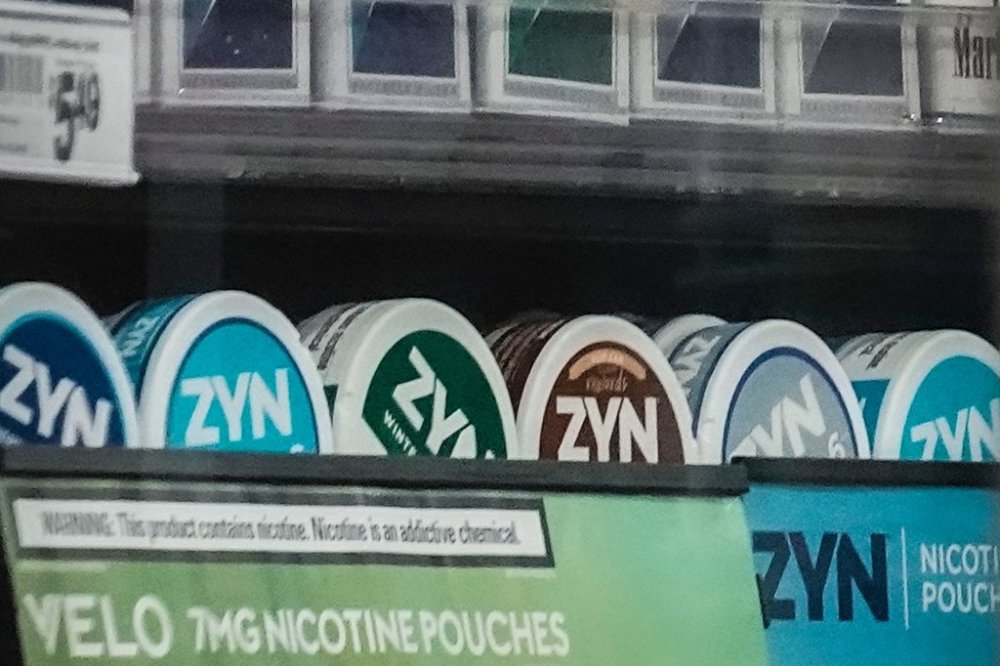
Federal rules dictate that the pouches — small tobacco-free bags containing nicotine that are placed between the lip and gum — can only be sold behind the counter at pharmacies. Only one brand, Zonnic, has been authorized for sale by Health Canada.
In a letter to Prime Minister Mark Carney, Smith and Service Alberta Minister Dale Nally say the restrictions are a form of “regulatory inconsistency” and could be causing more harm than they’re preventing.
“When a regulated alternative is more difficult to access than cigarettes, it sends the wrong signal and complicates efforts by adults working to lessen their dependence,” says the letter shared on social media Monday.
It says regular retail stores already sell age-restricted nicotine products and should be allowed to sell the pouches as well.
“If retailers can responsibly manage the sale of other nicotine products, why do nicotine pouches require a more restrictive sales model?”
Smith, at an unrelated health announcement Monday, said Alberta is proposing to fix a “weird situation” where cigarettes and smoking cessation products aren’t sold at the same place.
“We just think it’s good health policy to make smoking cessation products more available as opposed to less available,” she told reporters at a Lethbridge hospital.
“We’ve been pretty successful at persuading (Ottawa) on a number of issues, and that’s the process that we’re going through right now … to see if we can come to a meeting of the minds on that.”
In the letter, Smith and Nally say federal policy appears to have coincided with growth on the illicit black market, where unregulated pouches are widely available online with no age restrictions.
It says this unregulated market may actually be increasing youth exposure to pouches, which Ottawa aimed to prevent when it introduced the regulations in 2024.
An impact assessment done as part of the regulations says Ottawa was concerned pouches and other types of smoking cessation aids were creating new nicotine users, especially among youth.
“Over the past decade, the ways in which (nicotine pouches and other nicotine replacement therapies) are marketed and sold have become increasingly similar to tobacco and vaping products,” the assessment says.
“Considering these risk factors together, a tailored regulatory approach focusing on (orally administered nicotine replacement therapies) is necessary to reduce the appeal of, access to, and use of these products by young people.”
The assessment says that at the time there was a growing popularity for pouches in the United States and the popularity had made its way north.
It cites a study that found Canadian youth were more aware of one particular U.S. brand, Zyn, than they were of the Health Canada-approved option.
“Participants highlighted that they primarily heard about nicotine pouches through their friends and social media influencers,” the assessment reads.
“Some groups identified various athletes as people in the public eye who endorsed or posted online about nicotine pouches, endorsing their use as a focus and energy aid.”
The assessment says Ottawa needed to find a balance between maintaining access to pouches for those using them to quit smoking while also limiting access and appeal to youth.
Federal Health Minister Marjorie Michel’s office wasn’t immediately able to comment on the Alberta letter.
This report by The Canadian Press was first published March 2, 2026.