
Woman who accused Quebec cardinal of misconduct did not defame the cleric: lawyer
Advertisement
Read this article for free:
or
Already have an account? Log in here »
We need your support!
Local journalism needs your support!
As we navigate through unprecedented times, our journalists are working harder than ever to bring you the latest local updates to keep you safe and informed.
Now, more than ever, we need your support.
Starting at $15.99 plus taxes every four weeks you can access your Brandon Sun online and full access to all content as it appears on our website.
Subscribe Nowor call circulation directly at (204) 727-0527.
Your pledge helps to ensure we provide the news that matters most to your community!
To continue reading, please subscribe:
Add Brandon Sun access to your Free Press subscription for only an additional
$1 for the first 4 weeks*
*Your next subscription payment will increase by $1.00 and you will be charged $20.00 plus GST for four weeks. After four weeks, your payment will increase to $24.00 plus GST every four weeks.
Read unlimited articles for free today:
or
Already have an account? Log in here »
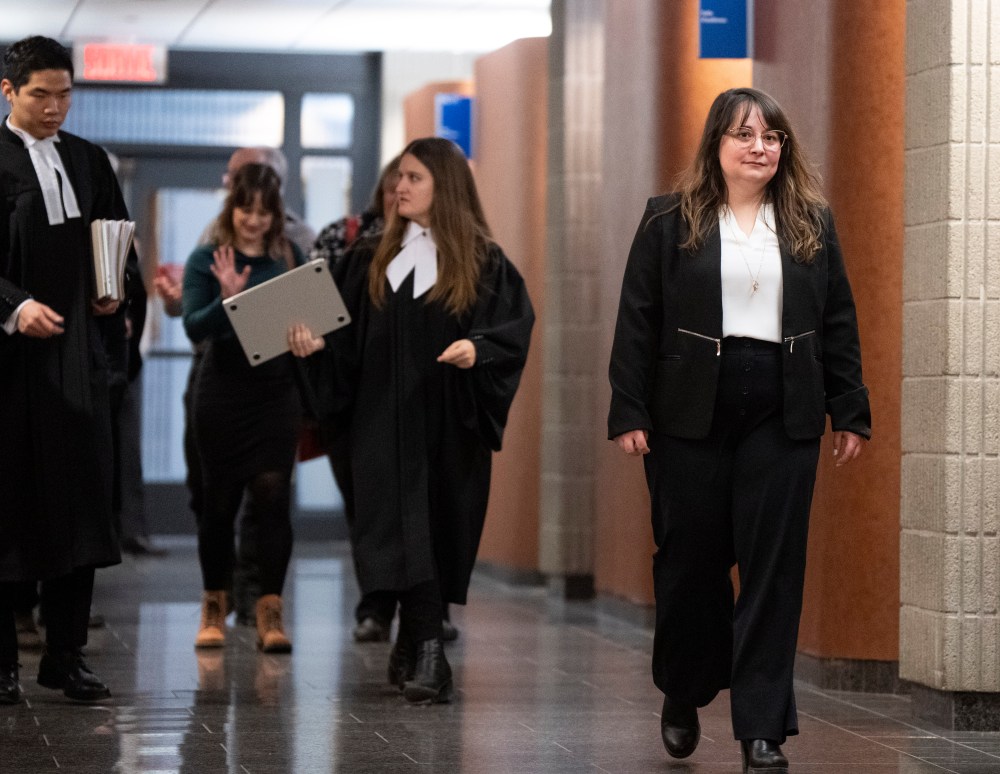
MONTREAL – The woman who accused Cardinal Marc Ouellet of sexual misconduct did not defame the cleric, her lawyer said Tuesday at the Montreal courthouse, adding that any distortion of the case in the media wasn’t the accuser’s fault.
Paméla Groleau’s allegations are true, Justin Wee said in his closing statements at the defamation trial launched by Ouellet in Superior Court. She never sought out journalists and had no control over what they reported, Wee said.
Ouellet filed a $100,000 defamation lawsuit against Groleau after she named him in a 2022 class-action involving her and other complainants alleging sexual misconduct by members of the Quebec City diocese. Groleau alleged Ouellet touched her without consent three times between 2008 and 2010 — including one time when he allegedly he ran his hand down her back to the top of her buttocks — while she trained or worked as a lay pastoral agent for the Catholic Church.
The cardinal denies the allegations and has never been charged with a crime in connection with anything in the class action, which included 101 alleged victims who accused about 88 priests or diocesan staff of various types of misconduct.
On Monday, one of Ouellet’s lawyers, Dominique Ménard, closed her case by saying Groleau’s testimony was inconsistent and lacked credibility.
Wee countered the next day, saying Groleau has never changed the timing of the events she has described and “had spoken about them at the time they occurred.” He said Groleau first reported her allegations anonymously in 2008 to a church advisory committee.
Ménard said news articles at the time the class-action had been filed in 2022 had lumped together Groleau’s accusations with those against other clergymen, including people linked to pedophilia cases “without specifying that Mr. Ouellet was not one of those cases.”
In response, Wee said, “this is not a fault attributable to Ms. Groleau,” adding, “the defendant joined a class-action lawsuit that did not distinguish between adult and minor victims.”
Wee commented on Ouellet’s testimony from March 2, when the cleric argued that the focus of the allegations in the media had been distorted and caused him stress. Wee suggested that what Ouellet considered defamatory related to misplaced pedophilia associations rather than anything Groleau had alleged.
As well, Wee argued that any reputational impact on Ouellet was limited. And he said Groleau never intended to harm Ouellet, noting that before she joined the class action she had written a formal letter to former pope Francis in 2021 with her allegations, hoping the pontiff would investigate.
“Until then, there were no lawyers involved,” Wee said.
In 2022, former pope Francis announced there was not enough evidence to open a formal Church investigation into Groleau’s allegations.
Wee also asked Justice Martin Castonguay to maintain evidence presented at trial by Mélissa Trépanier and Marie-Louise Moreau, two women who accused the cardinal of inappropriate behaviour, including one who told the court she felt like a “prisoner” during a 1992 encounter.
On Monday, Ménard, asked the judge to disregard both testimonies, calling Moreau’s account “irrelevant” and that Trépanier’s was “somewhat irrelevant” and “deeply subjective.”
For his part, Wee said what the woman had to say was important in highlighting the challenges victims face reporting misconduct in the Church.
Moreau testified last week that in 1992, Ouellet came up behind her while she was preparing items for mass in Montreal. She said he put his hands on either side of her and allegedly rubbed his pelvis against her.
Trépanier said that in 2014, Ouellet allegedly put a $50 bill down the front of her sweater and that she felt his hand inside her shirt. She described the encounter as a breach of trust and an abuse of power that left her “devastated” and concerned for others.
During cross-examination on Monday, Ouellet said he had ”no memory” of ever talking to Moreau.
Ouellet’s lawyer has said the relation between Trépanier and Ouellet was not sexual in nature. Trépanier said during her testimony she had known Ouellet for about 10 years, going back to when she was involved in church youth activities, and had considered him a spiritual father figure.
Trépanier and Moreau, like Groleau, have agreed to have their names published, waiving the publication ban that usually applies in cases involving sexual assault allegations.
With both sides concluding their cases on Tuesday, Castonguay said he will issue his ruling at a later date.
This report by The Canadian Press was first published March 10, 2026.