
What is a strategic oil reserve and does Canada have one?
Advertisement
Read this article for free:
or
Already have an account? Log in here »
We need your support!
Local journalism needs your support!
As we navigate through unprecedented times, our journalists are working harder than ever to bring you the latest local updates to keep you safe and informed.
Now, more than ever, we need your support.
Starting at $15.99 plus taxes every four weeks you can access your Brandon Sun online and full access to all content as it appears on our website.
Subscribe Nowor call circulation directly at (204) 727-0527.
Your pledge helps to ensure we provide the news that matters most to your community!
To continue reading, please subscribe:
Add Brandon Sun access to your Free Press subscription for only an additional
$1 for the first 4 weeks*
*Your next subscription payment will increase by $1.00 and you will be charged $20.00 plus GST for four weeks. After four weeks, your payment will increase to $24.00 plus GST every four weeks.
Read unlimited articles for free today:
or
Already have an account? Log in here »
CALGARY – The war raging in the Middle East has jolted global energy markets, prompting the International Energy Agency to release the largest amount ever from member states’ emergency oil stocks.
Here is a rundown of what’s happening and what it means:
Massive supply shock
Global crude oil prices have been on a roller-coaster since the United States and Israel began launching strikes on Iran almost two weeks ago. Several other countries in the region have since been drawn into the conflict.
Iran sits on the north side of the Strait of Hormuz, a strategically vital waterway between the oil-producing Gulf states and the open sea. Typically, about one fifth of the world’s oil supply — 20 million barrels per day — passes through the channel, but traffic has been all but choked off.
Crude prices have touched levels not seen since Russia’s invasion of Ukraine four years ago, edging close to US$120 per barrel at one point this week. They’ve since fallen back below US$90.
“We’ve never seen a supply shock of this scale in the oil market before,” said Rory Johnston, author of the Commodity Context newsletter.
“Anything other than the largest collective release in the IEA’s history would have been deeply insufficient.”
The International Energy Agency acts
The Paris-based International Energy Agency has 32 members, including Canada. Its reserves were established in 1974 after the Arab oil embargo, and member countries currently hold more than 1.2 billion barrels of public emergency oil stocks, with a further 600 million barrels of industry stocks held under government obligation.
The IEA said Wednesday it would make 400 million barrels of oil available to the world market. That’s the biggest release volume in the agency’s history and more than double the nearly 183 million barrels it unlocked in 2022, the record at the time.
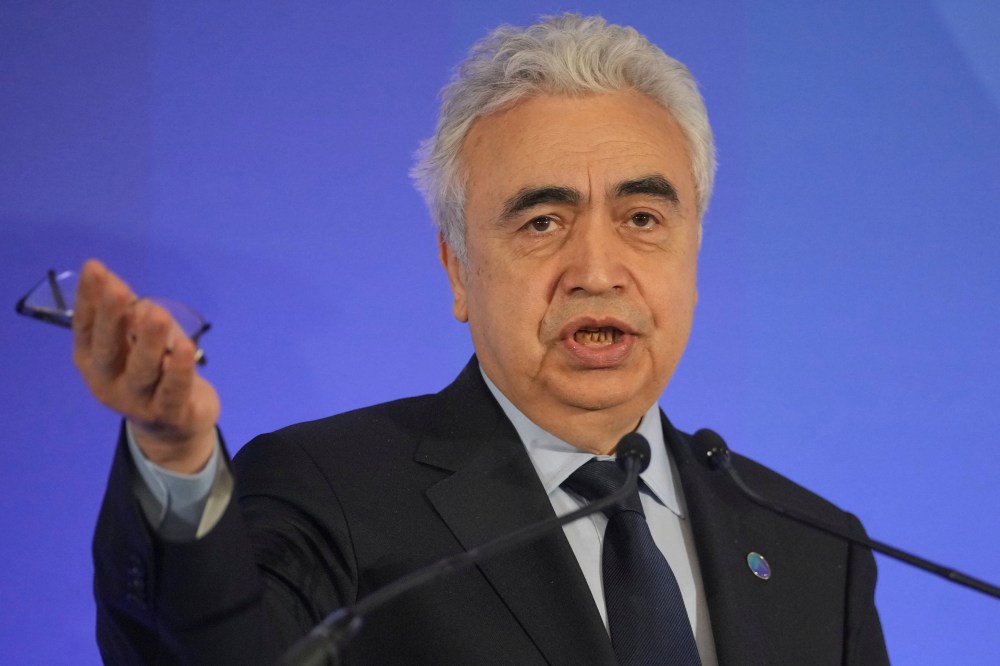
“This is a major action aiming to alleviate the immediate impacts of the disruption in markets,” said Fatih Birol, executive director of the IEA. “But, to be clear, the most important thing for a return to stable flows of oil and gas is the resumption of transit through the Strait of Hormuz.”
Johnston expressed dismay that this option is being tapped so far into the conflict, given that energy market disruptions were a predictable outcome of going to war with Iran. Instead of talking to IEA members early on about a release, they have been left to have “ad hoc panicked policy discussions,” he said.
“The White House clearly had no plan for it to last this long,” he said. “All of this is just evidence to me that they had no plan going in and they are flailing now.”
Johnston said it will be important to find out the daily rate at which those barrels will be released into the market, but it’s unlikely to come anywhere close to filling the 15-to-20-million-barrel-a-day supply gap the world is currently contending with.
“It’s the only thing we can do and we should be doing it, but that’s also what we should have done as soon as we could, not two weeks into the crisis.”
Does Canada have strategic reserves?
The IEA stipulates that members set enough oil aside to cover 90 days worth of net imports. But Canada is a net exporter — the vast majority to the United States and some to Asia via the Trans Mountain pipeline — so it is not beholden to that rule.
Canada is the only G7 nation that does not maintain a strategic reserve of oil.
Johnston said limiting the requirement to net importers shows an “old-school view” that doesn’t fit with today’s global reality.
“There is an argument to have a (strategic petroleum reserve) in order to have essentially government discretionary power, to help out more in these environments.”
There have been off-and-on discussions over the years about Canada setting up such a reserve, but it hasn’t happened.
Richard Masson, former head of the Alberta Petroleum Marketing Commission, said meeting Canada’s supply needs in the event of a global energy crisis isn’t an issue. Even refineries on the East Coast would have access to ample supplies of Texas crude via tanker.
“Everybody in the world experiences the higher prices, but we don’t have the worry right now of running out of physical barrels to process and put into the consumer market,” he said.
How else can Canada help?
On Wednesday, Natural Resources Minister Tim Hodgson said Canada will do its part to contribute to the world’s oil supply, but didn’t detail how. He said options could include delaying maintenance downtime at production facilities or asking refineries to source their crude domestically to free up supply elsewhere.
Masson said he’s not sure oilsands companies would be willing to put off their seasonal maintenance turnarounds.
“The system is designed so that thousands of people plan their years to come to these sites for very intense work.”
As far as churning out more crude for the global market, Masson said “we can do hardly anything” right now.
The Trans Mountain pipeline to the Vancouver area has been operating at around 90 per cent capacity, so in theory there is some space to get more crude to the Pacific to export to Asia on tankers. But the tolls on that pipeline are pricier than on ones heading south of the border.
“That’s why it hasn’t been full. Otherwise it would have been full already,” said Masson. “We really don’t have the ability to move anything near term to Asia that we aren’t doing already.”
Loading crude onto rail cars and sending it to ports is also not as easy as an option as it has sometimes been, Masson added, for a variety of reasons.
“There’s some limited ability to turn that up just a touch, but not much.”
This report by The Canadian Press was first published March 11, 2026.
— With files from The Associated Press.