
Stanley Park’s stagnant Lost Lagoon closer to being reconnected to ocean
Advertisement
Read this article for free:
or
Already have an account? Log in here »
We need your support!
Local journalism needs your support!
As we navigate through unprecedented times, our journalists are working harder than ever to bring you the latest local updates to keep you safe and informed.
Now, more than ever, we need your support.
Starting at $15.99 plus taxes every four weeks you can access your Brandon Sun online and full access to all content as it appears on our website.
Subscribe Nowor call circulation directly at (204) 727-0527.
Your pledge helps to ensure we provide the news that matters most to your community!
To continue reading, please subscribe:
Add Brandon Sun access to your Free Press subscription for only an additional
$1 for the first 4 weeks*
*Your next subscription payment will increase by $1.00 and you will be charged $20.00 plus GST for four weeks. After four weeks, your payment will increase to $24.00 plus GST every four weeks.
Read unlimited articles for free today:
or
Already have an account? Log in here »
VANCOUVER – Lost Lagoon at the entrance to Vancouver’s famed Stanley Park has become a swamp of green algae and stagnant water but the city’s board of parks is moving forward with a plan to reconnect the lagoon to the ocean after more than a century of being marooned.
Board members endorsed exploratory work in a motion on Tuesday to reconnect the lagoon to Coal Harbour and Second Beach to improve its ecological health and restore it as a tidal ecosystem.
Instead of a growing bloom of algae and worsening water quality — a result, the board says, of a century of infilling — a lagoon reconnected to the sea could see bird-rich mud flats at low tide, and marsh-like conditions at high tide.
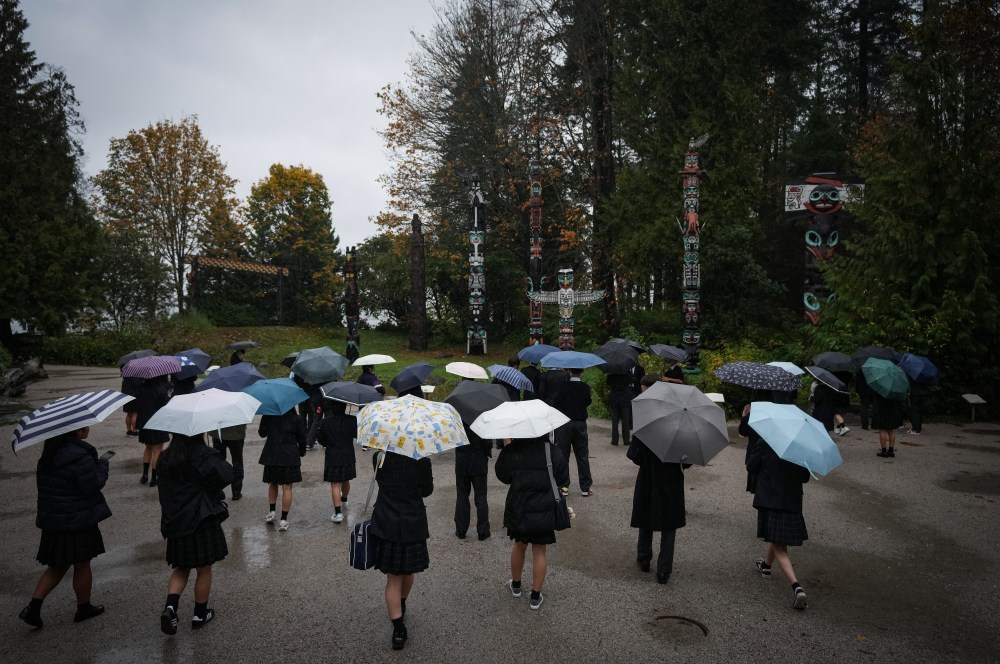
Chad Townsend, senior planner of environment and sustainability at the Vancouver Board of Parks and Recreation, said that while many think of Lost Lagoon as a natural system, things were very different a century ago.
He said the site has a Squamish name, Ch’ekxwa’7lech, meaning “gets dry at times,” referring to how tides would roll in and out about 100 years ago.
As a historic salt marsh, the lagoon was used by local First Nations for shellfish harvesting and waterfowl hunting, and the site supported a diverse ecosystem of fish, birds, crustaceans, and invertebrates.
But things changed after the construction of the Stanley Park Causeway in 1916 when the lagoon was cut off from Burrard Inlet to make way for what was to become Highway 99.
Now, the lagoon is less than a metre deep.
Townsend said the causeway is like a dam, cutting off tidal flows and turning the lagoon into a “very deteriorated” ecosystem.
“So, things like algae blooms and smell are all indicators of poor habitat quality,” said Townsend. “A lot of that has to do with depth.”
He said that when depth drops to less than one metre, water bodies heat up faster. The lagoon now lacks the ability to exchange nutrients and fresh water.
“It really has none of the characteristics that it would have when the (First) Nations were stewarding Stanley Park.”
Ernie George, director of treaty, lands and resources with the Tsleil-Waututh Nation, said in a letter that the nation supports the board’s efforts to connect the lagoon to the sea.
George said after the lagoon was cut off the environment changed from a saltwater lagoon to a freshwater lake.
“The loss of salt marsh is not unique within Burrard Inlet as the inlet has seen a dramatic decrease in salt marsh and other key habitats since contact,” read the letter.
“Some estimates have half the Inlet’s shores being altered, removing fish habitat for important species like Pacific salmon and forage fish,” the letter said.
The lagoon is quiet on a rainy Wednesday, with a few ducks and Canada geese out for a swim, a woman can be seen on the opposite side taking a selfie in front of the lagoon.
Valerie Bacon is a regular visitor to the lagoon for exercise.
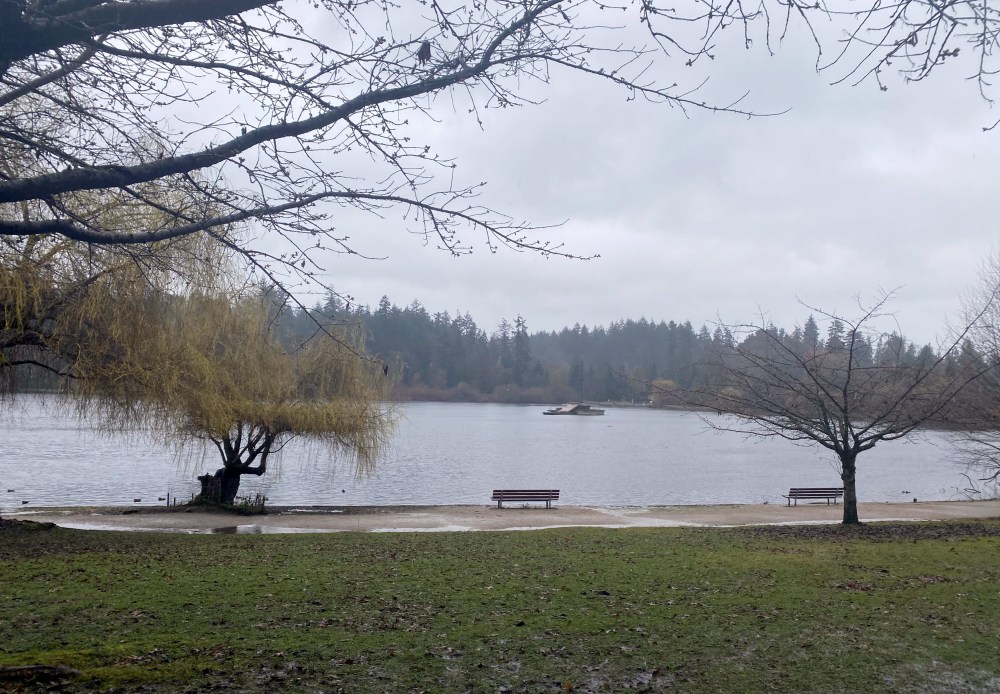
“It makes me relax because it’s so beautiful and calm,” said Bacon, who lives in nearby Yaletown.
She said wood ducks with their distinctive red eyes are a common sight and she had met an occasional coyote.
Bacon supports the park board’s plans to reconnect the lagoon with the ocean.
“I like the fact that they’re going to free it,” said Bacon, adding that she is thrilled about the idea of being able to see more birds and fish thriving in the healthy ecosystem.
A staff report dated Feb. 26 offered three options to reconnect the lagoon to the ocean, including building a channel to connect the lagoon to tidal waters at Second Beach.
Tom Digby, the board’s chair, said algae blooms and fish die-offs have become a regular occurrence and it’s important to explore long-term solutions to restore the area’s ecological health.
The board said a redesigned lagoon would restore the tidal habitat, but it’s not currently funded and the estimated cost of the project is $30 million.
Townsend said the funding is “relatively small” compared with other recent infrastructure projects by the city.
“I think it’s an important development, and it’s really exciting for the whole region to have such a project that restores natural flows, bird habitat, and turns back the clock on a decision that was made for a very different reason of pleasure boating 100 years ago,” said Townsend.
This report by The Canadian Press was first published Mar. 11, 2026.
Note to readers:This is a corrected story. A previous version said the causeway was created for access to the Lions Gate Bridge. In fact, it was built for what would become Highway 99.