
Time running out on changing clocks?
Advertisement
Read this article for free:
or
Already have an account? Log in here »
We need your support!
Local journalism needs your support!
As we navigate through unprecedented times, our journalists are working harder than ever to bring you the latest local updates to keep you safe and informed.
Now, more than ever, we need your support.
Starting at $15.99 plus taxes every four weeks you can access your Brandon Sun online and full access to all content as it appears on our website.
Subscribe Nowor call circulation directly at (204) 727-0527.
Your pledge helps to ensure we provide the news that matters most to your community!
To continue reading, please subscribe:
Add Brandon Sun access to your Free Press subscription for only an additional
$1 for the first 4 weeks*
*Your next subscription payment will increase by $1.00 and you will be charged $20.00 plus GST for four weeks. After four weeks, your payment will increase to $24.00 plus GST every four weeks.
Read unlimited articles for free today:
or
Already have an account? Log in here »
WINNIPEG — Manitobans could soon be consulted on whether it’s necessary to continue changing the clocks twice a year in the province.
Premier Wab Kinew hinted that the province is nearing the end of the practice of moving clocks forward an hour in the spring and “falling” back an hour in autumn.
“Nobody would design the system this way if we were starting from scratch today,” Kinew told reporters on Friday at an unrelated news conference.
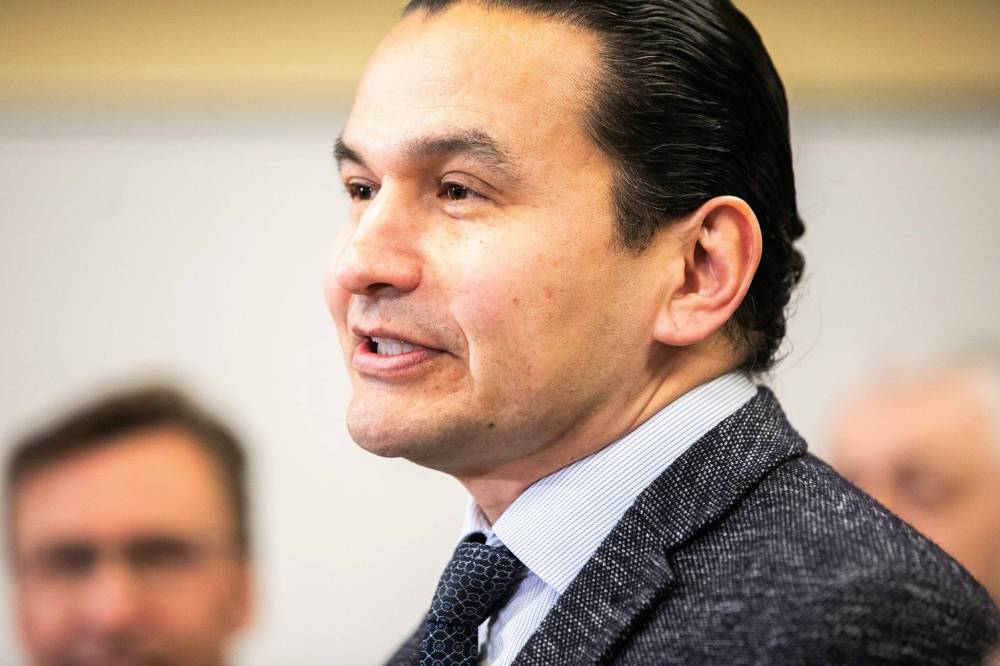
Premier Wab Kinew said he and other politicians have been getting an earful about daylight time. (Mikaela MacKenzie/Winnipeg Free Press)
“The challenge just comes from us trying to transition away from this sleep-destroying structure that we currently have and trying to get it to something that’s more healthy and sustainable for the public in the long run.”
Kinew said the government is looking at surveying Manitobans on what their preferences would be.
He said he and other politicians have been professionally and personally getting an earful about daylight time.
As clocks moved forward an hour on Sunday, Kinew told reporters he was at a rink with other hockey parents for an early practice and he wondered, “Why are we doing this?”
He said that the inboxes of legislature members are full of comments from Manitobans about the time change. Kinew added that his wife, who is a doctor, told him it isn’t ideal health-wise.
Brandon residents gave the idea mixed reviews on Friday.
The switch to daylight time needs to be cancelled, a Brandon security guard, Duane Pullinger, told the Sun.
If he were surveyed by the premier, he’d ask for the practice to be cancelled like British Columbia has done.
“Get rid of it,” Pullinger said. “I think it messes up a lot of people. It does for me, a little bit. Your body gets to a certain rhythm, you build that up, and then you got to readjust.”
He added that for those people working night shifts, the time change directly affects their work.
“What does it really save us, at the end of the day? It’s just an hour.”
The premier should keep daylight time the way it is, said Tina, a 64-year-old Brandon resident.
People are already used to resetting their clocks, so it wouldn’t be worth the effort to make the change, she said, adding that she wouldn’t benefit from it due to her schedule.
“I’m used to getting up early in the dark, so to me it doesn’t matter,” she said.
The clock changes are too much of a disruption to routine, so daylight time should be removed, said Samarth Patel.
Patel said he wants the practice to stop because it interferes with his hours.
“Don’t change the clocks,” he said. “Sometimes I work night shifts, so it affects my schedule.”
He added that he does not like losing an hour of sleep in the morning when clocks go forward in the spring.
Time regulation falls under provincial and territorial jurisdiction, and the Canadian Encyclopedia says Ottawa officially introduced daylight time in 1918 as a measure to increase wartime production.
B.C. Premier David Eby announced earlier this month that his province will stay on daylight time permanently and won’t be turning clocks back to rejoin standard time on Nov. 1.
It joins Saskatchewan and the Yukon in ending seasonal clock changes. The Yukon is also on year-round daylight time, although the territory calls it Yukon standard time. Saskatchewan is on permanent standard time.
Kinew told reporters he’s not rushing to follow B.C.’s move to stay on daylight time and pointed to benefits of having permanent standard time.
“Everybody, I’m sure, intuitively would prefer the one hour of sunshine in the summer evening, but the health benefits are actually greater if you stick with wintertime, as it were, in Manitoba,” he said.
“We’re talking about prevalence of stroke, prevalence of obesity in the society coming down significantly if we move to that permanent wintertime. I just don’t know if the general public in Manitoba is there.”
This isn’t the first time Manitoba has looked at doing away with the time change.
A private member’s bill was introduced in the legislature in 2019 that proposed abolishing daylight time, but it did not pass. At that time, the then-Opposition New Democrats conducted an online survey on time changes. The party never came to a conclusion. In 2022, the then-Progressive Conservative government looked at moving to permanent daylight time if the United States led the way.
Tory MLA Ron Schuler has introduced a new bill this month to move to permanent daylight time effective next year.
Alberta Premier Danielle Smith has indicated her government will consult on doing away with twice-a-year clock changes.
In 2020, the Ontario government passed legislation to end the twice-yearly changing of clocks and make daylight time permanent — but only if Quebec and New York agreed to do the same.
In 2022, Atlantic Canada’s premiers decided to hold off on any move toward dropping the time change until they saw what neighbouring jurisdictions would do.
» The Canadian Press, with files from Connor McDowell