
Manitoba not positioned to cash in on data centres
Advertisement
Read this article for free:
or
Already have an account? Log in here »
We need your support!
Local journalism needs your support!
As we navigate through unprecedented times, our journalists are working harder than ever to bring you the latest local updates to keep you safe and informed.
Now, more than ever, we need your support.
Starting at $15.99 plus taxes every four weeks you can access your Brandon Sun online and full access to all content as it appears on our website.
Subscribe Nowor call circulation directly at (204) 727-0527.
Your pledge helps to ensure we provide the news that matters most to your community!
To continue reading, please subscribe:
Add Brandon Sun access to your Free Press subscription for only an additional
$1 for the first 4 weeks*
- Enjoy unlimited reading on brandonsun.com
- Read the Brandon Sun E-Edition, our digital replica newspaper
*Your next Free Press subscription payment will increase by $1.00 and you will be charged $20.95 plus GST for four weeks. After four weeks, your payment will increase to $24.95 plus GST every four weeks.
Read unlimited articles for free today:
or
Already have an account? Log in here »
Hey there, time traveller!
This article was published 17/03/2026 (205 days ago), so information in it may no longer be current.
In case anyone wonders what’s at stake when the government talks about the need to increase Manitoba’s electrical capacity, a pair of Bell Canada announcements over the last 10 months are good examples.
Last May, BCE Inc. CEO Mirko Bibic announced that Bell Canada would be opening six data centres in British Columbia that would be equipped to power artificial intelligence models and applications.
All of the new data centres combined, according to a Globe and Mail report, would need up to 500 megawatts of electricity once fully operational over the next few years.
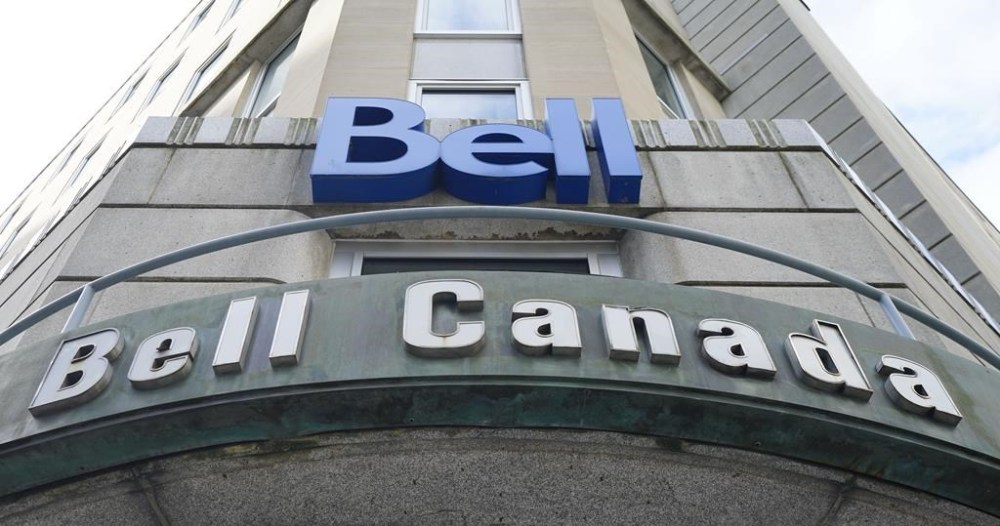
The plans represent an investment of at least $300 million in the province over three years as part of the first stage of the company’s “Bell AI Fabric” strategy, with the aim of providing so-called sovereign AI computing solutions for Canadian companies and governments.
“There’s been a lot of talk about data centres being built, and visions and ambitions,” Bibic told the Globe in an interview. “We’ve got the land, we’ve got the buildings, we’ve got the chips in there, we’ve got the power.”
While other telecoms are also looking to AI for growth — such as Telus Corp., which wants to retrofit one of its Quebec facilities to handle AI, with plans to do the same in B.C. in the future — B.C. has the advantage of offering companies like Bell Canada access to clean hydropower and fibre-optic connectivity.
Then yesterday, BCE Inc. announced that it plans to build a new 300-megawatt data centre just outside Regina, Sask., with construction slated to begin this spring.
The new facility, according to The Canadian Press, is projected to generate economic value of up to $12 billion for the province, including short- and long-term job creation, with construction expected to support at least 800 trades and engineering jobs. It would also create a minimum of 80 full-time roles once fully operational.
According to the government of Saskatchewan’s website yesterday, the province’s Crown corporations are collaborating to support the project. SaskPower has already begun the first phase of construction on the transmission interconnection needed to provide reliable power for the new facility. SaskTel’s fibre optic transport network will provide “reliable connectivity” to link the facility to Bell’s “national fibre backbone,” among other potential collaboration options.
And SaskEnergy plans to develop natural gas infrastructure for Bell’s on-side gas-fired power generation “to support the data centre’s peak operational demand as well as backup power generation.” This would also include the construction of a new high-pressure pipeline, and high-volume meter station, according to the Saskatchewan government.
It is, of course, an open question whether Manitoba’s NDP would be interested in attracting such a facility. The AI data centres in B.C. and across Canada are expected to require significant amounts of water, which is used primarily for cooling server infrastructure. That would be particularly concerning in a province that has already been experiencing droughts.
But it’s a question worth asking. In his comments to the Globe last May, Mr. Bibic said that Bell Canada has the potential — read “interest” — in expanding its AI footprint into Manitoba and Quebec, both of which rely on hydropower. That ability to access clean hydropower is one of the reasons that B.C. had an advantage in attracting the Bell Canada data centres in the first place.
Yet the difficult situation currently facing Manitoba Hydro seemingly puts large investments like an AI data centre far out of reach for this province.
Our province faces a near-term capacity crunch, and as of Sept. 1, 2025, implemented changes to the Manitoba Hydro Act came into force that set out new parameters on Manitoba Hydro’s ability to serve requests for a large supply of power greater than five megawatts.
According to Manitoba Hydro’s website, the Crown corporation must deny a request for service — regardless of size — if the request or proposed use of the power is prescribed in the regulations as “ineligible.” This includes projects in which power would be used for cryptocurrency mining.
It would also deny a request for service of a large supply of power greater than five megawatts, where it is not reasonably feasible to supply the requested power, considering Hydro’s capacity to supply power.
So even if a large company — like Bell Canada — wanted to set up an AI data centre here in Manitoba, we’re closed for business.
In the meantime, the province is taking steps to increase its electrical capacity by about 1,760 megawatts by 2035 through the construction of 600 MW of wind power from projects majority-owned by Indigenous peoples, and the construction of new natural gas turbines in Brandon that would generate roughly 500 to 750 MW, which Manitoba Hydro swears will primarily be operated during “peak winter demands.”
Those new turbines will be operational by 2029-30, according to the province.
In the meantime, while we wait, other provinces will continue to reap the benefits.